


Israel, in its current position, has little choice but to accept U.S. President Donald Trump’s dictate on Lebanon, wait to see whether his negotiations with Iran end in agreement or collapse, and only then recalculate its course on all fronts.
Israel was pushed into this position for several reasons. The first is that Trump is determined to reach understandings with Iran and reopen the Strait of Hormuz, while Tehran has conditioned any agreement on a ceasefire in the Lebanese arena as well. The second is Israel’s diplomatic, military and logistical dependence on the United States, a dependence Prime Minister Benjamin Netanyahu has cultivated, alongside the international isolation in which Israel now finds itself.
Gallery
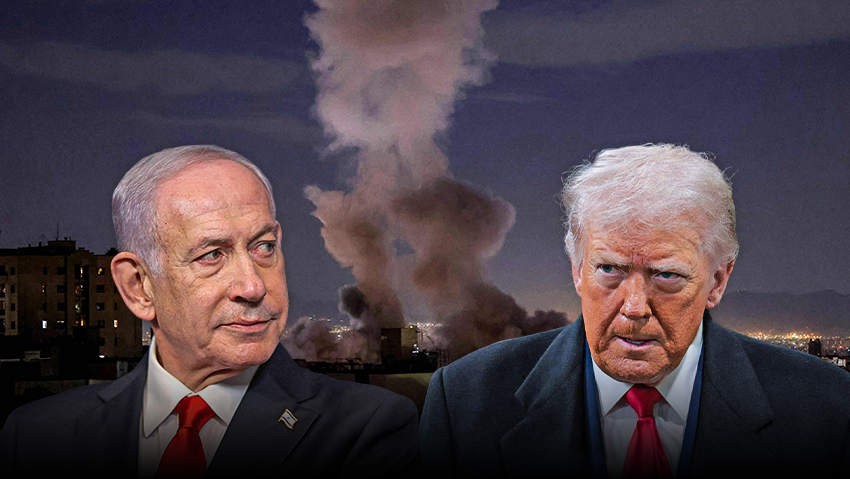
Benjamin Netanyahu and Donald Trump
(Photo: Atta Kenare/ AFP, JOE RAEDLE / AFP, Anna Moneymaker/ AFP)
The third reason is the situation of residents of northern Israel. After more than two years of war, they have been forced to live, raise children and try to make a living under a bloody drip of rockets and drones, refugees in their own homes, with no end in sight. If, as a result of the ceasefire, Hezbollah stops firing across the border, the situation for Galilee residents will at least improve temporarily.
For the IDF, however, the picture is more complicated. The military will have to continue bearing the burden of an attrition war inside Lebanon for an unknown period, without yet having an adequate answer to Hezbollah’s fiber-optic guided explosive drones.
The ceasefire terms as they relate to the IDF remain vague. It is unclear whether clear conditions were even set during the shouting match between Trump and Netanyahu. What is clear is that Israeli forces will remain along their current lines, and will probably still be able to carry out limited ground maneuvers or targeted airstrikes to suppress sources of fire if Hezbollah continues shooting at troops in the field.
For now, IDF ground and air activity is geographically limited, as it was three weeks ago, to southern Lebanon on both sides of the yellow line. Targeted strikes on Hezbollah facilities in the Bekaa Valley may also still be possible.
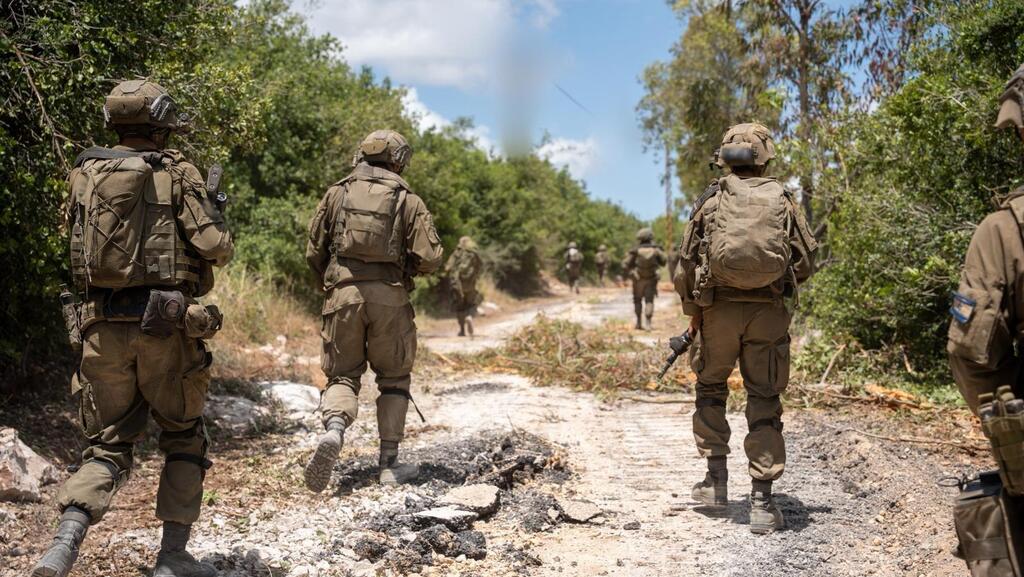
IDF forces in Lebanon
(Photo: IDF)
But a strike on Beirut’s Dahieh is now off the table. The practical meaning is that Israel and the IDF have temporarily lost an important lever of pressure over Hezbollah and the Lebanese government.
Most of Hezbollah’s senior figures fled the large Shiite district in southern Beirut long ago. But the neighborhood remains home to the Shiite community’s elite: senior clerics, educated and wealthy families, and thousands of displaced families who fled Shiite villages in southern Lebanon. Some are renting homes there, while others are still living in the streets.
That is why, even though the Dahieh no longer contains the same high-quality personnel targets or enormous weapons depots that it did more than two years ago, significant destruction there would still deal a heavy blow to the Shiite community in general and to Hezbollah in particular.
I saw this firsthand when I entered the Dahieh in August 2006, days after the Second Lebanon War. I saw entire blocks of buildings destroyed, roofs collapsed into basements, in an area of about half a kilometer by half a kilometer where Hezbollah headquarters had been located among and inside civilian residential buildings.
The destruction sown then by the Israeli Air Force was not directed solely at specific targets. It was destruction as punishment and deterrence, and it was almost total. At the time, the target bank prepared by Military Intelligence and the air force ran out just days after the war began.
Among the ruins, stunned civilians wandered, wringing their hands in grief. Women wailed and asked, “Where will we go?” Hezbollah officials moved among them, trying to calm them and promising that Iran would compensate them for their losses. It took the Shiites, with heavy Iranian assistance, more than a decade to rebuild that part of the Dahieh and other areas in Lebanon.
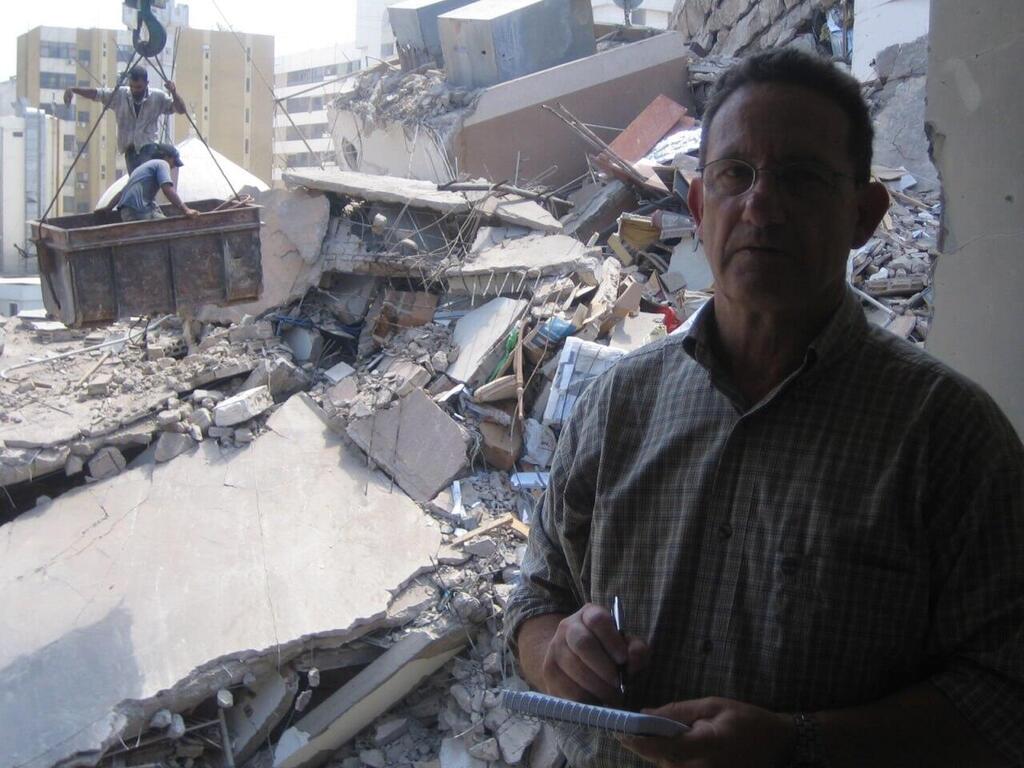
Significant destruction would have dealt Hezbollah a heavy blow. Ron Ben-Yishai in Dahieh, 2006
It is no wonder Hezbollah is so worried today. Its condition is far worse than it was 20 years ago. Tens of thousands of established and influential Shiite civilians would have to choose between fleeing and risking death, and such a blow could undermine the Shiite community’s hold on Lebanon’s economic and political capital, where the country’s international airport and main commercial port are located.
This comes as hundreds of thousands of Shiites, out of a community of more than a million, are already displaced after fleeing villages in southern Lebanon. Iran, with its battered economy and unstable regime, would not be able to provide much help, even if Trump signs an agreement that lifts sanctions.
Lebanon’s other communities, and a significant portion of the Shiite community as well, oppose Hezbollah and, above all, the pointless war it is waging against Israel. The Lebanese government, through the very negotiations it is conducting with Israel, is gradually stripping Hezbollah of the legitimacy it claimed for itself under the argument that it is “Lebanon’s defender against Israel.”
No less important, Hezbollah would have difficulty threatening the other communities and the Lebanese government with civil war while most of its people are outside the capital. If Israel were to bring down building blocks in the Dahieh one after another, as it did in 2006, the organization would face internal and external pressure it would struggle to withstand.
Netanyahu was therefore right to accept the recommendation of the IDF chief of staff and senior defense officials and approve a strike on the Dahieh. But instead of threatening on social media and announcing the plan in advance, he should have first allowed the air force to carry out what the IDF calls a “demonstration of capability”: bombing two or three important buildings to show Hezbollah, the Lebanese government and the Shiite community what awaits them.
Only afterward should he have explained to Trump that Israel had no choice in light of Hezbollah’s fire on Israel.
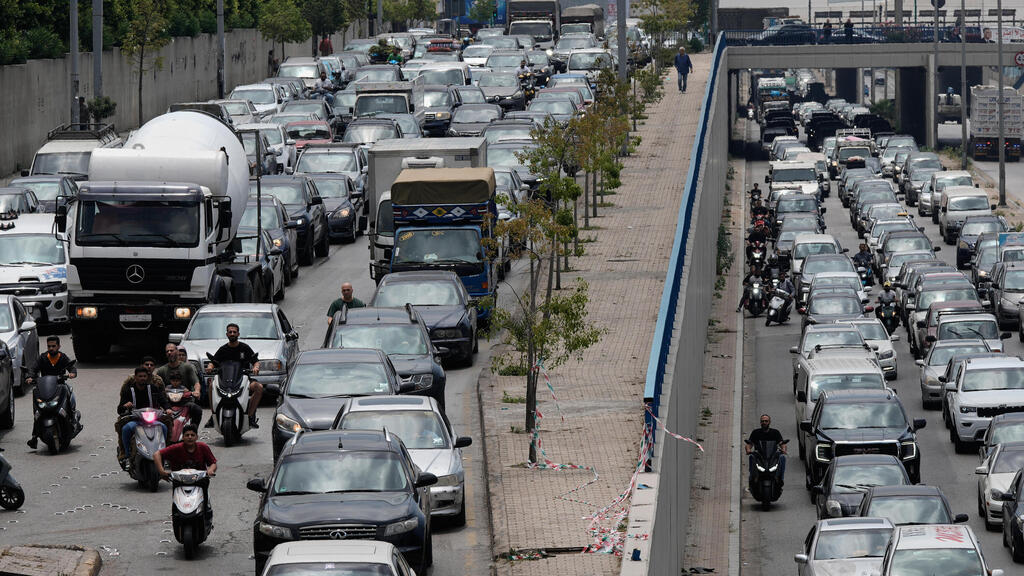
Residents leave Beirut’s Dahieh area
(Photo: REUTERS/Mohamed Azakir)
Such a move would not have prevented Trump from becoming furious, shouting at Netanyahu, humiliating him and leaking the confrontation to the international media in order to appease the Iranians and keep negotiations with them alive, as he did yesterday. But at least there would have been a chance that Hezbollah and its Iranian patrons would lower the flames in Lebanon on their own initiative, to prevent the Israeli Air Force from continuing to topple buildings in the Dahieh.
Had Iran carried out the threats made by its senior military officials and launched fire at northern Israel in order to assist Hezbollah, the Israeli Air Force would have renewed its strikes in Iran as well, as the IDF wants and is prepared to do in any case.
Once again, Netanyahu spoiled a correct move he had prepared because he was in a rush to tell everyone about it. First act, then threaten. Not threaten and then fail to act.
Now Israel must determine how to get out of this with minimal damage.
The practical meaning of obeying Washington’s dictate is a partial ceasefire whose main purpose, if Hezbollah respects it, is to ease the pressure on uninvolved civilians on both sides of the Lebanese border. That is not insignificant, and may even be desirable. A “civilian” ceasefire would give residents of northern Israel a break from the constant physical and mental pressure they have endured.
The defense establishment would also have more room to focus on developing and producing solutions that can neutralize, or at least reduce, the deadly toll that fiber-optic drones are exacting from IDF soldiers inside Lebanon.
The danger is that if this situation continues for many months, it could become fixed, turning into version 2.0 of Israel’s war of attrition in the Lebanon security zone, much like the 18 years Israel experienced until May 2000.
Another possibility is that Hezbollah violates the ceasefire in the coming days. Netanyahu would then face a brutal dilemma: decide whether the situation, meaning the number of Israeli casualties and the level of public anger, justifies defying Trump, blowing up the diplomatic track with Lebanon, risking an Iranian response and launching a major military move that changes the reality in Lebanon; or grit his teeth, wait until the negotiations with Iran are over, and then reconsider how Israel should act in Lebanon.
It should be made clear that a significant military move in Lebanon would be intended to remove Hezbollah’s threat to northern Israel and to IDF forces for at least several months, and perhaps up to a year. Such a move would have to include a large, rapid and sophisticated ground maneuver at least as far as the Zahrani River in southern Lebanon, alongside massive airstrikes in Beirut, Sidon and the Bekaa.
The area between the Israeli border and the Zahrani River contains Hezbollah’s Badr region, from which most of the launches into Israeli territory are carried out. In Beirut, the coastal cities and the Bekaa are the civilian populations that influence parliament speaker Nabih Berri and other Hezbollah decision-makers.
Such a move would have to be carried out with U.S. support, or at least in coordination with Washington, because it could expand to Iran and challenge the IDF’s stocks of munitions and spare parts.
It is an extremely difficult dilemma, especially for a country heading toward elections.