

I am heartbroken by the attack in Manchester—an attack that, tragically, was all too predictable. Since October 7th, Jews across the world have watched the dam of denial burst. Antisemitism, once whispered in classrooms and hidden in online forums, now roars through the streets, the airwaves, and the corridors of power. Our enemies are emboldened, organized, and unashamed. And we—our community, our leadership, and even the State of Israel itself—have too often looked away.
Gallery
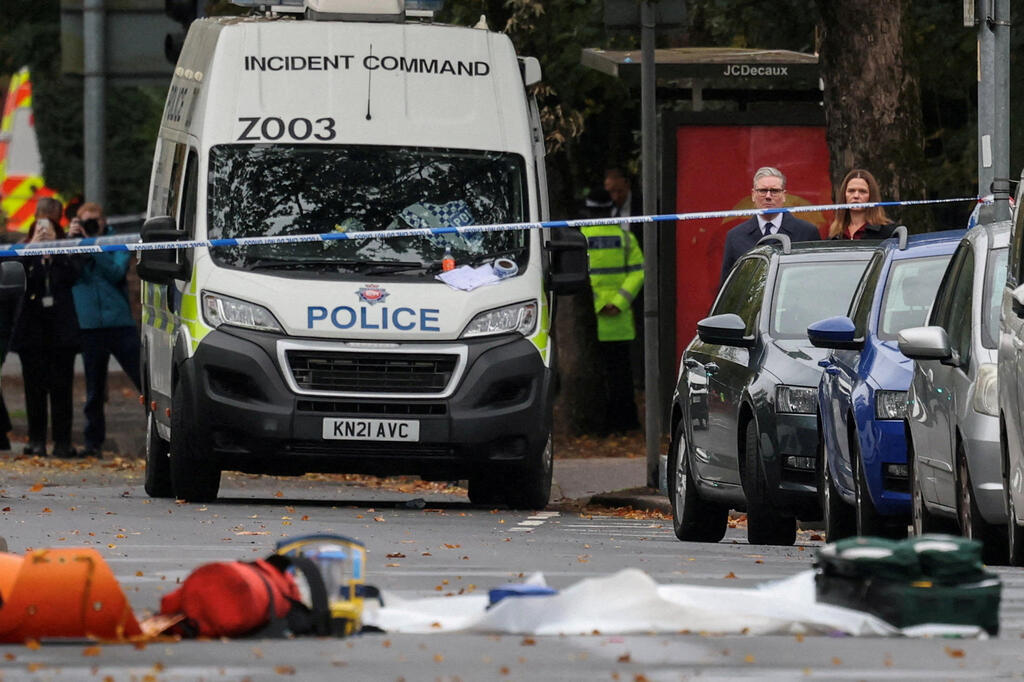
UK Prime Minister Keir Starmer with his wife Victoria at the scene of the Manchester synagogue attack
(Photo: REUTERS/Hannah McKay/File Photo)
The warning signs were everywhere. Jewish students harassed on campus. Synagogues barricaded like fortresses. Demonstrators calling for intifada in Western capitals. The murders of Jews in Europe long before October 7th should have shaken us awake. Instead, we comforted ourselves with hashtags, PR campaigns, and the fantasy that antisemitism was a relic of the past rather than the defining challenge of the future.
Manchester must end that illusion. The blood of our brothers and sisters cries out: denial is not protection. Press releases are not shields. Influencer campaigns are not weapons.
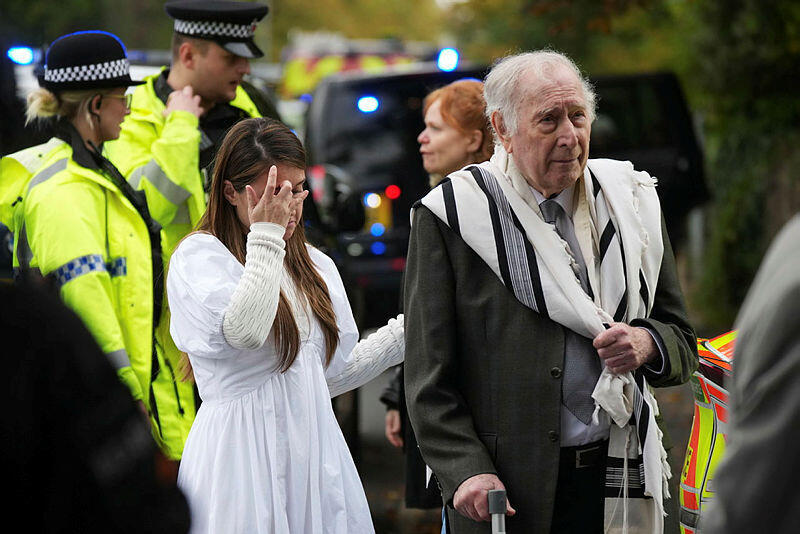
Members of the Jewish community in Manchester, near the scene of the synagogue attack
(Christopher Furlong/Getty Images)
The failure of our leadership
For too long, the institutions that claim to speak for the Jewish people have failed us. Federations, NGOs, and advocacy organizations raised billions, but squandered them on galas, inflated salaries, and social-media vanity projects. Millions were handed to influencers to produce TikToks about falafel while Jewish schools couldn’t afford Hebrew teachers and synagogues begged for basic security.
This is not just incompetence—it is betrayal. Jewish philanthropy has been misallocated for decades, funding performative branding exercises instead of existential necessities. Our ancestors did not fight pogroms, cross oceans, and build a sovereign state so their descendants could watch leaders chase likes and retweets while ignoring our most basic vulnerability: safety.
Had even a fraction of that money been invested in Hebrew immersion, self-defense training, or community security, Manchester might have been prevented. Instead, we paid influencers to dance while enemies plotted.
The failure of the ADL
Even the institutions created to defend Jews from antisemitism have failed. The Anti-Defamation League, once the proud standard-bearer of Jewish security in America, is now paralyzed by politics and mission drift. Its head, Jonathan Greenblatt, speaks endlessly about events overseas while antisemitism surges in his own backyard. Meanwhile, Jewish students are assaulted on campuses, synagogues require armed guards, and Jewish businesses are vandalized.
The collapse of the ADL’s credibility has reached a breaking point. As former FBI official Kash Patel confirmed, the FBI has entirely severed ties with the ADL, citing its misuse of “hate labels” to go after political opponents and conservative groups. Under James Comey, the ADL was treated as a de facto partner of the FBI, embedding agents and shaping surveillance priorities. That era is over. Patel’s blunt words cut through the illusion: “This FBI won’t partner with political fronts masquerading as watchdogs.”
For an organization founded to defend Jews, being dismissed as a “political front” by federal law enforcement is devastating. Instead of building alliances across government and law enforcement to protect Jews on the ground, the ADL indulged in soundbites, partisanship, and virtue-signaling. The result: the ADL no longer commands trust—neither from American Jews who look to it for defense, nor from allies in Washington who once expected it to lead with clarity and strength.
The ADL is flush with funding, its brand global, yet its results are paper-thin. Survival in the 21st century requires more than reports and rhetoric. It requires real relationships with those who can secure Jewish communities—local officials, governors, federal agencies, law enforcement. It requires mobilizing Jews into networks of resilience and self-defense. And it requires the courage to say plainly that antisemitism is not an “awareness issue.” It is a security crisis.
Aliyah of the soul
The Jewish people need more than physical Aliyah to Israel—we need Aliyah of the Soul. This means rejecting the exilic mentality of passivity and reclaiming the mindset of sovereignty wherever we live. It means raising our children not only to know the Holocaust, but to know the Maccabees; not only to remember the gas chambers, but also Masada, Tel Hai, and October 7th.
Aliyah of the Soul is about reshaping Jewish life so that defense, dignity, and Hebrew identity are not optional but essential. The exile taught us to hide, to shrink, to hope others would protect us. Sovereignty demands we stand tall, in our own language, with our own hands, ready to defend our people.
The call for modern Maccabees
History is unforgiving. The destruction of our Temples came not only from Roman power but from Jewish division and denial. European Jewry was annihilated less than a century ago because Jews were unarmed, powerless, and unprepared for industrialized hatred. Today, the warning lights flash red again. To ignore them is to repeat history’s darkest chapters. We need modern Maccabees—Jews who see self-defense as natural and necessary as lighting Shabbat candles. Jabotinsky himself said Jewish self-defense should be as natural to us as kindling those sacred lights. He understood that without it, the Jew of exile would forever remain at the mercy of others. This is not metaphor but blueprint. Every Jewish community must invest in martial training, Krav Maga, firearms licensing where legal, and coordinated defense. Every Jewish school must teach not only Hebrew and Torah, but resilience, strategy, and leadership in crisis. Self-defense must become a central pillar of Jewish identity. A Jew who cannot defend himself is prepared for exile. A Jew who can is prepared for sovereignty.
Israel’s responsibility
The State of Israel must also admit its failures. For decades, Israeli governments assumed Jewish safety abroad was someone else’s problem. They assumed “Never Again” meant the IDF could defend Israel and that Diaspora Jews could fend for themselves. But October 7th proved otherwise. If Israel—the Jewish state with one of the world’s most powerful armies—can be infiltrated and massacred, how much more vulnerable are unarmed Jews in Paris, London, or New York? Israel must lead not only by defending its borders but by exporting its culture of resilience. Krav Maga should be taught in every Jewish community center. Hebrew immersion must be fully subsidized worldwide. Israelis must mentor Diaspora Jews, teaching that strength and identity are not luxuries but lifelines.
A new Jewish priority
The survival of the Jewish people in the 21st century depends on three urgent priorities:
1. Self-Defense: Every Jew must be trained to defend himself and his community. Self-defense is not extremist. It is existential.
2. Hebrew Revival: Hebrew is the heartbeat of sovereignty. Without it, we are a museum piece, not a nation. With it, we are a people with a future.
3. Institutional Revolution: Jewish philanthropy must abandon vanity projects and redirect billions into security, education, and infrastructure. The influencers will fade, but the foundations we build will endure.
The hour is late
Manchester is not an isolated tragedy. It is part of a global pattern of violence that began long before October 7th and will continue until we take responsibility for our survival. The exile is over. The sovereign era has begun. Sovereignty is not only about a flag in Jerusalem—it is about a mindset in every Jewish heart. We are called to repent—not in the narrow sense of ritual, but in the profound sense of national teshuva. We must repent for assuming history’s tides would not return. We must repent for our leaders’ blindness, for our institutions’ waste, and for our own complacency. The question is stark: will we remain Jews of exile, trembling before our enemies, or will we become Jews of sovereignty—proud, unafraid, and prepared? Never Again is not enough. Only Hebraization, only Aliyah of the Soul, only the rise of modern Maccabees can secure our future. The hour is late. The danger is real. The choice is ours.
Adam Scott Bellos is the Founder and CEO of The Israel Innovation Fund (TIIF) and the author of the forthcoming book Never Again Is Not Enough: Why Hebraization Is the Only Way to Save the Diaspora. He leads initiatives including Wine on the Vine, Project Maccabee, and the Herzl AI Project, all dedicated to building Jewish cultural revival, resilience, and sovereignty in the 21st century.