

Claims that “Trump is unpredictable” and that “no one can know what he will do” are repeated constantly; but that is not entirely accurate; an analysis of the man suggests that overall he is fairly predictable, and his moves can be anticipated; to understand his conduct, one must examine his personality profile, his actions over the years and the specific situation at hand.
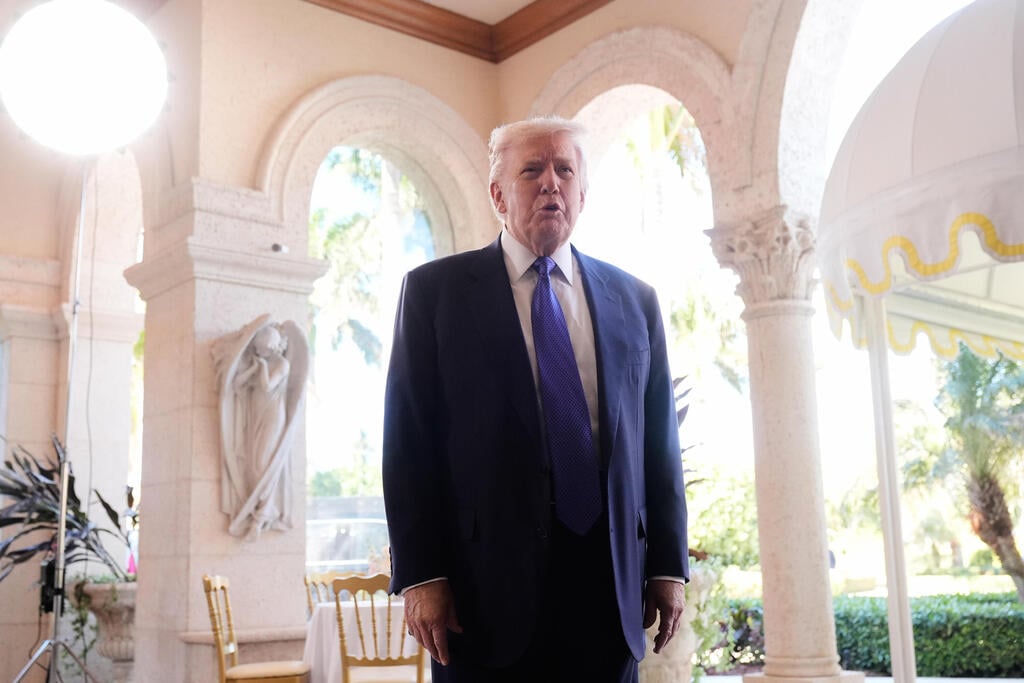
US President Trump
(PHoto: AP Photo/Mark Schiefelbein)
In 1987, when Trump was a successful businessman, he published his bestseller "The Art of the Deal"; the title was no coincidence, echoing the famous "The Art of War", written in the sixth century BCE and long a source of inspiration for military leaders, statesmen and strategists; in those years Trump sought to position himself as a master negotiator and a model for leaders, politicians and business figures aiming to maximize outcomes and achieve success in deals.
In his book, Trump outlined five principles for success: think big; make sure you do not lose; use leverage; control the narrative and public perception; and act aggressively; from a psychological perspective, according to the DSM, often called the “Bible” of psychologists, the U.S. president fits many traits associated with a narcissistic personality type — grandiosity, preoccupation with power and image, a sense of being “special,” a strong need for admiration, limited empathy, feelings of superiority, envy, and arrogance.
When civil protests erupted in Iran, Trump tweeted that “help is on the way”; the protesters who expected assistance received none; thousands were killed by Revolutionary Guard forces, and criticism of Trump grew both inside Iran and in the United States, where the phrase “Trump Always Chickens Out” (TACO) resurfaced.
Yet the criticism overlooks a pattern: his behavior has often been consistent — reflected in the lack of a U.S. response when Iran attacked Saudi Aramco’s oil and gas facilities in 2019 during his first term; in the swift agreement he reached with the Houthis in May 2025 after a brief armed clash; and even in the limited strike on Fordow during the Rising Lion war campaign, after which he quickly declared the war over and pushed both sides toward an end.
Alongside avoiding prolonged wars, Trump has repeatedly sought deals and regional agreements; early in his current term he worked to end the “Swords of Iron” war and the Russia–Ukraine war, helped secure an agreement between India and Afghanistan, and even proposed a settlement between Egypt and Ethiopia; therefore, given his character, his comfort zone and the authority he holds as commander in chief, it is likely he will use his tools not to pursue decisive military victory but to secure a deal that reinforces the image he seeks to cement as his legacy; even if force is used, it would likely be limited — signaling rather than toppling — aimed at returning the parties to negotiations rather than overthrowing a regime.
Any agreement he ultimately reaches will likely be wrapped in gold, presented as the best in the world, and himself portrayed as the greatest dealmaker in the universe.
Col. (res.) Doron Hadar served as commander of the Crisis Management and Negotiation Unit.