

In the 1970 classic “Patton,” the famed World War II general visits the North African front, where a senior British commander assures him the Royal Air Force has complete air superiority. Seconds later, German planes attack the base. Taking cover under a table with the British officer, Patton quips, “You said you had complete air superiority?”
I thought of that scene on Tuesday night, as U.S. President Donald Trump declared victory over Iran during a press conference, while my family and I took shelter in our safe room.
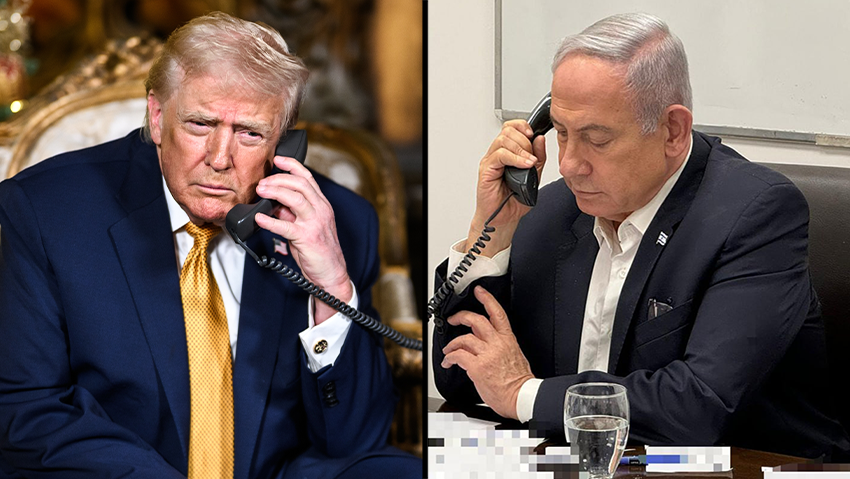
Donald Trump and Benjamin Netanyahu
(Photo: Prime Minister's Office, Shutterstock)
The moment captured a deeper truth. Despite the close partnership between Washington and Jerusalem, and the historic cooperation between the U.S. military and the Israel Defense Forces, America and Israel are living in entirely different realities.
From an American perspective, the near destruction of Iran’s military capabilities, damage to its nuclear infrastructure and the elimination of senior leadership can be framed as a victory.
For Israel, the standard is far stricter.
Any outcome that allows Iran to rebuild its nuclear and ballistic programs, retain enough enriched uranium for multiple nuclear weapons and continue supporting terrorist proxies is not a victory. It is a pause.
And it is a pause that could last five years, perhaps ten, before Israel is forced to fight the same war again, possibly alone.
This gap in perception is not theoretical. It will shape what comes next.
Much will depend on Iran’s response to the administration’s 15-point peace plan, and on whether Washington agrees to a temporary ceasefire during negotiations. Israel’s concern is familiar. Iran may accept principles in theory, then stall, dilute and avoid implementation in practice.
We have seen this pattern before. The 20-point Gaza plan stalled when Hamas refused to disarm. The risk now is that Iran follows the same path, agreeing in principle while preserving its core capabilities.
Israel cannot afford that outcome.
A difficult reality
Heavily dependent on American munitions, fuel and diplomatic backing, Israel would struggle to sustain a prolonged campaign against Iran on its own. As in previous conflicts, Washington retains the leverage to halt Israeli operations.
That reality makes the next phase critical.
 Michel Oren
Israel must press for clear, enforceable guarantees before any agreement takes shape. Not vague assurances, not frameworks, but concrete commitments that address the core threat.
At the same time, Israel must act with urgency, both in Iran and in Lebanon, to shape the strategic environment before diplomacy locks in outcomes it cannot reverse.
This is the central tension of the moment. For the United States, the war may be ending. For Israel, the question is whether it has truly ended at all.