


Just before we start talking about a “new Middle East” and a regional alliance against Iran and Hezbollah, it may be worth returning to reality and discussing the more critical goals of this war — and those that may not be achievable.
Among the Israeli public, and perhaps also in the American media, a sense — or perhaps a hope — has taken hold that the objective of the current war is the overthrow of the ayatollahs’ regime in Iran. It may sound appealing, especially in the American media, to replace Iran’s evil authoritarian regime and thereby bring redemption to Zion and to the people living in America. Yet that objective is still nowhere on the horizon.
(Photo: Reuters)
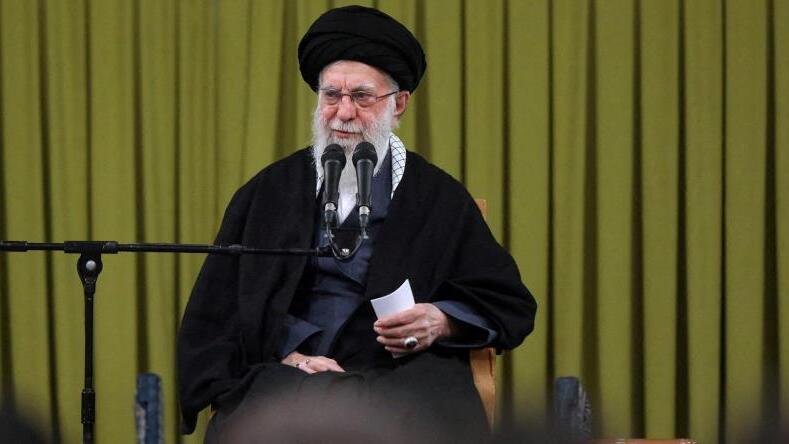
There are no masses in the streets of Tehran or other Iranian cities. There is no broad public protest like the one seen there only a few months ago. Nor are there minority militias seizing territory in western Iran. The elimination of Iran’s supreme leader, Ayatollah Ali Khamenei, along with dozens of other senior Iranian officials — despite its symbolic importance — is far from signaling the collapse of the regime.
The assassination removed a tyrant, a dictator and a fierce opponent of Israel and the United States. But he was already of very advanced age — 89. Moreover, Khamenei and the Islamic Republic established very clear succession mechanisms, allowing those next in line to take power and keep the regime intact.
Quite a few politicians and ministers in Prime Minister Benjamin Netanyahu’s government mainly offer their supporters hollow promises that “the war will continue until the end,” as National Security Minister Itamar Ben-Gvir has said. Yet it is unclear what that “end” actually means or what the ultimate objective is.
The critical goal of this war should be halting Iran’s nuclear program and severely damaging its ability to launch ballistic missiles. In other words, the aim should be to force the new leadership in Tehran — whether led by Mojtaba Khamenei, Ali Larijani or anyone else who survives the current turmoil — to accept the terms presented by President Donald Trump’s envoys during earlier talks with Iran.
War, or the use of military force, should serve as a tool to achieve a broader diplomatic objective. Reaching that objective — stopping Iran’s nuclear program — could represent an enormous American-Israeli achievement with far-reaching implications for the entire Middle East.
Avner Vilan, a former senior security official and an expert on Iran’s nuclear program, wrote on X on Thursday that Iran likely still possesses the stockpile of enriched uranium it held on the eve of Operation Rising Lion — about 450 kilograms enriched to 60%. According to Vilan, that amount could suffice to produce roughly 11 to 12 nuclear bombs once enriched to weapons-grade levels of 90%, a process that could take only a few weeks if Iran has access to a secret enrichment facility.
For that reason, the transfer or destruction of that uranium stockpile must be part of any future agreement to end the war between the United States and Iran. In the meantime, however, another critical problem has emerged along Israel’s northern border — one no less urgent than Iran: Hezbollah.
The sweeping U.S.-Israeli attack on symbols of Iranian power, including Khamenei, led the Shiite organization to decide to join the war rather than remain on the sidelines, as it did during the days of Operation Rising Lion. Suddenly, many Israelis discovered that Hezbollah still retains significant operational capabilities, despite the widespread sense in Israel that the organization had been neutralized after a series of brilliant operations in September 2024.
Without that chain of extraordinary and daring operations in September 2024 — the exploding pagers, the assassinations of senior Hezbollah officials and, above all, the severe blow to the terror group’s rocket and missile stockpiles — it would not have been possible to conduct the current campaign against Iran, with the skies over Tehran looking like a training ground for the Israeli Air Force
The truth must be said: without that chain of extraordinary and heroic operations in September 2024 — the exploding pagers, the assassinations of senior Hezbollah officials and, above all, the severe blow to the group’s rocket and missile stockpiles — it would not have been possible to conduct the current campaign against Iran, with the skies over Tehran looking like a training ground for the Israeli Air Force.
Had Israel gone to war with Iran while Hezbollah remained the organization it was before September 2024, Israel would look very different today, with enormous damage to the home front. The actions of the Mossad and Military Intelligence during those critical weeks were what helped reshape the Middle East.
 Avi Issacharoff Photo: Yuval Chen
Back to March 2026: Hezbollah is now a far weaker organization with more limited capabilities. Even so, it continues to attack northern Israel and at times the country’s center. It still possesses a large stockpile of rockets, drones and even ground forces. This problem will not disappear anytime soon, and it is unclear whether Israel has the ability to address it without enlisting the Lebanese government and the Lebanese Armed Forces in the effort. It may be that future U.S. negotiations with Iran should also include a demand that Hezbollah be disarmed.
Addressing both the Iranian issue and the Hezbollah problem could indeed produce dramatic change in the region. Iran’s decision to attack a range of Arab states surrounding it in order to pressure them to push Washington to end the war was an enormous gamble.
It is possible that Arab leaders will fold and seek to end the war in exchange for another handful of dollars. But it is more likely that the wealthy oil states — which have long viewed Iran as a genuine threat — will press the United States to act against Iran with the full extent of its military power in order to bring about a real change in the regional balance.