

No one knows whether there will be a strike on Iran. Not the prime minister. Not the IDF chief of staff. Not the chairman of the Joint Chiefs of Staff. Even the president of the United States, it seems, has yet to decide. And even if he has, circumstances can change. No one knows what tomorrow will bring.
That means a strike is a plausible option, not a foregone conclusion. Within that reality, Israel’s communications policy toward the United States is sound. One word captures it well: silence. There are almost no official statements about the need to attack. Aside from unnecessary remarks about “textile factories,” relative caution has been maintained.
The advantages are clear. Silence preserves ambiguity vis-a-vis Iran. It helps prevent unnecessary escalation. Just as important, it takes into account a strong strain of American public sentiment opposed to regional entanglements. Fewer public calls for a strike reduce the likelihood of retrospective accusations of a “Zionist conspiracy.” The beneficiary is not only Israel but also the Jewish community in North America, which is often the first to face antisemitism linked to such claims.
But that same communication prudence does little to calm the Israeli public. It does not help people sleep at night. It does not ease anxiety. It certainly does not quiet the new national pastime of speculation: will there be a strike or not?
The reason is simple. The average Israeli is not part of the official calculus guiding Israel’s messaging. There is no coherent communications policy directed inward to balance the psychological impact of the moment. There are no consistent messages, no clear definition of who speaks, how and when. An occasional IDF spokesperson’s statement is welcome, but insufficient.
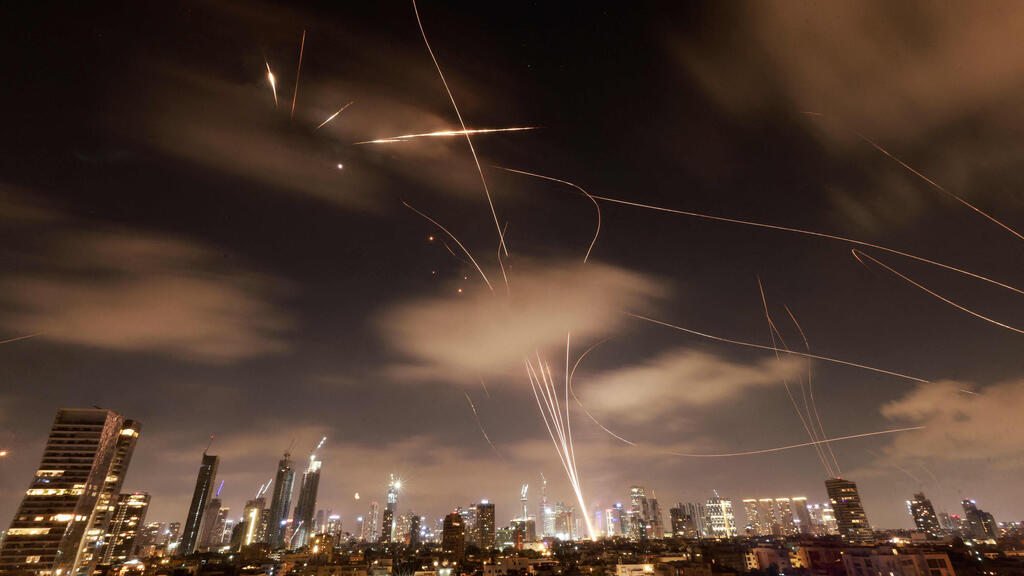
Air defense systems intercept Iranian missiles above Tel Aviv
(Photo: Menahem Kahana/ AFP)
To preserve national resilience, the public also needs to hear that the health system is functioning, that emergency stockpiles are prepared, that transportation will continue to operate, that the economy is strong and that whatever comes, the country will get through it together. Not only as a matter of faith, but as a matter of managing reality.
Instead, the prevailing approach appears to be “we’ll cross that bridge when we come to it.” That is a serious mistake. From Dan to Eilat, an entire public has been on edge for weeks. Breaking news alerts and Telegram messages rattle nerves. Israelis are not being spoken to directly, yet they, too, must be taken into account. Ness Ziona deserves attention no less than Virginia.
This is not a luxury. The state has a responsibility to ensure the safety of its citizens. Projecting stability is part of that responsibility. Neglecting the Israeli audience undermines national resilience.
In the best-case scenario, the result will be fatigue that shortens the public’s staying power after a strike. In the immediate term, it simply makes people less patient and more irritable. It fuels friction, traffic accidents and a combustible public atmosphere. In other words, it brings out a diminished version of ourselves.
Alongside its policy of silence toward Washington, Israel must launch a resilience campaign directed at its own citizens. That does not mean exposing intelligence. It does mean conveying that if a strike occurs, matters will be under control.
This can be done calmly, without alarmism. Hospital directors can speak about preparedness. The prime minister and emergency officials can issue coordinated statements. The strength of the economy can be emphasized without harming the stock market. The readiness of transportation and energy systems can be demonstrated.
This list is partial, but the point is clear. Shaping national morale cannot be left solely to editorial decisions in media outlets. It requires initiative. A stronger home front makes the entire country more resilient. Neglecting it will ultimately narrow the room for maneuver at the front as well.