

U.S. Vice President J.D. Vance’s recent statement that Washington is focused on preventing Iran from acquiring nuclear weapons, while leaving it to the Iranian people to replace the regime, reflects a basic understanding in Washington. Despite President Donald Trump’s earlier remarks during protests in Iran, it now appears more likely that the United States will use its considerable military presence in the Gulf to push for an agreement with the current regime, rather than set regime change as an objective.
Senior officials in Washington’s security establishment seem to recognize that the United States lacks a cohesive internal opposition in Iran with which it can work. In addition, Washington has no intention of deploying ground forces and does not plan to wage a broad, sustained air campaign. These are three necessary conditions for bringing down the regime in Tehran.
Gallery
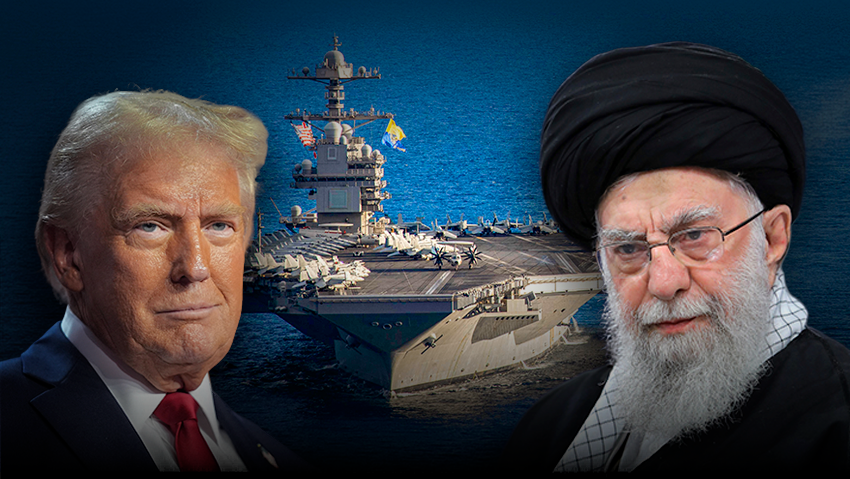
Donald Trump, USS Gerald R. Ford aircraft carrier, Ali Khamenei
(Photo: Maxwell Orlosky / US Departmetn of Defense/ AFP, AP/ Evan Vucci, Office of the Iranian Supreme Leader via AP)
Even if the improbable were to occur and the regime did collapse, Iran would not necessarily become a democracy. A more likely scenario is that it would descend into internal power struggles that could push the country toward civil war.
It should be emphasized that U.S. forces stationed in the Arabian Sea region are capable of inflicting significant damage on Iran. Yet even though Iran may be in its weakest position since the 1979 revolution, the regime remains sufficiently resilient. In the event of an American strike, it would likely seek to endure, understanding that its victory would lie in not losing, meaning simple survival.
It is also important to stress that even if the United States were to eliminate Iran’s supreme leader, Ayatollah Ali Khamenei, the regime would not necessarily collapse. The system is not built solely around his persona, dominant as it may be. In such a scenario, the Islamic Revolutionary Guard Corps, which has no intention of relinquishing its control, would likely appoint another leader and continue governing.
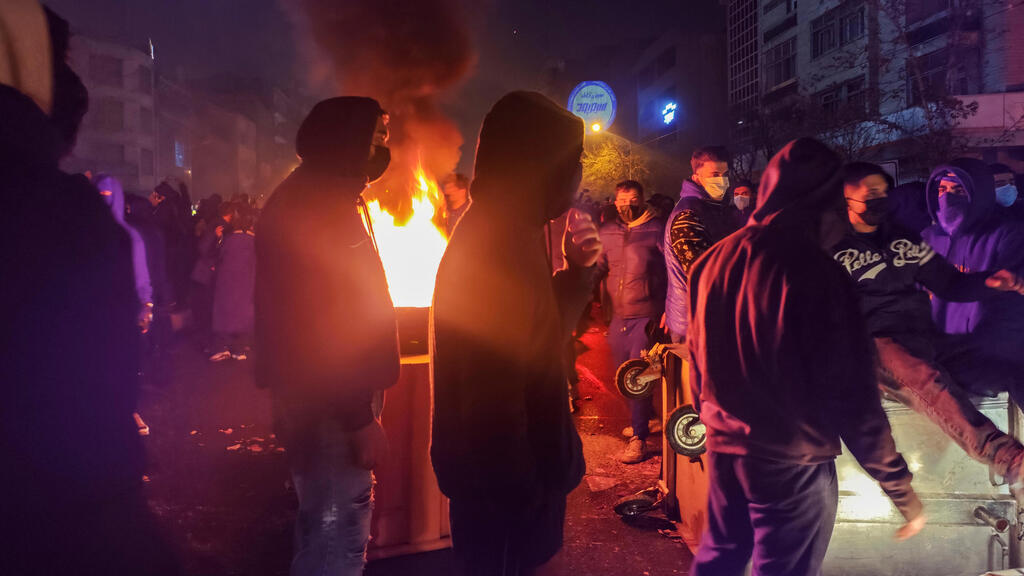
Tehran on Janaury 8
(Photo: Anonymous/Getty Images)
And even if the unthinkable did happen and the regime fell, there is no guarantee that a stable democratic order would follow. The greater probability is a struggle among competing factions, with the potential to plunge Iran into chaos.
 Danny (Dennis) Citrinowicz
If there is one lesson from recent confrontations with Iran, it is that the regime’s capabilities should not be underestimated. Although recent events have demonstrated that it is vulnerable and not omnipotent, it still retains the ability to harm Israeli and American interests and to deploy its remaining capabilities.
Looking ahead, it is clear that the current regime will struggle to restore its standing without a dramatic shift in policy, particularly given Iran’s severe economic situation and the absence of a visible horizon for improvement. In the short term, however, even an American military strike would not necessarily bring it down. On the contrary, such an attack could drag the region into a dangerous and potentially unprecedented escalation.
Danny (Dennis) Citrinowicz is a senior researcher in Iran and the Shiite Axis Program at the Institute for National Security Studies