

“Follow the money” originated as a line from the 1976 film All the President’s Men. It was spoken by the character Deep Throat to Bob Woodward as a guide to solving the Watergate scandal. The principle remains true today.
Everyone is focused on Iranian enrichment, and rightly so. But attention must also be placed on the money.
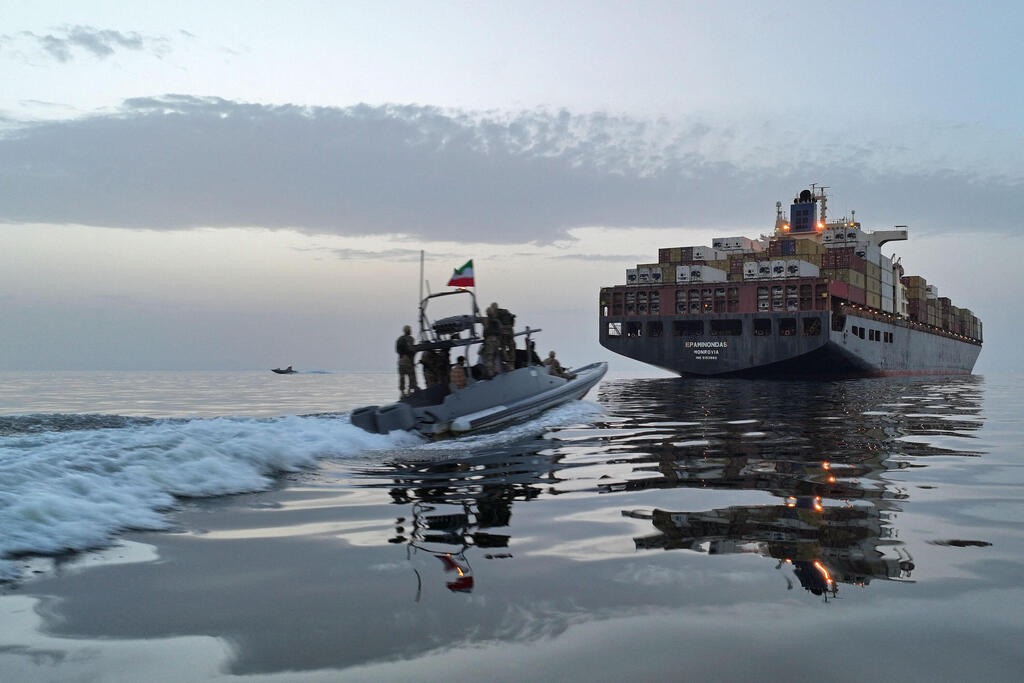
(Photo: Meysam MIRZADEH / TASNIM NEWS / AFP)
The new wars of the 21st century
The 9th President of Israel, the late His Excellency Shimon Peres, told me in the last century that the new wars of the 21st century would be economic wars, media wars, ideological wars, and proxy wars. America is fighting an economic war with Iran right now.
The United States has done a trillion dollars’ worth of damage to Iran, but Iran has done two trillion dollars’ worth of damage to the U.S. economy, and likely ten to fifteen trillion dollars to the global economy. You can be sure Iran is watching the poll numbers for the midterm elections in November like a hawk, along with the impact the oil embargo is having on the world economy.
Lessons from the hostage crisis
Isser Harel, the founder of Mossad, Israeli intelligence, told me in his home on September 23, 1980, with senior advisor to Prime Minister Begin, Reuben Hecht, in the room, that when Ronald Reagan put his hand on the Bible, the hostages would be released.
Jimmy Carter was actually ahead in the polls at the time, but Harel was predicting something astonishing. The moment Reagan put his hand on the Bible, my phone rang. It was Reuben Hecht saying, “Harel is a prophet.”
What we did not know was what Harel knew. He knew Cyrus Vance was negotiating through the Algerians to buy back the hostages, offering one billion, two billion, then five billion. But on the morning of the inauguration, at 4:21 a.m., Jimmy Carter wire transferred 7.9 billion dollars from the Federal Reserve to the Bank of England to buy back the hostages.
Iran has been playing this game for a very long time.
Kharg Island: the regime’s lifeline
The goose that laid the golden egg is Kharg Island, because Iran’s economy is totally tied to the billion barrels of oil it exports annually. Once Kharg Island is blockaded, the money will stop and the terror network will be bankrupt.
The persecutors of the Iranian population, many of them, will quickly defect when they no longer get paid. The only way they can save themselves will be to join the protesters and oppose the regime. If the government is unable to pay the wages and bonuses of its security forces, its power will implode.
The battle over frozen assets
One of the major issues in the negotiations over the ceasefire has to do with Tehran’s frozen assets, which total more than 100 billion dollars. Sanctions have been imposed since 1979.
On April 10, before the first round of ceasefire talks began in Pakistan, the Speaker of Iran’s Parliament, Mohammad Ghalibaf, said that Iranian revenues frozen in foreign banks must be released before any negotiations could begin.
These assets have been frozen all over the globe. Japan is holding about 1.5 billion dollars, Iraq 6 billion, China 20 billion, India 7 billion, while countries like Luxembourg hold about 1.6 billion and Qatar about 6 billion.
What would releasing the 100 billion dollars in assets achieve? It would throw a lifeline to the regime and undermine the hopes of the Iranian people to overthrow it.
A final decision
Iran’s economy is crumbling. Prices have risen 40 percent since the war began, and authorities are worried about making payroll.
Donald Trump needs to deliver a death blow to Iran by blocking Kharg Island. There is no possibility that the United States can negotiate in good faith with these devils.
Dr. Mike Evans has written 120 books and is a #1 New York Times bestselling author. He is the founder of the Friends of Zion Museum in Jerusalem, the ten Boom Museum in Holland, and Churches United with Israel, the largest Christian Zionist network in America, with more than thirty million followers.
First published: 09:26, 05.04.26