


Israel and Iran are preparing for another round of conflict. The assessment in both is that it will happen, but not soon. In Tehran, officials fear Israel will try to finish what it started, meaning an attempt to topple the ayatollahs’ regime.
Supreme Leader Ali Khamenei faces a dilemma over whether to pursue talks with the United States or rebuild Iran’s military capabilities and restore its ability to threaten Israel. Israeli officials say they see no signs that Iran has renewed its nuclear weapons project, but they warn of the risk of miscalculation.
Gallery
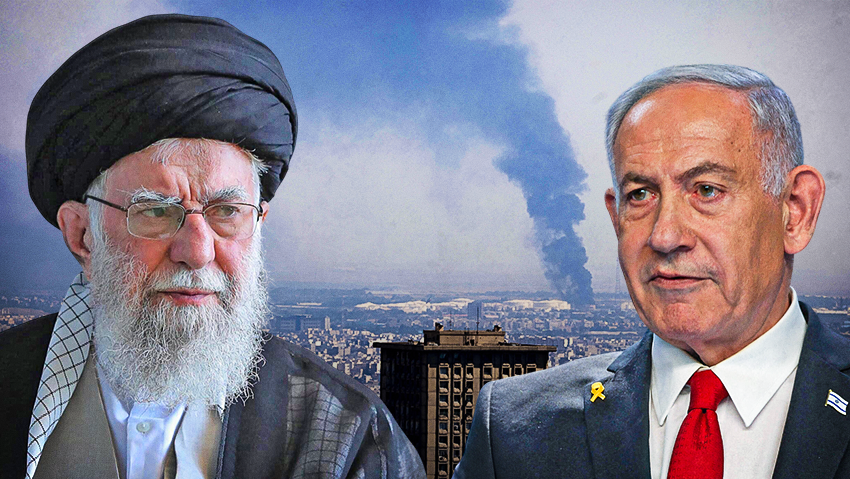
Ali Khamenei and Benjamin Netanyahu
(Photo: gettyimages, Atta Kenare/ AFP, Reuters/ Ronen Zvulun)
What is happening in Iran mirrors events in Lebanon. On one side, voices inside Iran are calling for negotiations with Washington to dismantle the nuclear and ballistic missile programs in order to address dire economic problems, especially severe water shortages that threaten the regime’s survival. On the other side are hard-line conservatives demanding revenge for the humiliation Iran suffered in the twelve-day war and urging Khamenei to begin rapid reconstruction of the military capabilities that were lost so Iran can once again threaten Israel.
Both camps, moderates and hard-liners, fear Israel will exploit the fact that most of Iran’s significant air defenses were destroyed in the war. Those systems once provided strategic protection against an airstrike. There is concern that Israel will now try to topple the regime, something President Donald Trump prevented in the final days of Operation Am Kalavi. Israel is monitoring developments across Iran’s military branches and is worried about a miscalculation.
For now, Khamenei appears inclined toward the hard-line path led by the Revolutionary Guard. Despite extensive efforts by the Trump administration, both secret and public, to launch talks with Iran on the nuclear and ballistic missile issues, the supreme leader refuses to send envoys to negotiations, even secret ones in mediating states such as Oman, Qatar or European countries.
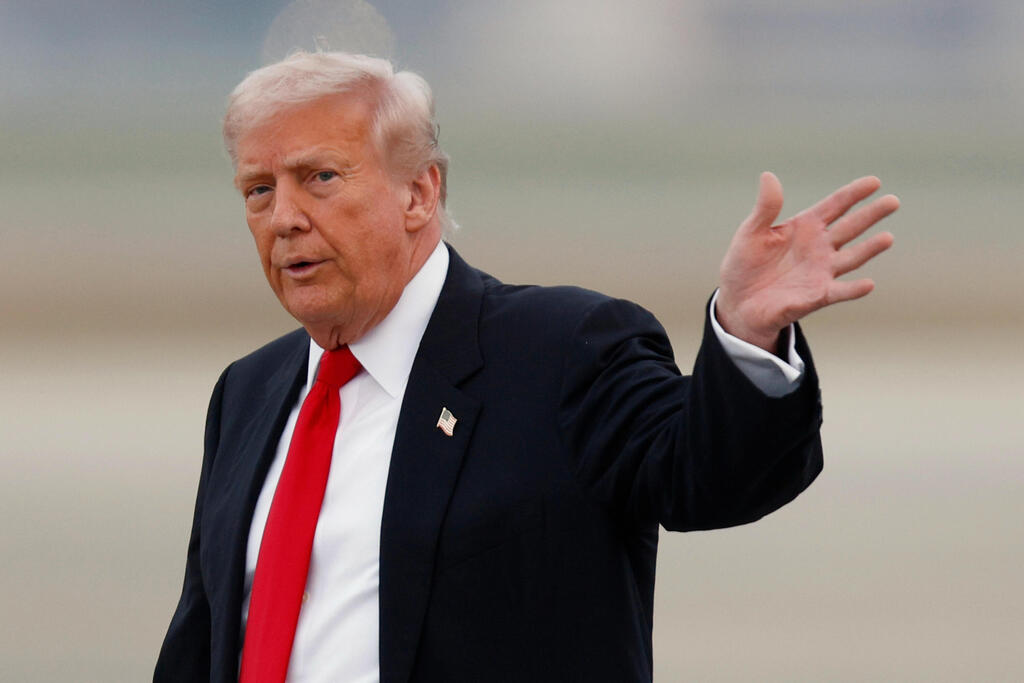
U.S. President Donald Trump
(Photo: AP/ Luis M. Alvarez)
Washington is offering incentives and increasing sanctions, but nothing has worked. Khamenei says openly he has lost trust in the United States after the joint U.S.-Israeli strike on the Fordo facility, and he will not enter talks. Some Israeli officials believe that without negotiations and a long-term diplomatic agreement to prevent Iran from acquiring nuclear weapons and advanced missiles, another round of war will be unavoidable. A senior Israeli security official said, “We monitor what is happening in Iran very closely. Every day we check whether the Iranians are crossing any red lines or preparing something that could escalate the situation. If they cross the red lines we set for ourselves, we will act without hesitation to stop the threat.”
For now, neither Washington nor Jerusalem believes military action will be required soon, and they see no concrete Iranian plans to strike Israel in retaliation for the humiliation of Operation Rising Lion.
Media reports in the United States and Arab countries indicate Iran has not resumed enriching uranium. Although Iranian Foreign Minister Abbas Araghchi and other officials insist Iran’s right to enrich uranium is not up for debate, the country does not need to enrich more. Iran holds about 400 kilograms of uranium enriched to 60 percent and several hundred more enriched to 20 percent.

the Fordo facility before the U.S. strikes
(Photo: AFP)
The Israeli Air Force did not bomb or destroy these stockpiles because they were buried deep underground and because Israel wanted to avoid causing a nuclear accident or radioactive contamination during the attack on Iran’s nuclear sites. Iran could retrieve these stockpiles and theoretically build about five nuclear bombs, although experts say this remains hypothetical. Most enrichment facilities have been taken offline for an extended period, according to experts, including former Mossad chief Yossi Cohen.
Iran focuses on air defenses and ballistic missiles
The good news for Israel is that there is no indication Iran is trying to develop an actual nuclear weapon using the enriched uranium it already possesses. Instead, Iran is focused on acquiring long-range and strategic air defense systems that could rebuild its protective shield. The country’s skies are currently exposed to Israeli military capabilities.
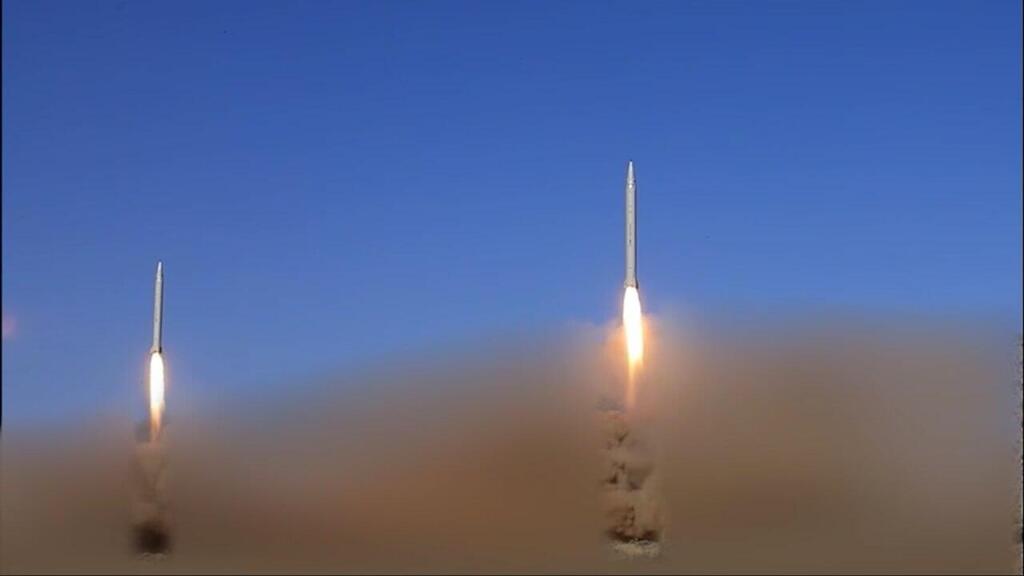
Iranian ballistic missiles launched towards Israel
Iran is pursuing two tracks. One is an attempt to purchase air defense systems from China, Russia, North Korea and any supplier willing to sell. Russia needs its systems for its own use, and China is reluctant to violate a UN Security Council resolution that bans supplying weapons to Iran. The second track is domestic manufacturing of air defense systems modeled after Russia’s S-300 and S-400 systems. Here too Iran faces shortages of components, spare parts and raw materials from the West.
Iran is also trying to rebuild its ballistic missile arsenal, again mainly through foreign suppliers. It recently unveiled new long-range missiles that it claims can defeat air defenses in Israel and the United States. Israeli officials do not dismiss the rhetoric, but for now it appears Iran is still unable to produce ballistic missiles, cruise missiles and drones at the scale it did before the war. These efforts are in the early stages.
Iran believes its ballistic missiles were the only system that effectively damaged Israel during the twelve-day war, so it is now focused on rapidly producing long-range missiles to deter Israel from launching another strike. The program is also meant to deter the United States and pressure the international community to ease sanctions through fear.
Iranian Foreign Minister Araghchi recently claimed Iran’s missile stockpile now surpasses its prewar arsenal in both quality and quantity. Israeli and U.S. officials doubt this and argue the claim is aimed at deterring Israel while Iran’s air defenses remain weak.
Tehran warns: If Israel strikes Hezbollah, we will not sit idle
Iran has not abandoned its regional proxy network. It continues to arm, finance and support groups led by Hezbollah, although these efforts are also hampered. According to the U.S. Treasury Department, the Revolutionary Guard has transferred about one billion dollars to Hezbollah this year to rebuild its capabilities. The fall of the Assad regime in Syria in December 2024 and Lebanon’s February 2025 ban on Iranian flights disrupted Iran’s land and air routes for moving weapons, technology and funds. Iran and Hezbollah have turned to alternatives including smuggling through Turkey and Iraq, seaports and money-transfer networks. They continue to rely on smuggling routes along the Syria-Lebanon border despite Syrian and Israeli countermeasures.
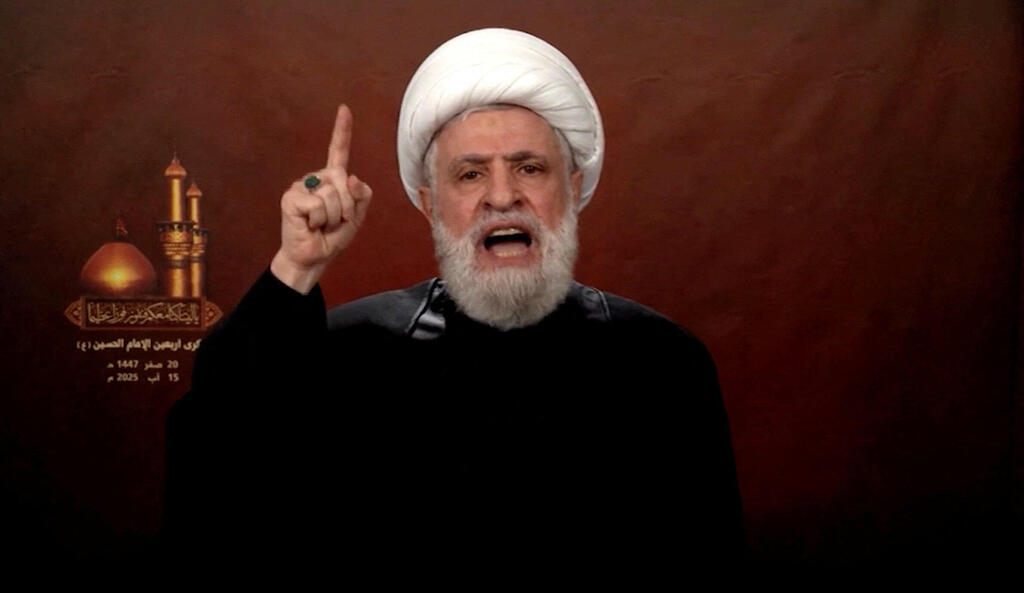
Hezbollah chief Naim Qassem
(צילום: Al Manar TV/Reuters)
Recent statements by senior Revolutionary Guard officials and Iranian lawmakers warn that if Israel attacks Hezbollah or if Hezbollah attacks Israel, Iran will not remain idle. Some dismiss the threats, but Israeli intelligence takes them seriously and warns against complacency. These concerns are driving Israel’s rapid multibillion-shekel investment in new warning systems, intelligence capabilities, air defenses and offensive weapons that will be needed for the next round with Iran.
Israeli officials in Jerusalem and at military headquarters in Tel Aviv hope these capabilities, once operational, will deter Iran from initiating conflict. Still, the assessment is that another confrontation with Iran is almost inevitable, even if not imminent. Israel must prepare quickly and decisively, they say, without the delays that occurred in the past.
A bitter dispute is now unfolding between the Finance Ministry and the Defense Ministry over Israel’s 2026 defense budget. The argument is fueled by the belief that another war with Iran is likely in the coming years and that anything not purchased or produced now will not be ready when needed.