

The continuing threat of war between Tehran and Washington, together with escalating rhetoric on both sides, once again exposes the gap between the deeply flawed memorandum of understanding signed only a month ago and its limited ability to restrain the uncompromising policies of Iran’s Islamic Revolutionary Guard Corps.
The regional deadlock underscores what Israel and the Gulf states understood from the outset: Any agreement that does not neutralize Iran’s ability to threaten the region with nuclear weapons and ballistic missiles, while also addressing its armed proxies in Lebanon, Iraq and Yemen, is little more than an incomplete operation that leaves the underlying disease untouched.
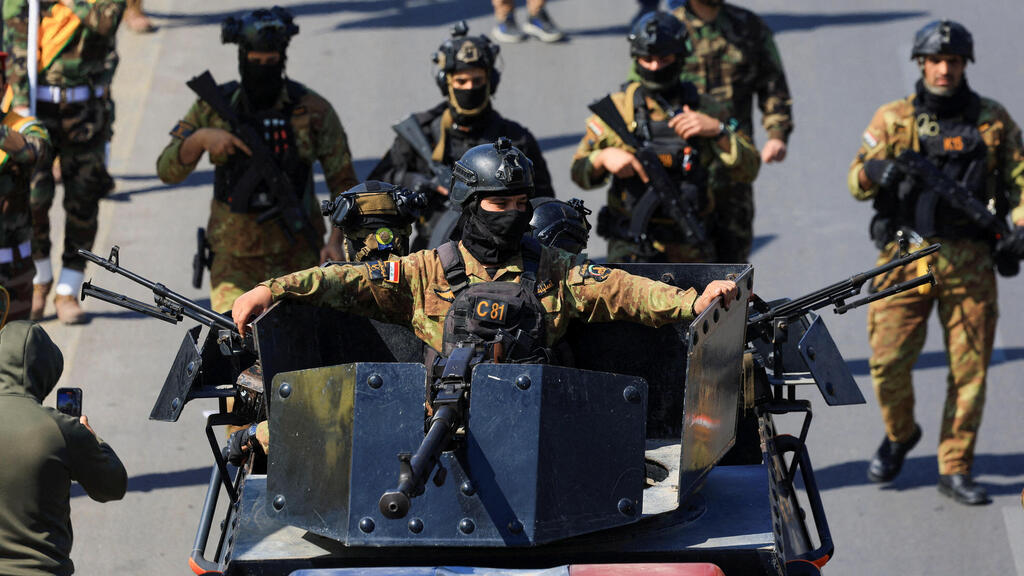
Proxies as a divide-and-rule strategy
The growing confidence of Yemen’s Houthis and Iran-backed militias in Iraq demonstrates why a broader strategy is required against Tehran’s regional network.
The Houthis continue to exploit the Red Sea and Bab al-Mandab for their own purposes and recently declared a naval blockade against Saudi Arabia. At the same time, Shiite militias in Iraq have continued launching drones toward countries across the region.
These actions reflect Tehran’s calculated use of proxies to divide its adversaries and spread instability without bearing the full cost of direct confrontation.
Iran is exploiting U.S. President Donald Trump’s immediate economic interest in resolving the Strait of Hormuz crisis, even if that comes at the expense of confronting the region’s deeper strategic problems.
While prolonging negotiations and using diplomacy to its advantage, Tehran is also rebuilding the ring of pressure formed by its proxies.
The activities of Iran-backed militias in Iraq have recently escalated significantly.
U.S. Central Command announced Wednesday that American and Saudi forces had jointly struck militia targets in Iraq after drone attacks launched from Iraqi territory toward Saudi Arabia.
The attacks caused considerable diplomatic embarrassment for Baghdad. Saudi Arabia issued a forceful condemnation and demanded that Iraq take immediate steps to ensure that such attacks are not repeated.
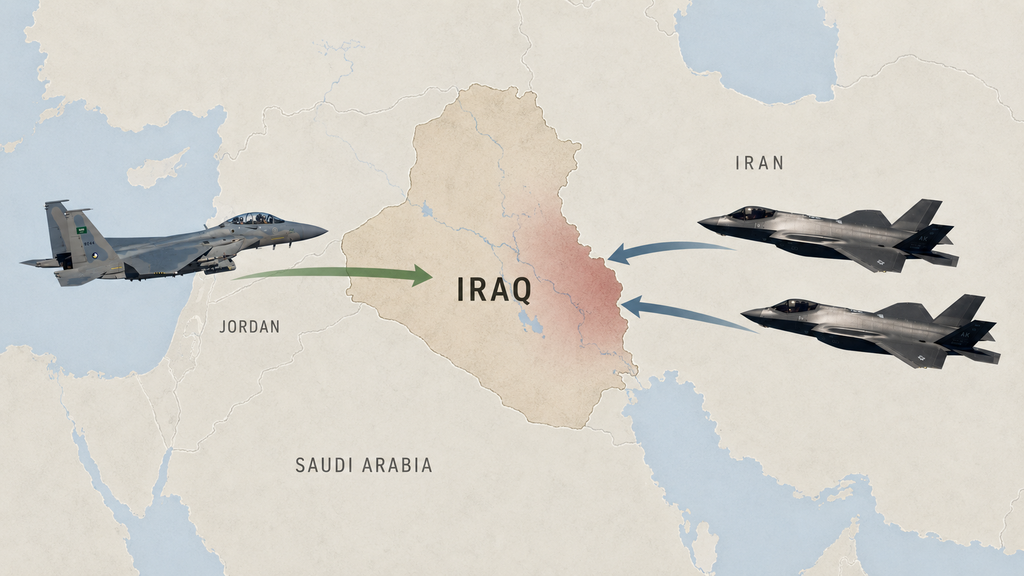
Saudi Arabia, US
(Saudi Arabia, US )
The Saudi response quickly prompted an Iraqi investigation, as Baghdad sought to avoid a serious diplomatic crisis ahead of the new Iraqi prime minister’s planned visit to the kingdom.
Iraq has strong economic and political reasons to preserve its ties with Saudi Arabia.
The attacks on Saudi Arabia were not isolated. Over the past two weeks, drones launched from Iraq have also been intercepted near Jordan’s border on their way toward Israel.
An explosive drone was intercepted near Erbil airport in Iraqi Kurdistan, only a week after more than 20 drones were launched toward the same area. Another drone aimed at the Israel-Syria-Lebanon border region near Mount Hermon was also intercepted.
The scope of these attacks shows that the militias are willing to operate across several fronts.
They are no longer merely an Israeli problem. They have become a threat to the region as a whole.
An opportunity centered on Iraq
Yet this dangerous reality also creates a strategic opportunity.
The attacks, especially those targeting Saudi Arabia, could provide the basis for a coordinated pressure campaign by Washington and the Gulf states against the Iraqi government.
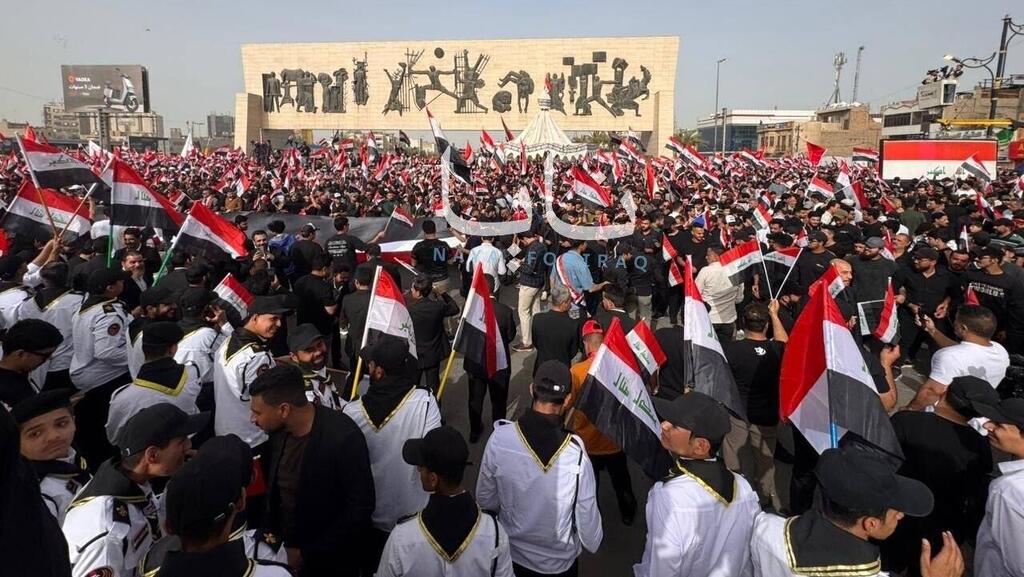
Protests in Iraq against the war involving Israel, the United States and Iran
The goal should be to force Baghdad to take stronger action against the Iran-backed militias operating on its territory.
A central figure in this equation is Iraq’s new prime minister, Ali al-Zaidi.
The young technocrat’s efforts to mediate between Washington and Tehran reflect his desire to build a closer relationship with the Trump administration and demonstrate Iraq’s strategic value to the United States.
That effort comes as Washington continues to demand that Baghdad disarm the Iran-backed militias.
Those militias operate under the umbrella of the Popular Mobilization Forces, known in Arabic as al-Hashd al-Shaabi.
The organization receives legal status and state funding. In 2016, Iraq’s parliament formally recognized it as an official security arm.
The dominance of Shiite parties in post-Saddam Iraq, the militias’ broad parliamentary representation and continuing tensions among Shiites, Sunnis and Kurds have all allowed the armed groups to establish a deep hold over the state with little effective resistance from Baghdad.
Yet domestic opposition to the militias has grown.
The camp led by influential Shiite cleric Muqtada al-Sadr has called for their disarmament and promotes an Iraqi nationalist line aimed at reducing Iranian influence.
Iraq’s most senior Shiite religious authority, Grand Ayatollah Ali al-Sistani, has also supported strengthening state institutions and bringing all armed forces under government authority.
These internal pressures, together with Baghdad’s regional and international maneuvering, reveal a complex political landscape.
On one hand, it provides fertile ground for continued Iranian interference. On the other, it exposes emerging cracks in Tehran’s influence.
Recent reports about al-Zaidi’s diplomatic activity show that he is caught between American pressure and Iranian power.
During a visit to Tehran, he presented a ceasefire proposal that was rejected outright. His subsequent meeting with Trump at the White House provoked anger among militia leaders.
A Gulf strategy of pressure and incentives
This is precisely where the regional opportunity lies.
Saudi Arabia and the United Arab Emirates have repeatedly faced Iranian drones and attacks by Tehran’s proxies. The latest launches from Iraq, followed by coordinated U.S.-Saudi strikes, have only reinforced the urgency of the threat.
The Gulf states understand that a sovereign, stable Iraq free from Iranian control is a major security interest.
 Roy Binyamini
A coordinated strategy with Washington should therefore present Baghdad with a clear combination of pressure and incentives.
The pressure should be economic and diplomatic.
Baghdad must understand that continued militia attacks could bring sanctions, political isolation and the suspension of regional investment.
The incentive should be substantial economic support.
Al-Zaidi is a banker who understands the language of numbers. Saudi Arabia and the UAE could offer Iraq meaningful financial incentives capable of reducing its dependence on Tehran.
Such a coordinated policy could compel Baghdad to confront the militias more decisively.
It could also draw Iraq, gradually, toward the region’s pragmatic bloc.
Iran is now working to rearrange the regional balance in its favor and reinforce its influence.
But a window has opened for an opposing strategic shift.
That change would require the Iraqi government to choose a side and adopt a far more determined approach toward Iran’s continued interference in its affairs.
Baghdad should do so not only to repair relations with Saudi Arabia and the United States, but above all for Iraq’s own sake.
The writer is a former department head at Israel’s National Security Council and an expert on the Middle East and Africa