

The attempt by Minister Miki Zohar to appoint Yair Netanyahu to a senior role in the World Zionist Organization sent shockwaves through the Likud, even among senior figures. Many ministers and Knesset members who normally rush to defend the prime minister fell silent this time. The party’s response machine went quiet. It was not just embarrassing, it was infuriating.
“Zohar caused serious damage to our movement,” one Likud minister said. “It was a huge embarrassment. We defend the father every time we are asked to, and often justifiably so, but how can we defend a deal designed to land his son a cushy job?”
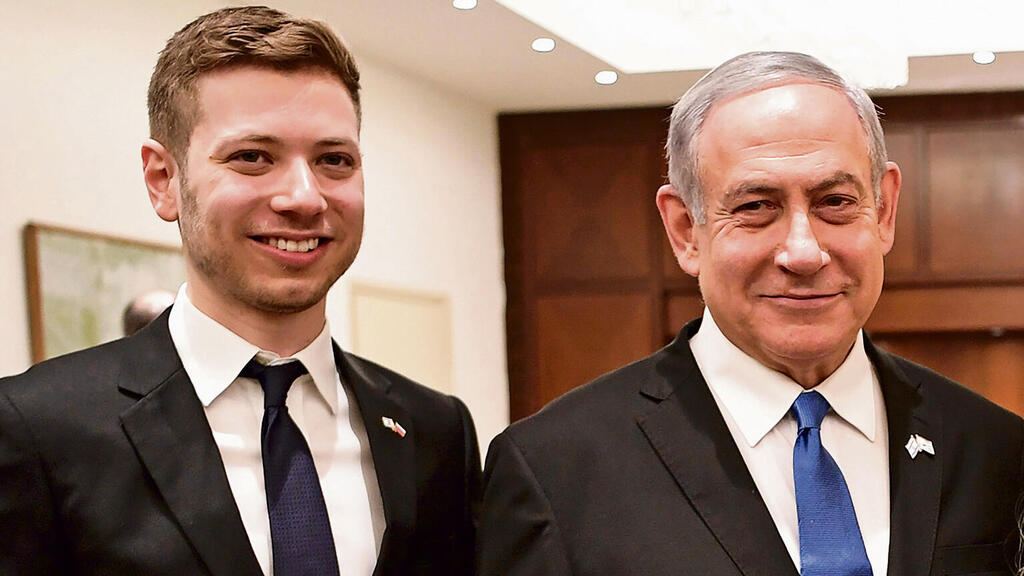
Benjamin and Yair Netanyahu
(Photo:Aleksey Nikolskyi)
Zohar insists on pushing forward and refuses to withdraw Yair Netanyahu’s candidacy. “Even if his father asks me to, I will not remove his name,” he said after the story broke. However, a source familiar with the matter said Yair is likely to withdraw because of the backlash.
The appointment was reportedly crafted in a secret deal known only to Prime Minister Netanyahu and Zohar. Other Likud members first learned about it from the media. Some initially thought it was a joke. The background is key. Netanyahu personally campaigned for Zohar’s election as co-chair of World Likud, granting him authority over negotiations in national institutions. “Netanyahu practically threw himself into Zohar’s campaign,” a senior source in those institutions said. “The day before meeting President Trump, he canceled his schedule to court as many delegates as possible. Now it is clear why, to arrange a job for his son.”
Even Netanyahu’s most sympathetic media outlets avoided covering the embarrassing episode. “I am appalled by Bibi’s nepotism,” wrote former Likud MK Yossi Ahimeir. “Rot is spreading in Likud.” Gil Shmueli, a Likud Central Committee member from Nahariya, fumed in a WhatsApp group, “Have we become a monarchical or semi-monarchical movement like Syria’s Ba’ath Party? It is disgusting. No vision, no integrity, no service to the people.” Another activist added, “The founding fathers would not be proud of what this family has done to the country through its total, shameless control.”
Yair Netanyahu defended himself on Telegram, posting archived stories about other political appointments. He cited Yair Lapid’s sister-in-law, who was given a senior but unpaid post in the WZO before resigning amid criticism, Uri Zaki, the partner of former minister Tamar Zandberg, appointed to head the Herzl Center, and Avigdor Lieberman’s son-in-law, who received a senior position at KKL London.
Missing from the list were examples involving relatives of Shas leader Aryeh Deri, who also landed KKL roles. Moreover, the comparisons ignored the experience and credentials of others who were appointed and the fact that Yair Netanyahu is a deeply controversial figure whose crude language and conspiracy theories raise questions about his suitability for a public role. After years of claiming his son was a private citizen, how can the prime minister now push for him to become an official representative of the State of Israel?
Is Netanyahu rethinking his “full-right” coalition strategy?
Some in Likud believe the prime minister may be reconsidering his hard-right coalition strategy and trying to appeal beyond his base.
If true, it would mark a major political shift. Until now, Netanyahu has zealously protected his partnership with Itamar Ben-Gvir and Bezalel Smotrich. The day after the October 7 massacre, a senior Likud figure told him, “We would welcome Lapid and Gantz even at the cost of dropping Religious Zionism and Otzma Yehudit.” Netanyahu replied, “I am not breaking up my 64-seat coalition. Who will I be left with in three months?”
But this week, a Likud minister said Netanyahu has begun talking about “unity” and is considering reshaping the coalition in anticipation of possible diplomatic agreements. “He is seeing in polls that the public is tired of division,” the minister explained. “To advance the Abraham Accords, he cannot rely on the far-right. He will aim for a broad coalition that does not depend on Ben-Gvir or Smotrich. Why do you think Smotrich quickly apologized for his comment about the Saudis? Because he knows Saudi Arabia is part of the next round of agreements.”
There are also signs of movement on the opposite side. Several opposition figures have recently said they no longer rule out forming a government with Likud under Netanyahu. One of them, National Unity leader Benny Gantz, has spoken of forming a “broad consensus government” after the next elections. Such statements from the center-left could give Netanyahu political cover if he decides to break free from his far-right flank in favor of a more moderate coalition.
The last message from the New Likudniks
Lior Meiri, a co-founder of the “New Likudniks” movement, recently announced in a Facebook post that he and his family are emigrating. “An inventory of my close circle,” he wrote. “Me. My wife. Our daughters (Spain). My brother, his wife, their kids (Portugal). My sister, her husband, their kids (Brazil). A good friend like a brother, his wife, their kids (Dublin). Another close friend, his wife, their kids (Spain). Many, many more. Anyone with eyes can see there is no future for children here.”
That post may mark the end of the New Likudniks movement. In its early years, it attracted thousands of new members and gained support from several MKs and ministers, including Yoav Kisch and Sharren Haskel. Their recommended primary lists featured “liberal” figures such as Yuli Edelstein, Nir Barkat and Gila Gamliel. The goal was to restore Likud’s moderate character.
Instead, they became an internal opposition to Netanyahu. About two years ago, the prime minister’s allies began purging the group, expelling thousands of its members through the party’s internal court. Minister Tzachi Hanegbi filed a petition to stop the expulsions but failed.
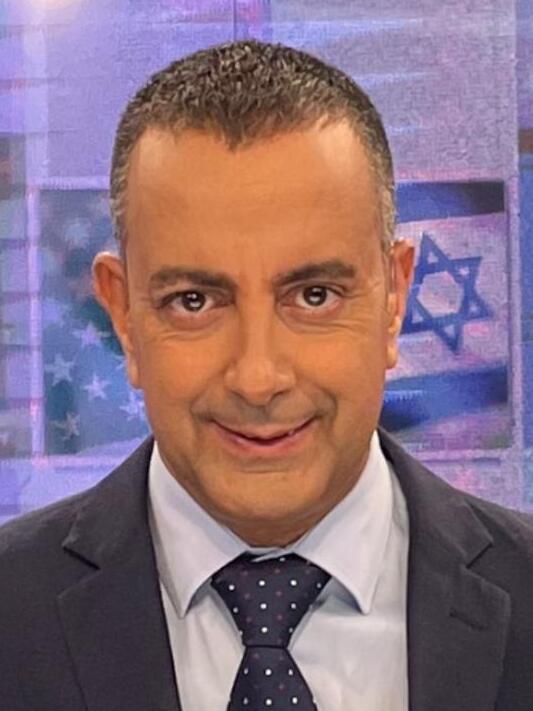 Yuval Karni
When asked this week whether the movement’s story is over, Meiri answered, “The New Likudniks, as an organized liberal-democratic bloc, ended when the district and Supreme Courts refused to intervene in Likud’s decision to expel thousands of liberal members.” He admitted their effort to influence the party from within had failed. “There is no point in encouraging lawful political participation when a party loyalist to dictatorship can erase you with a click. What happened to us in Likud will soon happen to other groups in national elections, Arabs, kibbutzniks, Tel Avivians, emigrants.”
Yet one of Meiri’s former partners responded to his post by saying, “Despair is not a plan.” He is likely not alone. A senior Likud official admitted the party lost something vital when the New Likudniks were driven out. “Yariv Levin dragged Netanyahu to the party court to expel 5,500 New Likudniks. They were the moderating force. If Netanyahu had known this would be the final result, he might have thought twice. They were accused of not being true Likud voters, but then why were Israel Aerospace Industries workers, or ultra-Orthodox and settler groups who do not vote Likud, not expelled too?”
First published: 17:53, 11.01.25