


The Israel Defense Forces is today facing one of the most serious crises it has known since its founding—and it doesn’t start or end just on the battlefronts. The real crisis lies in the people. Quietly, almost under the public radar, a troubling reality is forming: a sharp decline in willingness to continue in career service, increased burnout among officers and non‑commissioned officers (NCOs), and a wave of resignations striking right at the professional core that is supposed to lead the army forward.
According to internal data, willingness to serve in career among officers at the rank of Major has dropped within a few years from 58 % to just 37 %. Among NCOs in career service the trend is similarly clear—from 83 % down to 63 %. Even in initial career service, where the hit should be less, there is a consistent decline: from 44 % to 38 % among NCOs, and from 28 % to 25 % among officers. Alongside this, in‑depth surveys show a sharp rise in burnout: 18 % among Lt. Colonels, 5 % among Majors. And the most alarming figure: 11 % of those who resign voluntarily are precisely the ones identified as top performers. This is not just a trend–it is a direct hit to the heart of the system.
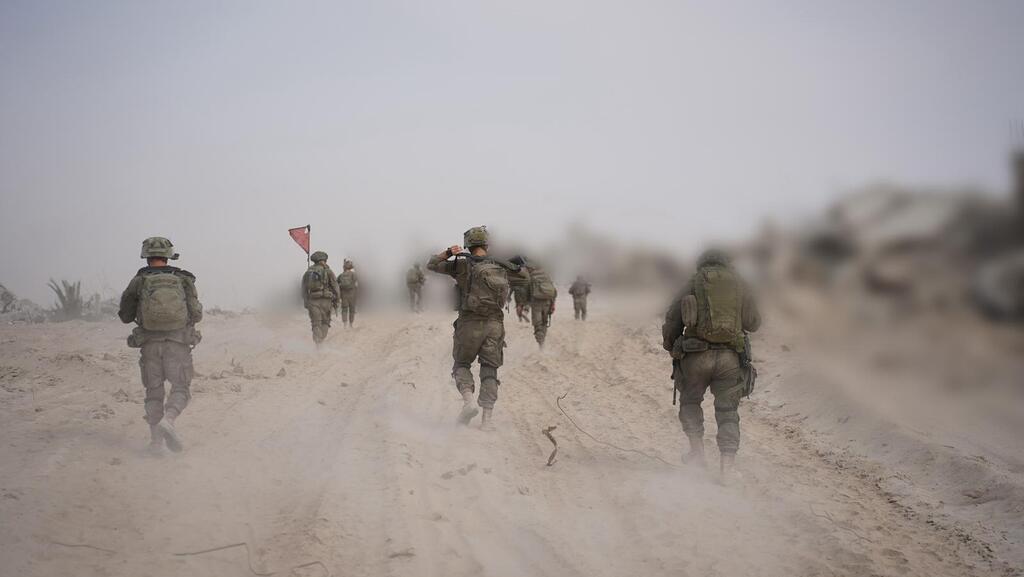
Kfir Brigade forces operating in the Yellow Line area
(Photo: IDF Spokesperson's Unit)
The rift is also being felt on the ground. Soldiers and commanders report a drop in family support, unaddressed workloads and a feeling of abandonment among combat‑supporters and the home front. “Those serving feel they weren’t appreciated enough,” says a senior figure in the Personnel Directorate. “Enormous accumulated burdens, rulings of the Supreme Court on completion of service years, pension damage and instability create frustration and harm motivation.”
At the same time, the IDF needs 7,500 additional fighters today and a similar number of combat‑support personnel to meet the ongoing challenges in Gaza, Lebanon, Syria and the 21 battalions in Judea and Samaria, and it has nowhere to bring them from. The “draft‑evasion” law, meant to be the answer, is in fact one big deception. The Chairperson of the Foreign Affairs & Defense Committee, Boaz Bismuth, claimed that within five years half of the Haredim not studying in yeshiva will enlist. But the numbers collapse that claim: in the cohort of 14,000 Haredim there are currently about 7,000 not studying in yeshiva and of them 2,900 enlisted this year, long before the five‑year timeframe.
The proposal to recognize service in the ZAKA organization as “military service” will only generate an artificial leap, a misleading façade that will obscure the depth of the problem. Even when Israeli society is at least partially prepared to give up on drafting Torah students, the Haredi leadership is not giving up on full exemption. And the army? It is on the edge.
The non‑enlistment rate among women approaches 50 %, and dropout during service is far too high at 15 %; these too require root‑cause treatment.
One bright spot worth noting is the steadily rising motivation among youth for combat service. It is true that the army is managing to bring tens of thousands of reservists back into service, but no one can build on reservists as a long‑term solution. The system needs a mass of regular‑service fighters and, no less, a mass of quality officers and NCOs who will stay in career service. Without that, there is no army.
A military that cannot retain officers, cannot recruit fighters, cannot enlist enough women and relies on reserves without a regular backbone cannot win a multi‑front war. This is reality.
All this is happening while the IDF is still replenishing its stocks, trying to close massive gaps and preparing for the next round. You don’t need detailed explanations to understand that the force the state built over years simply was not suited for a multi‑front war. It’s not just a budget issue but one of mindset. For decades Israel built a military geared toward a short war, a quick decision and relative quiet on secondary fronts. Then reality arrived, and it did not resemble the simulations. Whoever built the army’s preparation for a war of a month or six weeks got instead two years or more of combat.
This week the 1,000th military‑aid aircraft landed in Israel, and 150 supply ships arrived before it. One must understand what that means: the State of Israel conducted a massive campaign while relying on an air and sea bridge unseen here in years. That doesn’t just indicate the strength of the American alliance, it mainly indicates the size of the gaps.
Yes, the IDF failed on October 7. Not the soldiers, but the senior leadership. It happened due to systemic failure in the top of the command and the Shin Bet, which continue to evade presenting reports and a real explanation to the public. But even if the army had performed differently, the policy we paid for—no less than 70 billion shekels a year—wouldn’t have sufficed against the coordinated attack planned by Hezbollah and Iran, and later Hamas and the West Bank.
And that threat was known. The IDF warned of it months before October 2023. Former Chief of Staff Herzi Halevi laid out warnings of a third Lebanon war, yet in practice readiness in the north barely changed despite explicit demands from commanders on the ground such as then‑Galilee Division Commander and currently Home Front Command Chief Maj. Gen. Shai Kalpher.
Here the political and finance echelons come in. Instead of facing the reality, the Finance Ministry continues its campaign about “wasteful reserve days.” Yes, there was excessive, even corrupt use of reserve days. That needs to be fixed. But it’s not the big money, nor the main problem.
 Yossi Yehoshua
The people who commissioned the building of the IDF’s power over years are the political level: defense ministers and prime ministers who approved, sanctified and perpetuated too‑low budgets, overly‑optimistic reference scenarios and overly‑poor forces. They knew everything. They saw the numbers. And yet they built an army not suited for the threat.
Israel’s major challenge in the upcoming wars will not only be the number of aircraft, interceptors or tanks. All are important, but no technological capability will stand without the people to operate it. The personnel crisis in the IDF is a strategic issue – not operational, not marginal, not “one more thing to fix.” A military that cannot retain officers, cannot recruit fighters, cannot enlist enough women and relies on reserves without a regular backbone cannot win a multi‑front war. This is reality.
And this is exactly where national leadership is measured. Not by statements, not by posts, not by discussions about reserve days. But by one simple understanding: without human capital there is no army.