

Resolution 1701 is back. More precisely, it never disappeared, but it may soon return in a new form. It will probably not carry the same name, and its title may be slightly different, but its logic is likely to reappear in the foreseeable future.
Nearly two decades have passed since the UN Security Council adopted the resolution meant to end the Second Lebanon War. Israel was a month into a campaign it did not initiate and did not conduct to its satisfaction. The ceasefire set out in the resolution relied on the Lebanese army and UNIFIL to demilitarize the area south of the Litani River after the IDF withdrew.
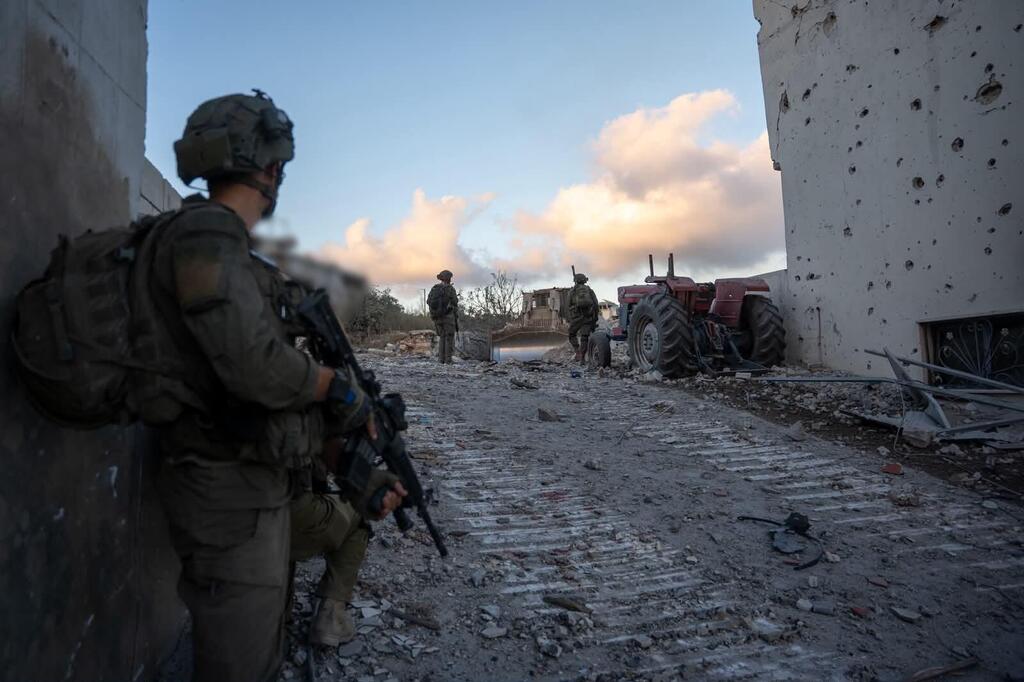
IDF in southern Lebanon
(Photo: IDF)
One does not need to be a great strategist, or even a historian, to identify the failure. In the years that followed, Hezbollah entrenched itself and built a country of tunnels. The Lebanese government failed to impose sovereignty in the area. UNIFIL, which had no real enforcement authority, functioned as a peacekeeping force with no peace to keep. And the IDF eventually returned to operate on the ground.
That outcome was among the reasons the Security Council moved to end UNIFIL’s mandate at the end of the current year.
Earlier this week in Switzerland, almost miraculously, amid statements about the nuclear issue and the Strait of Hormuz, Qatar and Pakistan announced, as part of the U.S.-Iran talks, the establishment of a “de-escalation cell to end the military presence in Lebanon.” Iran’s foreign minister described it as the “first real test” of the talks.
Iran’s logic in tying Lebanon to an agreement with the United States is clear. It allows Tehran not only to present achievements and preserve regional dominance, but also to label Israel as the problematic actor preventing Washington from claiming a victory.
But the timing matters too. The vacuum UNIFIL is expected to leave behind may be filled by another body or mechanism meant to ensure “regional stability.” Such a mechanism could be born from the work of that same “cell” over the next 60 days.
The sequence is striking: UNIFIL is leaving, and the cell is arriving. In other words, the cell could develop into an embryo, and after nine months the newborn may be called Resolution 1701 2.0.
Israel, as far as is known, was not part of the decision to establish the cell. But as always in such situations, the same dilemma arises: should Israel get involved and risk granting legitimacy to the process, or ignore it and try to shape reality on the ground?
The course of the war so far suggests the first option is usually preferable. That is especially true when the United States, the most significant power in the region, is involved. In diplomacy, as in public consciousness, there is no vacuum. In the absence of initiative, the enemy gains an advantage. And once the enemy has already seized the initiative, it is better to act preemptively.
The remedy is involvement. Israel must make sure its interests are represented in the room.
The south offers a clear example. While Israel fought militarily but failed to initiate diplomatically, countries such as Qatar pushed for the establishment of a multinational forum that would shape Gaza’s future. The result was that the financier of the massacre received a front-row seat in Gaza’s reconstruction. Israel, by contrast, joined late and declared its subordination to that council.
The practical meaning is that over the next 60 days, Israel must initiate. It must pour content into that amorphous “cell”; propose alternatives for regional “de-escalation”; present a plan for dismantling Hezbollah that includes an IDF enforcement arm, a Lebanese legal arm and an American economic arm; and compete with the narratives, channels and options the Qataris will put forward.
It must do so both behind closed doors and in the public arena.
History always repeats itself. The seeds of the next Resolution 1701 are already here. A lack of diplomatic initiative this time, while expecting a different outcome, would suggest a different problem altogether.