

For years, Iran has projected itself as a rising military force capable of confronting Israel and the United States through ideological resolve, missile barrages and expanding drone capabilities. Yet beneath the spectacle lies a harsher reality: the ability to intimidate is not the same as the ability to win a modern war. Terrorizing civilians or saturating skies with rockets does not equal strategic dominance on today’s battlefield.
Iran’s military posture has long emphasized volume over precision. Its arsenal features large stockpiles of rockets, relatively inexpensive drones and a network of proxy militias positioned across the region. These tools can generate headlines and create disruption, but they are not substitutes for integrated doctrine, technological superiority and coordinated command structures. Firing in bulk cannot compensate for limited accuracy; range cannot replace reliability. The result is a force structured to shock and unsettle rather than to secure decisive outcomes.
Gallery
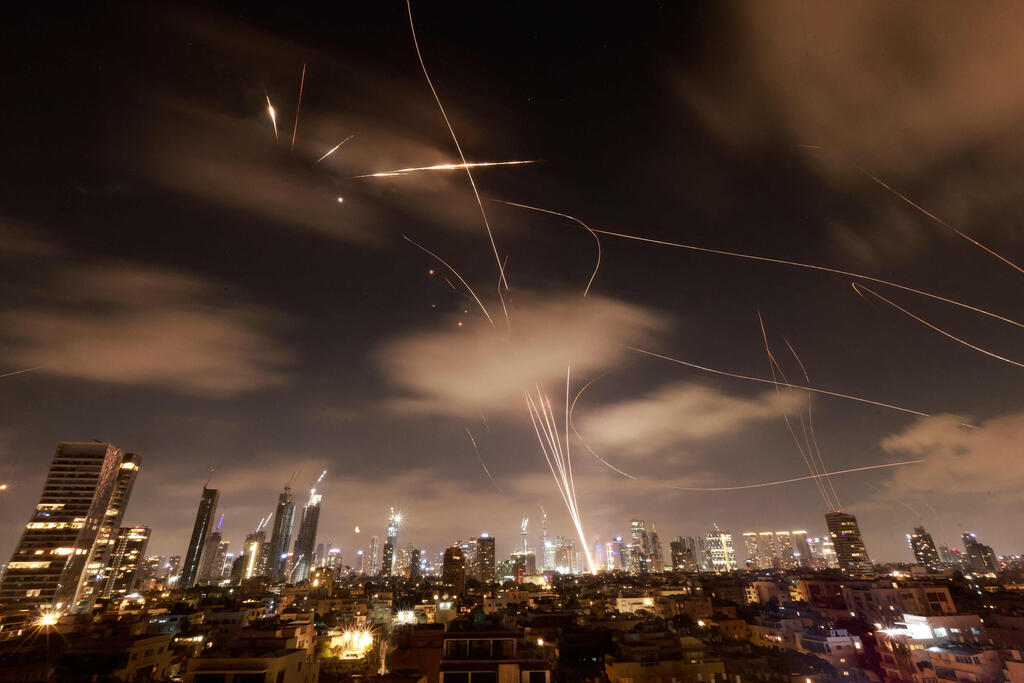
Israeli air defenses confront an Iranian ballistic missile barrage over Tel Aviv, June 18, 2025
(Photo: Menahem Kahana / AFP)
Modern warfare demands far more than saturation attacks. It requires real-time intelligence, interoperability across domains, resilient command-and-control systems and the capacity to adapt under pressure. By contrast, much of Iran’s approach still reflects an earlier era of warfare. Tunnels filled with rockets, improvised drone production and reliance on irregular proxies may complicate a battlefield, but they do not equal mastery of it. They represent asymmetry as necessity, not superiority.
Israel, meanwhile, has invested in reshaping the battlefield itself. Systems such as advanced missile defense networks and high-energy laser technologies aim not only to intercept incoming threats but to alter the cost equation. Where Iran accumulates munitions hoping to overwhelm defenses, Israel develops systems designed to neutralize them efficiently and at scale. This difference is not merely technological; it is conceptual. One side invests in decisive advantage, the other in numerical display.
The divergence extends beyond hardware. Israeli military operations emphasize intelligence-driven targeting, frequently striking at command nodes, logistics chains and technical infrastructure. Removing key personnel or disrupting supply networks can have lasting operational consequences. Iran’s retaliatory model, in contrast, often relies on broad rocket fire or proxy action intended to create fear and political pressure. The contrast is stark: precision versus volume, infrastructure targeting versus symbolic retaliation.
A barrage of ballistic missiles launched from Iran toward Israel


At the psychological level, the gap may be even more significant. Modern military effectiveness depends on institutional discipline, professional command structures and clear chains of authority. Iran’s decision-making environment is widely viewed as influenced by internal factional competition and ideological imperatives. In such a system, strategic clarity can be diluted by political rivalry. A doctrine built primarily around resistance narratives may struggle to adapt to the evolving demands of multi-domain warfare.
Admitting structural weakness, however, poses risks for any regime that derives legitimacy from projected strength. Iran’s leadership has anchored its identity in perpetual resistance and defiance. Acknowledging military limitations could undermine that narrative. This dynamic can encourage continued confrontation even when the balance of capability favors the opponent. It is not necessarily confidence in victory that drives persistence, but the cost of conceding vulnerability.
None of this suggests complacency is warranted. A state that prioritizes ideological steadfastness over pragmatic recalibration can remain dangerous, particularly if it is willing to absorb economic strain or regional instability to sustain its posture. Rockets and drones, even if strategically limited, still pose risks to civilian populations and infrastructure. Miscalculation remains a constant hazard in any prolonged standoff.
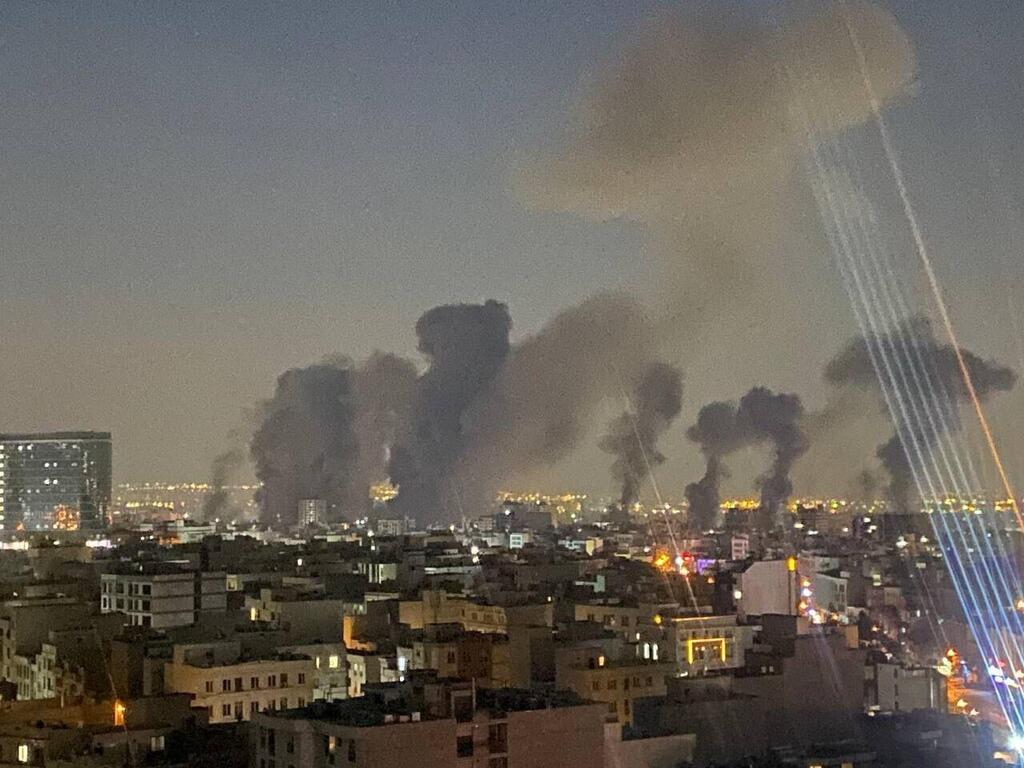
Wave of airstrikes across Tehran, March 6, 2026
Yet as the technological and operational gap continues to widen, the fundamental imbalance becomes harder to ignore. Sophisticated intelligence networks, layered defense systems, and precision strike capabilities increasingly define modern conflict. Against such tools, saturation tactics and symbolic escalation lose strategic weight.
In the end, wars fought on denial and spectacle struggle to endure against opponents grounded in adaptive doctrine and technological innovation. Fear can disrupt, but it cannot replace capability. And over time, the difference between the two determines not only who survives a confrontation—but who shapes its outcome.
- Rami Al Dabbas is a writer/commentator known for opinion pieces on Middle East politics, critiques of Islamist movements, advocacy of political realism and engagement and a controversial presence on social media.