

When the war ends, Israel’s strength will not depend only on its weapons systems. It will depend on the future we build for the young people who served.
Israel’s military achievements in Operation Roaring Lion are impressive. Exceptional intelligence, advanced technology, some of the world’s most sophisticated weapons systems and pilots among the best anywhere have produced remarkable operational success.
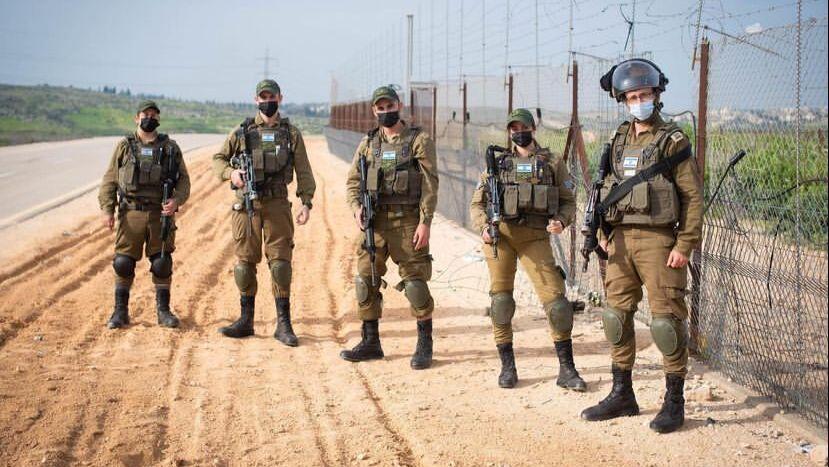
A journey of accelerated maturity in the military
(Photo: IDF)
But anyone who truly understands how these achievements are made knows the truth: behind every sortie stand hundreds of people.
Young men and women in their early 20s working in Air Force ground crews, air defense units, land and naval forces, logistics, maintenance, communications, the home front and personnel divisions. These are not glamorous roles that photograph well, but without them no aircraft takes off, no system operates and no mission succeeds.
I served in the IDF for 34 years, including as commander of the Israeli Navy, Shayetet 13 and the Duvdevan Unit. I watched young recruits enter the army and leave as entirely different people.
They become more mature. More focused. Capable of making decisions under pressure, managing teams and carrying real responsibility.
I salute this generation of soldiers.
A generation left alone
Over the past three years, about 270,000 young Israelis have completed their military service. All of them went through an intense process of accelerated maturity.
Yet when they leave the army, almost no one is waiting for them.
Research by the Myers-JDC-Brookdale Institute found that 23% of these young people gave up higher education because of emotional and employment insecurity. Twenty-eight percent lost their jobs. About half reported a decline in their mental health.
Nearly half say they struggle to find a clear path for life after the army.
This generation is one of Israel’s most important strategic assets. It is the source of Israel’s qualitative advantage against its enemies and its competitiveness in the global economy.
After every war, Israel knows how to rebuild its military strength. We purchase new systems, develop new technologies and invest billions preparing for the next threat.
But the real question is this: what will Israel invest in the soldiers themselves when they remove their uniforms?
From uncertainty to opportunity
Many return to civilian life alone, facing an enormous challenge. They lack professional guidance, networks and the tools needed to translate their abilities into success.
Many describe loneliness. A loss of belonging. The military framework disappears, and with it the sense of direction that guided them for years.
This is not only a personal problem. It is a national one.
It affects the labor force, productivity, higher education rates and family stability. In Israel’s periphery, where opportunities are already limited, the consequences are even more severe.
This is not merely a social or moral issue. It is a strategic challenge.
The great task facing Israeli society is to transform the moment of discharge from a period of uncertainty into a national launchpad.
A national investment
Alongside the military’s procurement plans, Israel must build a national program to propel this generation forward.
Training programs. Pathways to higher education and industry. Professional mentoring. Open doors and real opportunities, especially for young people from the periphery.
Investing in this human capital will create both a future for Israel’s young people and a powerful engine of growth for the entire country.
The young people who operate air defense systems during tense nights, who return aircraft to operational readiness at record speeds, who run crowded control rooms ensuring every system functions at the decisive moment, are the same young people who in a decade could lead companies, launch startups and drive Israel’s economy.
 Ram Rothberg
They have already proven responsibility, discipline and the ability to perform under pressure.
Israel’s real advantage has always been its people.
If Israel wants to maintain its security, economic and social strength in the coming decades, it must invest in the generation that has already proven what it can do.
Israel owes them more than thanks.
It owes them an opportunity.
Gratitude without a serious national plan to support them will remain empty words.
Israel must prove its commitment not only in wartime, when sirens sound and the skies burn, but also in the quiet afterward, when soldiers put down their weapons and face life on their own.
Ram Rothberg, a retired Vice Admiral and former commander of the Israeli Navy, is the founder of the nonprofit ‘Sailing to the Horizon’ and the ‘Masa El HaOfek’ programs for discharged IDF and national service veterans.
First published: 14:17, 03.16.26