

The United States declared a ceasefire with Iran, but the real battle is only changing arenas. After the missiles, the suicide drones, the tankers and the fires at energy facilities, the struggle is now shifting to the story each side will try to tell: Who won, who was worn down, who gave in, and who managed to change the rules of the game.
This stage is no less critical than the fighting itself, because in the Middle East, narrative is not merely a matter of perception. It shapes positions in negotiations, energy prices, investor confidence, maritime insurance contracts and the ability of states to project stability even after the fire dies down.
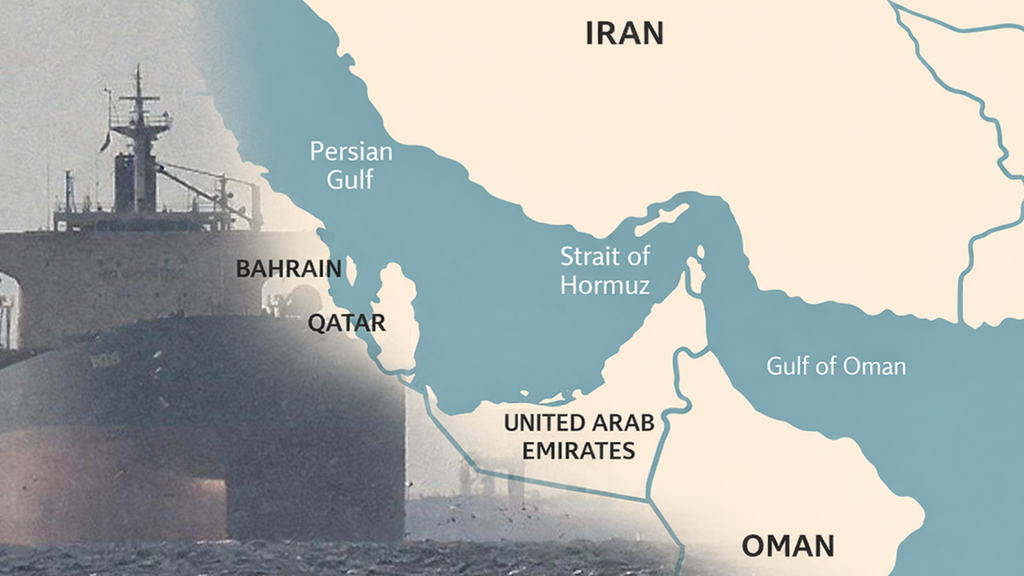
From Iran’s perspective, the narrative it wants to cement is already fairly clear. The regime suffered heavy blows. Senior figures were killed, infrastructure was damaged, major energy sites were attacked and sensitive economic assets were shaken. And yet the regime did not collapse. For Tehran, that is the great achievement. Not because it erases the damage, but because it allows Iran to claim it withstood an unusually powerful assault and still preserved continuity of rule, the ability to respond and room for diplomatic maneuver.
In a world where many political systems collapse long before they are militarily defeated, survival itself is a product that can be sold as an achievement.
But the Iranians will not settle for a story of survival alone. They will also want to sell a story of strength. Not strength built on air superiority or a classic battlefield victory, but another kind of power: the ability to shake global markets, turn Hormuz into a choke point, show their Gulf neighbors how vulnerable their infrastructure is and remind the West that the cost of striking Iran does not stay within Iran’s borders.
That is the most important strategic lesson of this campaign. Not that Iran is invulnerable, but that even when it is highly vulnerable, it can still hurt the entire regional and global system.
That is precisely where the region’s real economic pain begins. A ceasefire can stop the shooting, but it cannot instantly erase the memory of the markets. Shipping companies, oil traders, insurers, banks and investors have now seen that the Strait of Hormuz is not just a theoretical risk. They have seen that it can be disrupted, slowed, made more expensive and used as a strategic lever.
So even if oil and gas flows fully resume, and even if Gulf stock markets continue to rise in relief, the risk premium will not disappear quickly. The market may be breathing easier because the worst-case scenario of widespread destruction of civilian infrastructure was avoided, but it is still not convinced that the threat is gone.
This is a point the Gulf states themselves will have to absorb. This war has once again exposed how far “the Gulf” is from being a single economic unit. Some states were able to benefit, at least partly, from higher prices or rely on alternative routes. Others discovered how tightly they are bound to a single maritime passage. Some have a measure of logistical depth. Others depend almost entirely on secure access through Hormuz.
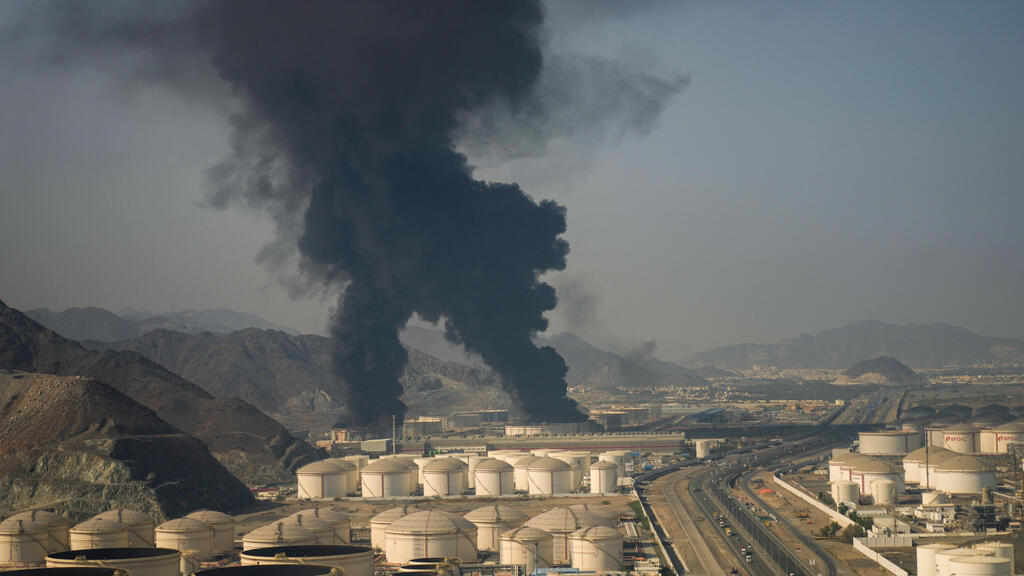
An oil facility at the port of Fujairah damaged in an Iranian attack
(Photo: Altaf Qadri/ AP)
Economically, that may be the most important lesson of recent weeks: not all Gulf states are hurt in the same way, and not all of them will emerge from this crisis with the same degree of vulnerability.
Qatar illustrates this especially well. In some countries, the main problem was disruption to transit or higher insurance and shipping costs. In Doha, the picture is more serious, because the war also hit actual export capacity. For a state that built its economic, political and diplomatic power on the reliability of its gas exports, that is not only an operational blow but also a reputational one. Even if global prices remain high, they do not fully compensate for lost output, damage to infrastructure and a crack in the image of reliability.
On the other hand, anyone too quick to cast the Gulf states only as victims of the war will miss part of the picture. Some benefited from the price spike. Some succeeded in drawing the West’s attention back to their strategic importance. And all of them received a sharp reminder that the world still depends on this region far more than it sometimes likes to believe.
But that is the paradox. The more important the region is, the more costly every shock becomes. The more the market knows the Gulf is essential, the more the threat to it becomes a powerful weapon.
And what about Iran itself? Here too, two apparently contradictory truths must be stated.
On one hand, Iran will enter negotiations with a sense of victory. Not because its economy is in good shape, but because it has convinced itself and its surroundings that it passed the supreme test: to absorb, survive and inflict pain in return.
On the other hand, economically, Iran is emerging from this war badly battered. Energy assets were hit, exports were disrupted, industrial and logistics centers were attacked, and the Iranian economy entered this ceasefire already worn down by inflation, crushing sanctions, shortages and years of underinvestment.
So Iran is not entering the next phase from a position of economic strength, but from a position of geopolitical leverage. That is an important distinction. It cannot afford a long, sustained war without a very heavy internal price. But it can argue that it has proved to the world that continued pressure on Iran will cost much more.
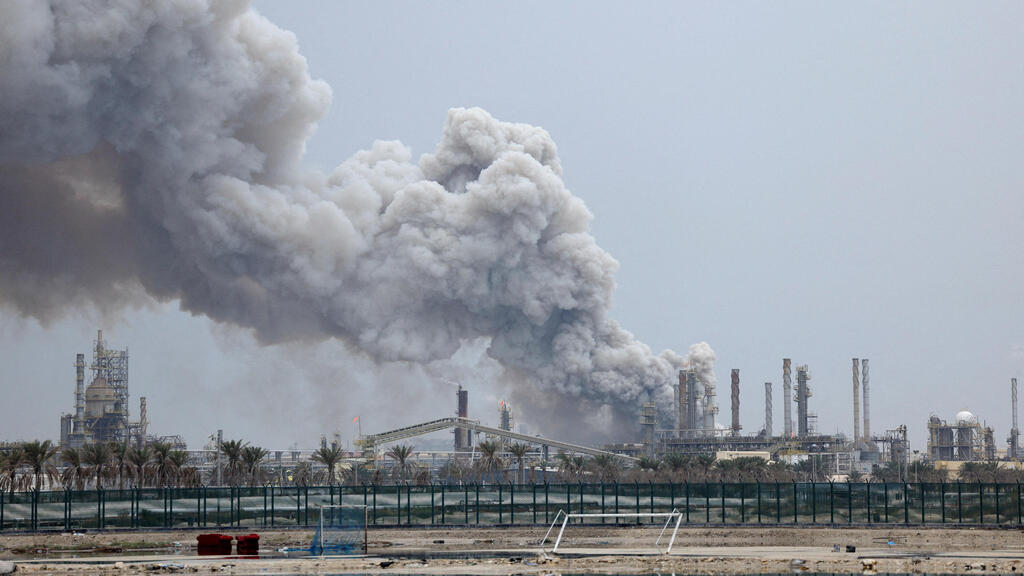
Smoke rises from the refinery in Bahrain after an Iranian attack
(Photo: Stringer/ Reuters)
Its goal now will be to translate the disruption it created into gains at the negotiating table: relief, breathing room, some degree of recognition of its positions and perhaps even the creation of a mechanism in which the threat to Hormuz becomes a permanent asset in its deterrence arsenal.
That is where the devil lies in the details. The ceasefire itself matters, but no less important is what is written around it: who will supervise it, who will guarantee it, what limits will be imposed, what will be said about sanctions, what will happen to freedom of navigation and what the practical meaning of “quiet” will be in a region where every side is already preparing for the next round.
If Iran emerges from this phase with the sense that it not only survived but also regained legitimacy as a power that must be engaged with respectfully, it will present that at home and abroad as a strategic success. If, by contrast, the ceasefire fails to produce meaningful economic and diplomatic gains, the sense of victory may prove to be an expensive illusion.
The war with Iran, then, has not really ended. It has only changed form. Instead of being fought over the sea and around energy facilities, it will now be fought through clauses, formulations, diplomatic corridors, insurance contracts, investment decisions and oil and gas prices.
For the markets, this is not a period of full calm but a test period. For the Gulf states, it is not a return to normal but an expensive lesson about the cost of dependence on a single route and the need for real redundancy. And for Iran, this is the moment in which it will try to prove that its survival is not merely a military fact, but a strategic achievement with an economic price tag the entire world will be forced to pay.