


Iran built a plan to destroy Israel — and that plan blew up in its face. Its previous leader, Ayatollah Ali Khamenei, issued a religious ruling, a fatwa, saying it was forbidden to build a nuclear bomb, in an effort to calm the world. Then he winked at the nuclear scientists and gave them the green light not only to enrich uranium, but also to revive the weapons program.
The strategy was to become a nuclear-threshold state. But during the war, the clandestine sites were destroyed, the scientists were taken out, and so were their aides and their managers.
Footage from the cockpit of an Israeli Air Force aircraft during midair refueling with a US Air Force plane
(Video: IDF)


Iran’s idea was simple: build a decentralized program, and no one will be able to hit us. That concept collapsed. The Israeli Air Force established air superiority over Iran and struck there at will — by day, by night, in the west and in the east.
In other words, the strategic deception was laid bare and the operational plan came crashing down. Even in their worst nightmares, the Islamic Revolutionary Guard Corps did not imagine they would lose the skies over Iran to Israel.
Iran will keep trying to produce a nuclear bomb, but it is no longer a threshold state. It is a state with nuclear ambitions and enriched material that still has to be dealt with. Trump has pledged to remove it, by agreement or by force. That pledge should be met with deep skepticism, and it must be remembered that this is our responsibility and our obligation.
We need to keep our feet on the ground. We need to look reality in the eye. This is a war of necessity, and one thing about it is clear: Israel is a regional power, and that is why it acts, initiates and keeps pressing forward.
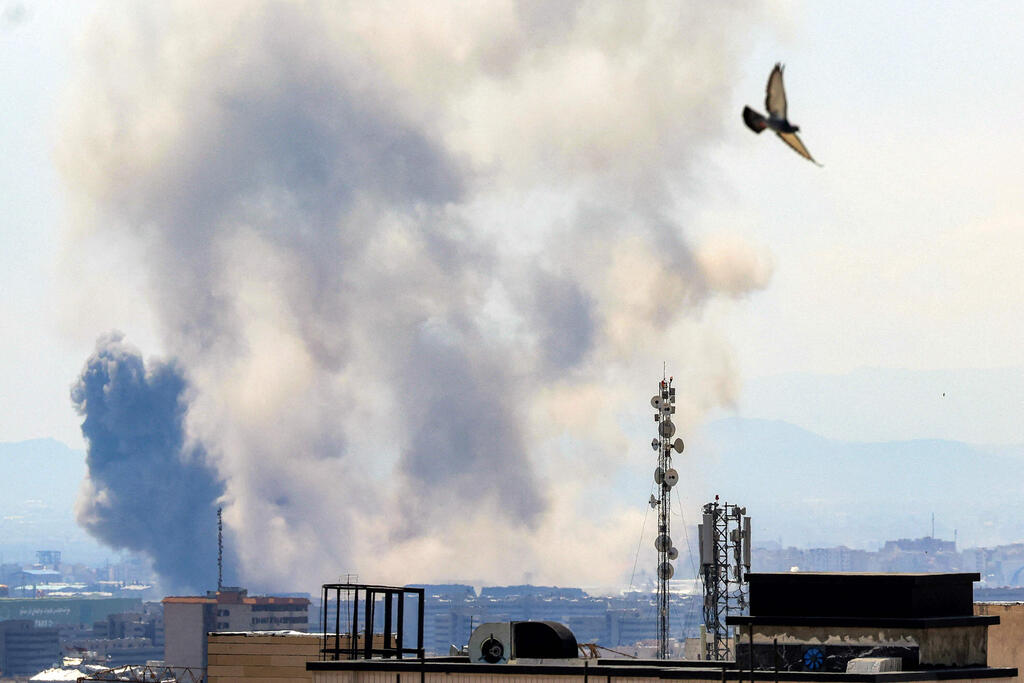
At the strategic level, there has been a major gain vis-à-vis the Abraham Accords states. They chose to stand on Israel’s side, deepening the strategic partnership of interests.
Are there no more challenges? There are, and plenty of them. Did everything go according to plan? No. Did the Revolutionary Guards prove stubborn even in the face of Trump? Yes. Was the closure of the Strait of Hormuz not a surprise to the United States and to Israel alike? Yes. We were not prepared for that sufficiently. Could the fighting perhaps have been stopped after two weeks instead of dragging on for 40 days? Maybe. Was this a war of necessity that unequivocally improved Israel’s security position? Absolutely yes.
And now, eyes front. As we have already written here before, even in moments of euphoria, war is a relay race. In the Middle East, results are determined on the morning after the morning after. We need braking distance to assess both the gains and the failures. There is no need to rush to judgment. It is better — and entirely legitimate — to leave some question marks in place.
And going forward there are still many challenges. A great many. Every watch must make sure it hands the next watch an improved security reality. When Tomer Bar turns over the watch in just a few weeks as commander of the Israeli Air Force to Omer Tischler, will he bequeath him a better reality than the one he inherited? Yes, with an exclamation point. Will Tischler still have to keep preparing the air force for future missions, execute strikes and safeguard freedom of action everywhere? The answer is also yes. And when he turns over the watch in four or five years, we will judge him too — and ask whether he handed his successor a better reality. That is true of every role, at the tactical level and at the strategic one.
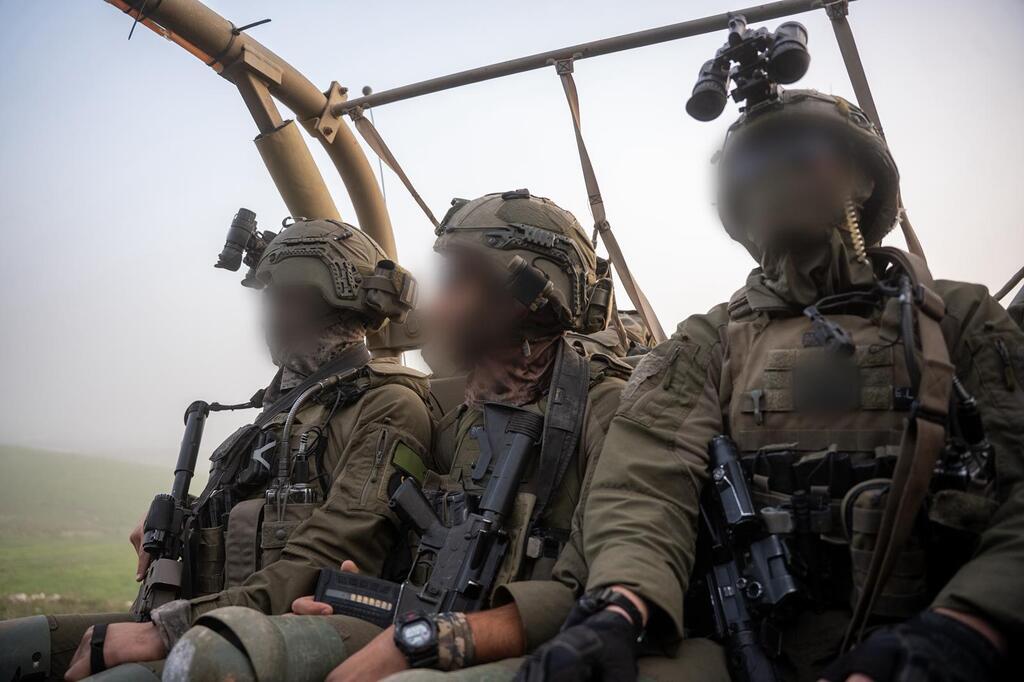
IDF paratroopers operating in Lebanon
(Photo: IDF)
From there to Lebanon. Hezbollah’s strategy over the past six months was clear: our pace of rebuilding will outstrip Israel’s pace of damage. The Israelis will strike here and there, we will eat the frog, not respond, and meanwhile make sure our rebuilding gathers steam.
In Lebanon too, war is no walk in the park, but over the past 40 days the IDF war machine has been producing an improved security reality. It is striking, destroying and seizing the initiative. Our pace of damage is far greater than their pace of reconstruction.
Here too there are no shortcuts. It is naive to think that what has taken 24 years in the West Bank — and is still unfinished — will be wrapped up in Lebanon in 40 days, successful as those days may have been.
What comes next? We need to keep pressing, acting and taking the initiative in order to complete the reshaping of the topographic map in the contact line sector in Lebanon: flattening miles of homes adjacent to the border. Near Metula and Avivim, there is no room for deterrence or warning. What is needed is our physical presence and the absence of any possibility of enemy activity — not today and not in the future. That is why there is no choice: the terrain in that area has to be changed.
The situation is fragile. Extremely fragile. That requires readiness and vigilance as though this were the first day of the war. The military has already learned the hard way that in the Middle East there are only two basic states: either war, or obsessive readiness for war.
Alongside that, there is a need for an international plan by the Security Council to disarm Hezbollah and rebuild Lebanon. We are waiting for Trump’s eight-point plan, or 18-point plan, for a different Lebanon. We are waiting for Lebanese Prime Minister Nawaf Salam to visit the White House. Above all, we are waiting to finally reach the implementation stage of such a plan.
One final point, and perhaps the most important: the situation is fragile. Extremely fragile. That requires readiness and vigilance as though this were the first day of the war. That is true for the platoon commander, and it is true for government ministries. The military has already learned the hard way that in the Middle East there are only two basic states: either war, or obsessive readiness for war.