

On International Holocaust Remembrance Day, new survey results from Brazil point to significant gaps in public understanding of the Holocaust in Latin America’s largest country.
The survey found that only 53.2 percent of respondents correctly defined the Holocaust as the systematic extermination of six million Jews by the Nazi regime. The findings are being published today to coincide with the annual day of remembrance.
Gallery
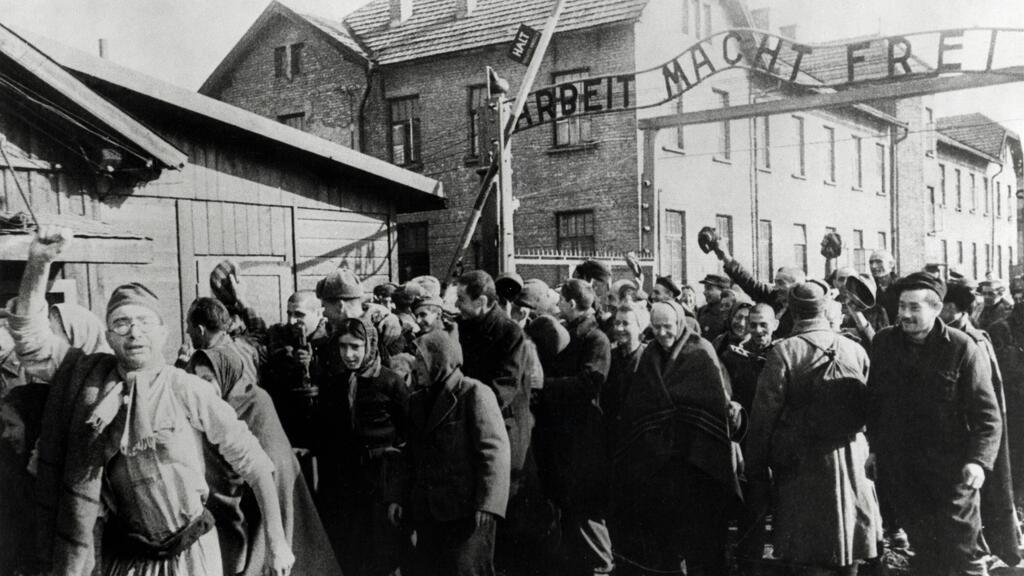
Survivors of the Auschwitz concentration and extermination camp pass through its gates after liberation, February 1945
(Photo: imago images/Reinhard Schultz/Reuters)
The survey was conducted by the ISPO Group of Rio Grande do Sul at the request of four institutions: the Israelite Confederation of Brazil, the Holocaust Memorial of São Paulo, the Holocaust Museum of Curitiba and StandWithUs Brazil.
According to the organizations, the results underscore the urgent need to invest in Holocaust education to strengthen historical memory, combat misinformation, prevent hate speech and foster civic values rooted in human rights and democracy.
The research was carried out in 2025, during April, September and October, and included 7,762 face-to-face interviews across 11 metropolitan regions in Brazil.
While most respondents said they were familiar with the Holocaust, the data suggests that this knowledge is often superficial, fragmented and uneven, particularly among groups with lower levels of education and income.
The lack of knowledge becomes more pronounced when examining basic facts. Only 38.5 percent correctly identified Auschwitz-Birkenau as an extermination camp, while more than half said they did not know.

Hana Nusbaum
(Photo: Rovena Rosa/Agência Brasil )
One of the survey’s more striking findings concerns Brazil’s Evangelical community, which is often viewed as strongly supportive of Israel. The survey showed that this political support does not necessarily translate into historical knowledge. Only 49.2 percent of Evangelical respondents correctly defined the Holocaust, below the national average. The organizations said the finding highlights the need for educational outreach even among audiences considered supportive.
Despite the troubling data, the survey also points to significant potential for improvement. Nearly two-thirds of respondents, 64.4 percent, said teaching the Holocaust in schools should be mandatory. At the same time, access remains limited: 88.3 percent reported they had never visited a Holocaust museum or attended a related educational event.
“In a context marked by a resurgence of antisemitism and the spread of hate speech, educational action is not only necessary but urgent,” said Hana Nusbaum, education manager at StandWithUs Brazil and the Holocaust Education and Memory Center. “Holocaust education plays a vital role because of its historical, ethical and human dimensions, and its ability to illuminate the dangers of intolerance and indifference.”