

Who would have imagined that a concept once used by thoughtful voices on both sides of the political spectrum could accelerate—no less than—the fall of Iran’s brutal clerical regime. Since the beginning of the war, and contrary to many of my fellow commentators, I argue that Trump is not erratic at all, but rather coherent and consistent in his goal: the fall of the Iranian regime. And the ayatollahs themselves are providing the rope with which they will hang themselves. They do not disappoint. Their conduct in negotiations and in managing the war shows there is no pit they are unwilling to fall into.
They fail to anticipate the next move by the United States and make the same mistakes over and over again. Meanwhile, on the path toward toppling the regime, Trump continues to emerge as a diplomatic meteor. He has managed to distance China, the United States’ number one rival and Iran’s ally, from the confrontation, while simultaneously leaving the Iranians, masters of deception, exposed and stripped bare.
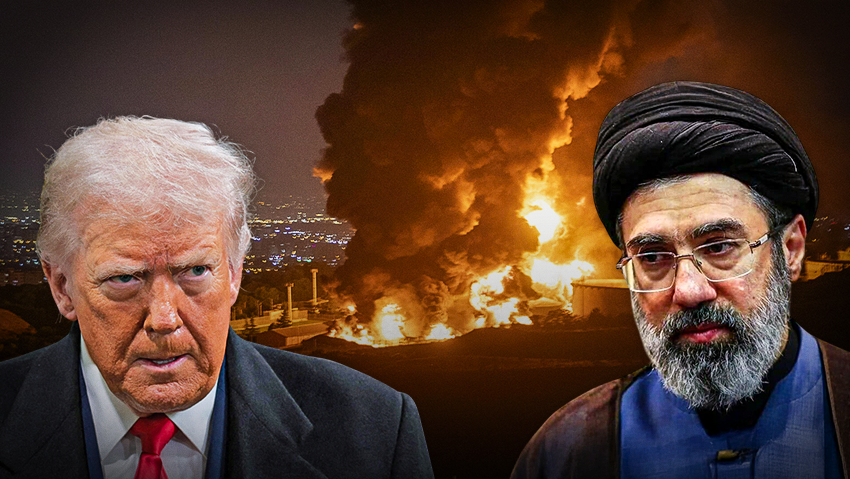
How does Trump manage to strip Iran of every economic and diplomatic advantage it once had? It seems he has developed a new approach within game theory, identifying the most critical cultural element in Iranian society.
To the average Western ear, Trump sounds unpredictable and aggressive. But that is not the case. In game theory dialectics, if I may suggest, he is applying a tactic of “polite brutal unpredictability”, a mix of Eastern-style commercial cunning wrapped in Western elegance.
Trump is destabilizing the Iranians and throwing them off balance. He is striking at the very core of their identity. Quite simply, he is shaming them.
The Iranians, who developed an aggressive and threatening negotiation doctrine that worked so effectively against Presidents Obama and Biden, continue, foolishly, to use the same strategy against him: “Hold us back,” they tell the American delegation, “before we pull out our ace card that will destroy the world.”
But Trump responds, time and again: “Go ahead. Pull it.”
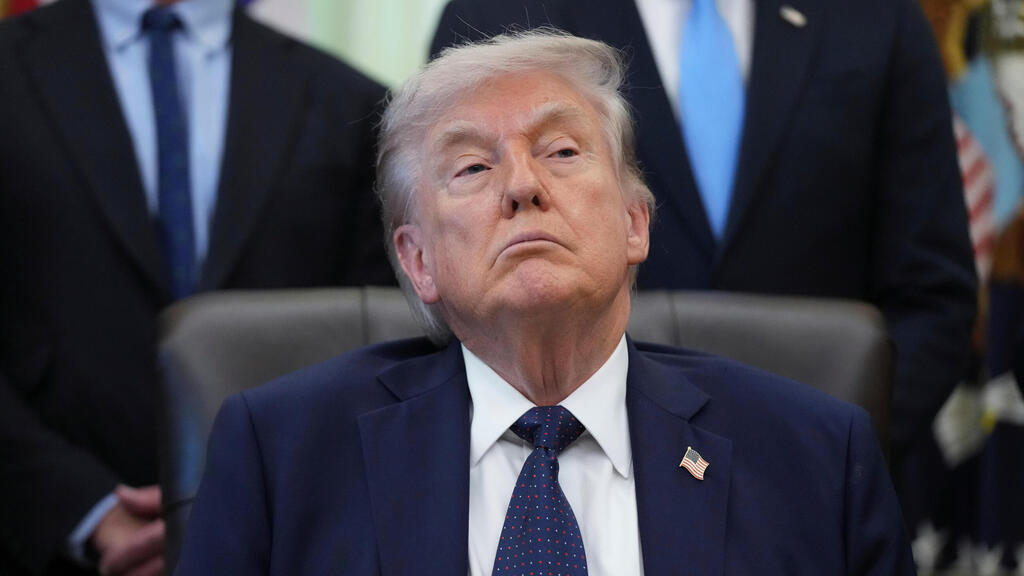
(Photo: AP Photo/Mark Schiefelbein)
And after being battered militarily by the most powerful forces in the world, the United States and Israel, they have no card left to play. Completely exposed. The advantage of stripping an enemy like the Iranian ayatollahs bare is that everyone can now see them. They are ashamed, and it drives them out of their minds.
The political events around us blur what may be the greatest achievement of this war: the ayatollahs are at their most significant psychological breaking point. They are ashamed. And therefore, they are not functioning.
Even those who wish them well, the Turks and the Qataris, who seek to preserve the axis, understand that this is the beginning of the end of the Iranian regime. They are begging them to come to negotiations, to save them from themselves. But even that, the ayatollahs are no longer capable of doing. They fail to show up to talks in Islamabad because, in their own eyes, they are naked. None of them can bear the shame. It is no coincidence that they cannot even agree on who should attend negotiations, or that they send proposals that make them look ridiculous even in the eyes of mediators. The chaos in Iran is complete.
I would like to propose an out-of-the-box strategy to ensure that this cruel regime ultimately ties the noose around its own neck.
The ayatollahs will never break from sanctions or economic pressure, no matter how severe. As far as they are concerned, the population can starve. They are focused on personal survival. Let Iran burn, as long as they survive, they will restart the jihad we have stopped. The only thing that will break them mentally and lead to violent internal conflict is damage to their personal honor. Not national pride, but personal honor. This is what the West does not understand. National honor does not interest them. When speaking about Iranian honor, one speaks only about personal honor.
Military pressure and bombardment will likely resume soon. The United States already has four aircraft carriers in the region, and Israel has replenished its stockpiles. Based on the facts, it appears the gates of hell may soon open on the ayatollahs. But this time, to bring about the final collapse of the regime, military pressure must be combined with psychological shock and fear, messages of humiliation and shame directed at the Iranian leadership. A large-scale campaign aimed at shaming the fragile new leadership of the Revolutionary Guards will further undermine their already shaken confidence, intensify internal conflict, and lead quickly to violent internal conflict, and from there, to the collapse of the regime.
This is exactly the direction the Israeli Mossad understood from the very beginning of the war.
Let us explain.
Iranian culture is a “shame culture.” It revolves around the question: “What will others say about me?” This stands in contrast to Western-Jewish culture, which revolves around “How do I feel after I made a mistake?” and how one corrects it.
In Western-Jewish culture, if you make a mistake, correction is immediate. It is between you and God, and between you and the person you harmed. Your conscience troubles you. You apologize, you fix what you did, and you move on. It is contained and personal.
In Iranian culture, similar to Japanese kamikaze culture, everything is exposed. If you make a mistake, you stand alone before the entire world. There are no boundaries. Everyone sees you.
The first to identify this phenomenon was American anthropologist Ruth Benedict, who studied it, especially in Japan, at the request of U.S. intelligence during World War II. She introduced the concept of “shame culture” to the world.
In a shame-based society, conscience does not torment a person, only personal honor does. How one appears to others. If a person loses honor because of a mistake, there is no redemption. Shame consumes them. This is why the ayatollahs do not care about Iranian casualties. What matters to them is how they appear externally. There is no conscience—only public shame. It is overwhelming and inescapable.
This is exactly where the ayatollahs are now. They have failed in every scenario. Their boasts about the strength of the revolution and their supposed superiority over the “barbaric” Americans and Israelis have shattered. They are completely humiliated. This is the root of the deep internal disputes among them. They are beginning to unravel.
A campaign of shame will work because Iranian society has strict codes of honor unlike anything in the West. We cannot fully understand it—but it works on them. Central to this are concepts like ABRU and SHARAF, both tied to personal honor in the most extreme sense. The harshest insult an Iranian can deliver is BI-SHARAF, meaning “without honor.” Take away a person’s ABRU, and they have no reason to live.
Even these concepts fall short of the peak of Iranian honor culture: TAHAROF.
TAHAROF is a complex and often surreal system of social etiquette, combining a strong desire for something with repeated declarations that one does not want it, while the other side must persist in offering it again and again. All of this serves one purpose: to avoid shame. It sounds absurd. In reality, it is even more extreme.
A widespread and strategic use of Iran’s “shame culture” can push its leadership into making repeated mistakes that weaken the regime’s grip. It is not enough on its own, but it is a powerful additional tool that should be used at scale.
Take one example that also answers critics of Israel’s Mossad: the agency fully exploited this “shame culture” dynamic.
This is how Khamenei was brought down.
They shamed him. They shattered his ABRU.
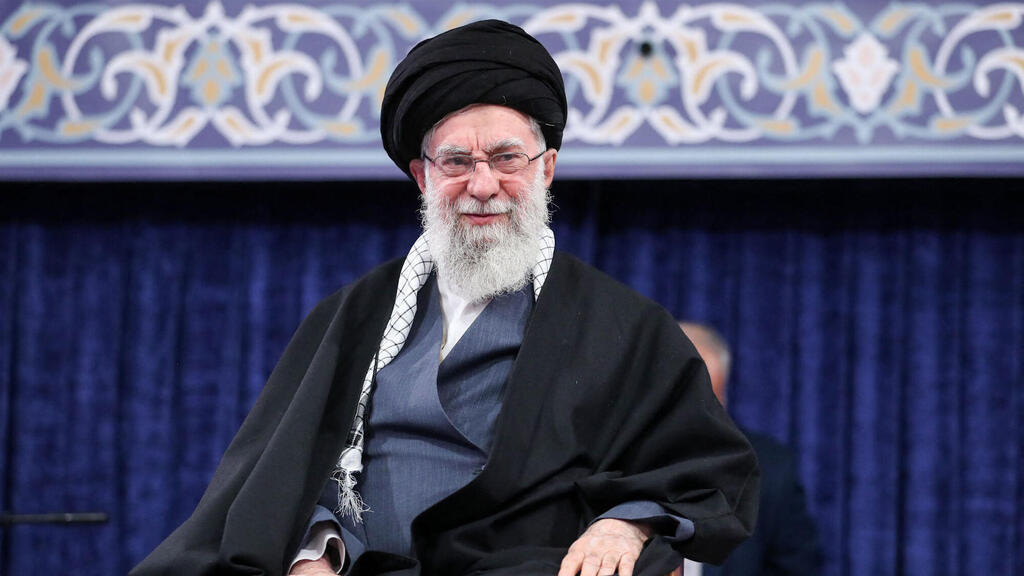
Ali Khamenei
(Photo: AFP PHOTO / HO / KHAMENEI.IR)
During the operation, Iran’s leader spent his time hiding in a bunker. At the end of the operation, mocking nicknames spread rapidly online, calling him “Ali the mouse.” These posts reached millions. His honor was publicly humiliated.
Driven mad by shame, Khamenei decided to prove he was not a mouse, but a lion. He refused to continue hiding. He would show Trump. Restored in his sense of honor, he chose to remain in the presidential compound and forced Iran’s senior leadership to gather there with him.
That exceeded expectations of the Mossad. That is where they were all eliminated. Lions, reduced to a pile of bones.