

In recent months, the Energy Ministry has granted natural gas exploration licenses in its exclusive economic waters to SOCAR, Azerbaijan’s state-owned energy company. This marks the first time a Muslim country is not only a consumer of Israeli gas, like Jordan and Egypt, but a direct partner in its production — and that should become the norm. While the step may seem controversial or even risky, in practice, it should serve as a catalyst for an Israeli policy of bolstering national energy security through regional partnerships.
SOCAR was awarded a license to explore for natural gas in Israel’s exclusive economic zone in partnership with several international companies, including BP and NewMed Energy. The license covers one of the new offshore blocks opened in the Energy Ministry’s most recent tender and allows the partners to carry out seismic surveys, exploratory drilling and economic feasibility studies for production.
Gallery
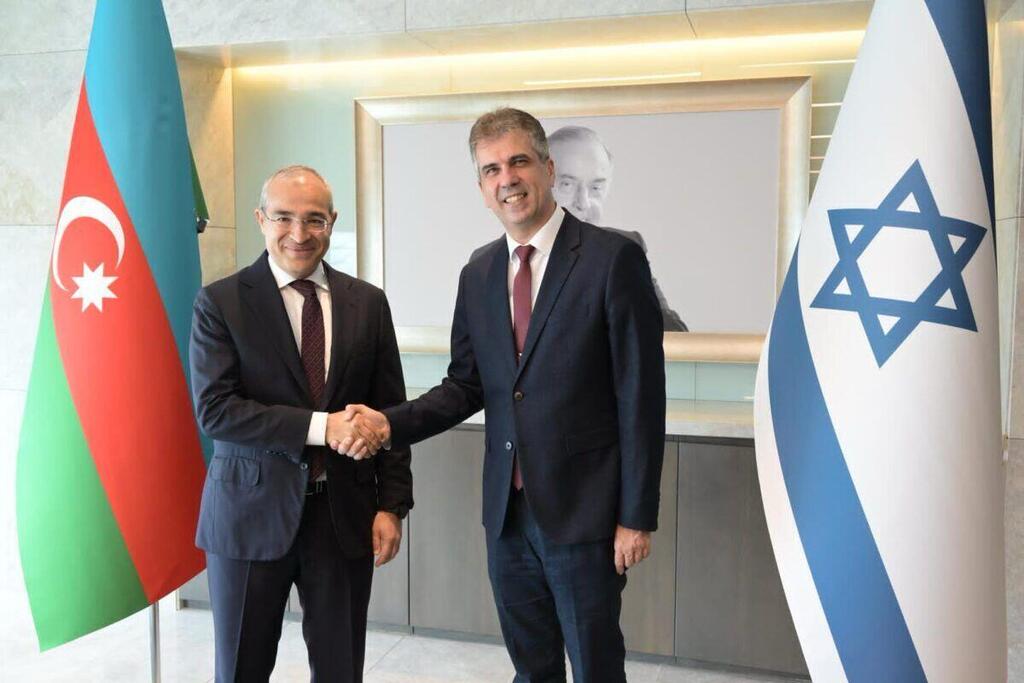
Israeli Energy Minister Eli Cohen (right) shakes hands with Azerbaijani Economy Minister Mikayil Jabbarov in Jerusalem
(Photo: Shlomi Amsalem)
For Azerbaijan, it marks an expansion of its operations beyond the Caspian Sea and a rare entry into a Middle Eastern energy market; for Israel, it is a partnership with a state-owned corporation whose capital, Baku, maintains deep strategic ties with Jerusalem.
One benefit of this move is the significant geopolitical leverage it gives Israel. The partnership creates pressure points beyond its borders, particularly toward Iran, Azerbaijan’s neighbor, with which it has a complex relationship.
Get the Ynetnews app on your smartphone: Google Play: https://bit.ly/4eJ37pE | Apple App Store: https://bit.ly/3ZL7iNv
In March 2023, Azerbaijan became the first Shiite-majority country to open an embassy in Israel, underscoring the depth of diplomatic ties. Tehran is highly sensitive to Jerusalem-Baku cooperation, especially as ethnic Azeris make up Iran’s largest minority.
According to security expert Brenda Shaffer, the Israel-Azerbaijan partnership grants Israel soft power in the Iranian arena. Expanding energy cooperation not only strengthens Israel’s energy security but also generates geopolitical leverage inside Iran. It is worth considering which other groups in the region might be affected by a similar move.
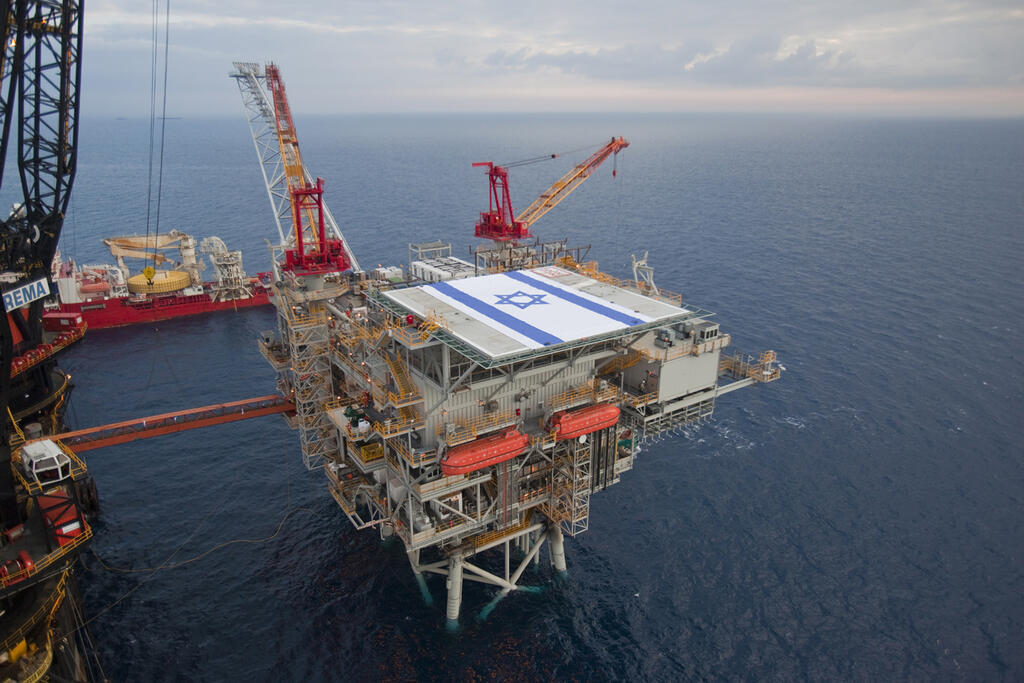
The natural gas production platform stands at the Tamar gas field in the Mediterranean Sea off the coast of Israel
Further underscoring the potential significance of this move is the fact that the regional energy market already runs on economic interests, not religious or political identity. Muslim-majority Azerbaijan supplies over a third of Israel’s oil imports via Turkey, which openly opposes Israel. Energy has long served as a practical bridge between Israel and its neighbors, and strengthening regional partnerships could create a deep web of interests that promotes stability. The move also opens new possibilities, such as exporting gas to Europe via Turkey.
Beyond geopolitical advantages, this step bolsters Israel’s standing as a regional energy power. As of 2023, Israel held proven gas reserves of about 1,083 billion cubic meters and exports to Egypt and Jordan. When a Muslim country like Azerbaijan chooses to invest directly in Israeli energy infrastructure alongside international players such as BP, it effectively paves the way for others to follow.
Energy Minister Eli Cohen has called the natural gas sector “a strategic asset for the State of Israel, strengthening our economic and political standing in the world and particularly in the Middle East.” The precedent set by Azerbaijan could lead to similar investments and broaden Israel’s regional legitimacy as a leading energy player.
That said, concerns about the move cannot be ignored. Bringing a Muslim nation, even a friendly one, into Israel’s energy sector could be seen as a security risk. Fears of political pressure, data leaks or economic dependency are not unfounded. But these are precisely the areas where strict regulation, time-limited ownership agreements and clear exit clauses can balance the risk. Foreign investment should not be avoided, but shaped in a way that ensures sovereign control alongside regional partnership.
The SOCAR deal could mark the start of a new era — one in which Israel reduces its energy vulnerability not through isolation, but through calculated openness. The more regional players share Israel’s energy interests, the more secure the resource will be and the wider its diplomatic reach. The government should adopt a clear policy enabling carefully controlled foreign investments in additional fields, under full oversight and ownership limits, to make Israel’s gas sector not only profitable but also more resilient, stable and secure.