


There are moments when a war reaches a crossroads. That was the case in December 2023, at the height of the first hostage deal and again in September 2024. It is the situation now as well.
On Sept. 23, 2024, after Prime Minister Benjamin Netanyahu visited Unit 8200, where young officers pressed him to assassinate Hezbollah leader Hassan Nasrallah, he ordered the preparation of two strategic options. The first: a ceasefire agreement with Hezbollah mediated by France. The second: assassinating Nasrallah and shifting to a scenario in which Lebanon becomes the main arena of the war. After issuing the directive, he departed for a meeting at the United Nations. The option that was ultimately chosen is known.
Returning to the present: four and a half weeks after the opening strike delivered by Israel and the United States against Iran’s ayatollah regime in Tehran, the war once again stands at a crossroads.
One path involves a sharp American threat from President Donald Trump, followed by the conclusion of the campaign within days. Such a scenario would bring significant military achievements, but also domestic criticism and the need for a sustained effort against Iran to preserve those gains. Iran could emerge more extreme and more motivated to rapidly and covertly pursue nuclear capabilities.
The second path involves a ground incursion into Kharg Island — Iran’s main oil export terminal — reopening the Strait of Hormuz and a slide into prolonged escalation that could last weeks or even months, but with the potential for more substantial damage to Iran.
How did we get here — and what can be done from this point? The achievements of the Israeli military and U.S. Central Command, known as CENTCOM, in degrading Iran’s strategic capabilities are dramatic. The nuclear project, military industry, Quds Force — the overseas arm of Iran’s Revolutionary Guard — and missile systems have all suffered severe blows.
True, Israel’s home front is absorbing an average of about 10 missiles a day. In practice, however, Israel is confronting a regional power that had planned heavy barrages, and what has materialized is less than 10% of the threat Iran had prepared. The reason is simple: Israeli strikes eliminated more than 80% of the capabilities Iran had built in advance. This is well understood in Tehran, even if it is difficult for the Israeli public to fully accept.
At the same time, the optimistic scenario of toppling the Iranian regime — put forward by Israel’s Mossad intelligence agency and embraced by many — will have to wait until after a ceasefire, with the hope that it may still materialize.
Along the way, another surprise emerged. Some have called it “the major failure of the American system”: the closure of the Strait of Hormuz. The scenario may have appeared in briefings, but in practice there was no preparation for it. This is similar to how a “surprise raid” scenario existed before Oct. 7, yet was not translated by the Israeli military into operational readiness. The same applies here: not in plans, not in forces and not in assigned missions.
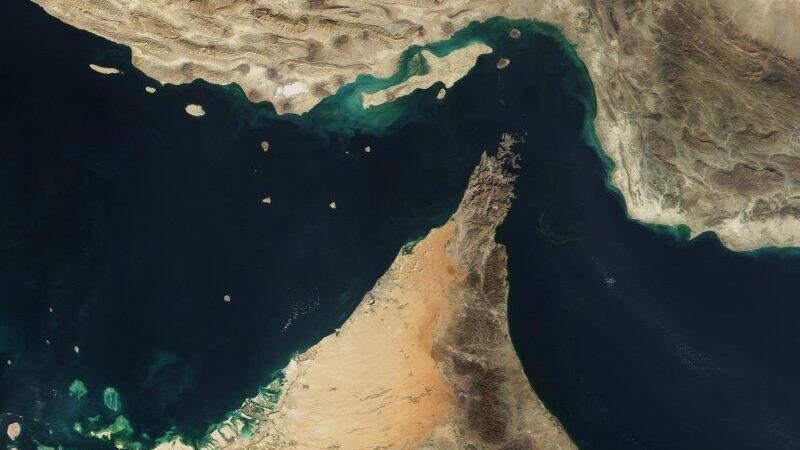
Strait of Hormuz
(Photo: Wikimedia Commons)
When the strait was closed, Trump ordered the world’s most powerful military: “Open the strait.” But CENTCOM did not provide an answer. There was no preparation — and no success even in dealing with a limited number of naval mines.
Still, the achievements of Israel and the United States are significant: severe damage to Iran’s nuclear project, major blows to its missile infrastructure and strengthened deterrence against the Iranian leadership. Iran, for its part, has adopted a familiar strategy — one used by Hezbollah: “Not losing is my victory.”
This reality presents two clear alternatives.
Option A: an effective American threat leading to a rapid end to the campaign within days, with significant achievements alongside the need for continued pressure on Iran.
Option B: insistence on reopening the Strait of Hormuz, combined with the seizure of oil facilities by U.S. ground forces with Israeli air support — a move that would lead to prolonged escalation lasting many weeks.
Regarding the Lebanese front: militarily, the goal should be to remain wherever necessary, with whatever forces are required. The mission is to defend residents of northern Israel — and experience has shown that against Hezbollah, defense requires initiative.
According to Israeli military reports, more than 850 terrorists have already been killed and forces are advancing toward the Litani River in southern Lebanon. They are not expected to remain there, but the objective is to establish fire control and prevent any Lebanese civilian movement southward toward Israel, alongside the destruction of homes along the immediate line of contact.
Former military chief Moshe “Bogie” Ya’alon used to say that the difference between tactical, operational and strategic is that tactical is for days, operational for months and strategic is for now. Strategy is dynamic.
At the White House, both alternatives are now being prepared with utmost seriousness. Only at the moment of truth — when the crossroads is reached — will the president choose a strategy. As Netanyahu once did regarding Nasrallah: he prepared two options and chose a path at the decisive moment. In the current war, each time such a crossroads has been reached, the choice has been escalation.
One final point: it would be a strategic mistake to end the war with an Israeli victory alongside an American failure. Coordination between the two countries must be maintained not only at the tactical level, but also at the strategic level and in the war’s objectives. It worked at the outset. Now it must be preserved — especially as the campaign once again stands at a crossroads.