

The wave of targeted killings that Israel has witnessed in recent years is not the result of a single incident or the actions of one particular crime organization. It is the outcome of several deep, interconnected processes that have evolved over more than two decades — economic, technological, social and cultural.
To understand today's reality, we must go back to the early 2000s.

That period marked a turning point for organized crime in Israel. The Trade Bank affair was one of the most significant events illustrating how unprecedented amounts of money could flow into the criminal underworld and reshape the balance of power. At the same time, a much broader process was unfolding: the globalization of organized crime.
Israeli crime organizations expanded their operations into Europe, the Americas, and other international markets. Drug trafficking, money laundering and other transnational criminal activities transformed local organizations into international networks. This was the stage in which organized crime became scalable, rapidly expanding its financial resources, influence, operational capabilities and global reach.
Today, we are witnessing the next phase of that evolution. While the first wave was driven primarily by globalization and the movement of illicit capital, the current phase is fueled by digital finance, encrypted communications, advanced technologies and increasingly sophisticated criminal infrastructures that enable organizations to operate faster, more efficiently and across multiple jurisdictions.
Yet money alone does not explain what we are seeing.

(Photo: Jose HERNANDEZ Camera 51/Shutterstock)
Alongside these economic changes, a profound cultural transformation has taken place. Social media no longer merely reflects reality — it shapes it. It promotes images of power, wealth, status and instant success, making organized crime appear attractive to some young people searching for identity, recognition and rapid social mobility. In this sense, culture has become just as influential as money itself.
This phenomenon is not unique to Israel. Similar patterns can be observed in Southern Italy, parts of France, South America and other regions where organized crime recruits a new generation of hitmen by offering money, influence and a sense of belonging.
At the same time, the unwritten rules that once imposed at least some limits on violence have steadily eroded. Attacks in public spaces, explosive devices and the killing of innocent bystanders—including women and children—have become increasingly common. The violence itself has evolved.
Taken together—the Trade Bank affair as a historical milestone, the globalization of organized crime, its growing scalability, digital finance, cultural transformation and the erosion of traditional criminal codes—these developments present a far broader picture than any single assassination or criminal incident.

Luxury vehicles, cash and a Rolex watch seized by police during investigations into organized crime are displayed in a police handout
(Photo: Israel Police)
Yet the state's response has not evolved at the same pace. While organized crime continuously adapts to economic, technological and social change, Israel's approach remains focused largely on individual incidents and specific criminal organizations rather than on the long-term evolution of the threat itself.
The fight against organized crime, important as it is, has not received the national attention it deserves-particularly in light of these developments. Israel's unique security reality naturally places terrorism, war and external threats at the center of national priorities, absorbing much of the country's strategic attention and resources.
In many other countries, where external security threats are far less dominant, organized crime is recognized as a major threat to national resilience, governance and economic stability. As a result, it often receives greater strategic attention, dedicated resources and long-term policy development.
It is time to broaden the way we think about organized crime.
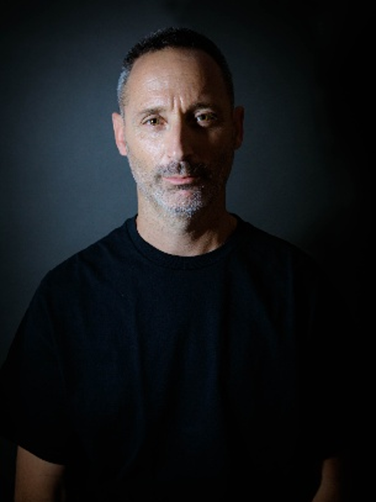 Liran Segal Photo: Courtesy
The fight must shift from a reactive approach to a strategic one, focusing on long-term trends rather than isolated events.
Greater integration of intelligence capabilities, financial tools, advanced technologies and interagency cooperation should become a central component of the national response.
Israel also needs an updated national framework that recognizes organized crime not merely as a criminal phenomenon, but as a growing threat to governance, the economy, homeland security and national resilience.
Finally, the traditional distinction between national security and internal security deserves renewed examination. Organized crime increasingly employs methods, technologies and operational capabilities that closely resemble those associated with national security threats.
Organized crime has already adapted to the realities of the twenty-first century.
It is now time for our strategy to do the same.
- The author is a consultant and lecturer specializing in intelligence, homeland security, organized crime, personal security and privacy protection.