

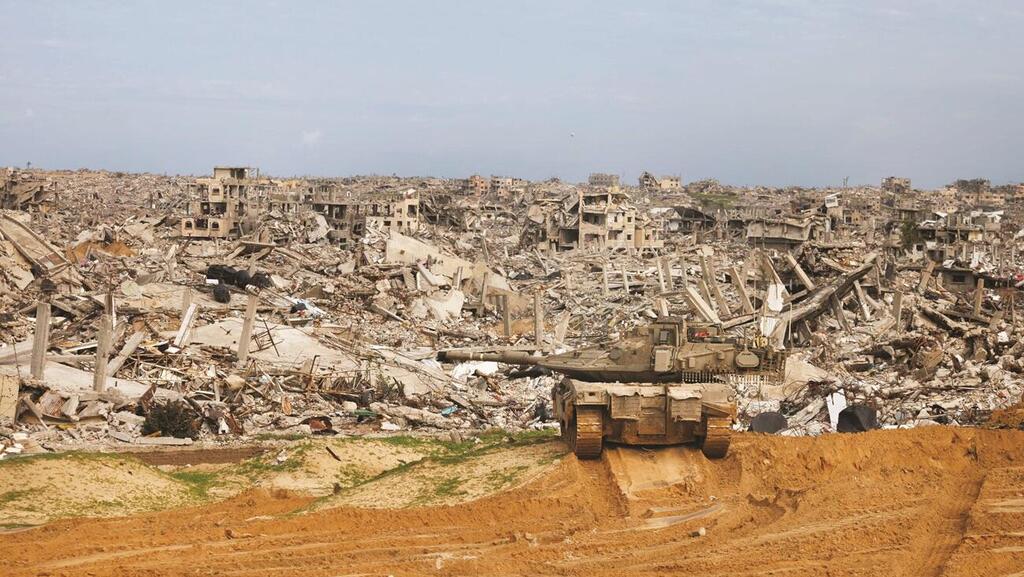
The hostage crisis was not over yet when we had a couple over for dinner. He a German, she an Israeli. When the talk turned to the critical situation in Gaza, where Israel had killed more than 70,000 Palestinians and created a humanitarian catastrophe, I, the German non-Jew, said that I considered myself a Zionist, supporting Theodor Herzl’s vision for a Jewish state, where Jews could live in peace, self-determination and safety.
When the time came to say goodbye, our Israeli guest hugged me and said that she was very moved that I still supported the Jewish state.
The polls had already turned from international solidarity after the brutal Hamas massacre to sharply increasing criticism of the way the Netanyahu government has dealt with the conflict.
The official position of the German government went back and forth from more or less unlimited support in the fall of 2023 to the cessation of arms deliveries, which were eventually lifted. (Since then, cooperation in high-tech arms production has been at an all-time high, including Arrow 3 missiles for Germany and three new Dakar-class submarines for Israel.) But among voters, as the polls clearly indicated, the critical view of the Jewish state persisted. Seventy-four percent wanted to increase pressure on Israel in 2025.
Like in every other European state, antisemitism, old and newly imported, has dramatically increased in Germany.
Among all my many friends, Jewish and non-Jewish, everyone would vehemently deny—and rightly so—being antisemitic in any way. Yet, at the same time, almost nobody in this group would be ready to still defend what’s happening in today’s Israel, me included. The common feeling is more and more like this: enough is enough.
The dilemma is obvious. The country from which the Holocaust originated is measured differently than other nations. Former Chancellor Angela Merkel had proclaimed Israel’s safety should be German Staatsräson (raison d’être).
Yet, in the current situation, the question is looming large: is this promise still realistic? Or is it outdated? How can Israelis still expect Germans to close their eyes to the dramatic situation in which the current government in Jerusalem is clearly on a path to annexing the West Bank, allowing terrorist settlers to harass and even kill Palestinians, burn their houses, and supporting and emboldening convicted criminals who are in charge of security and the police?
In this context, it is getting more challenging for the German government to stand by Israel and to keep up the idea of Staatsräson as a given. Chancellor Friedrich Merz recently said he had a hard time with this term since it did not spell out what it really meant. When it comes to the constant attacks by settlers against Palestinians and the construction of even more settlements, Chancellor Merz did not mince his words: “I made it clear: There must be no de facto annexation of the West Bank,” he wrote on X after he had called Netanyahu.
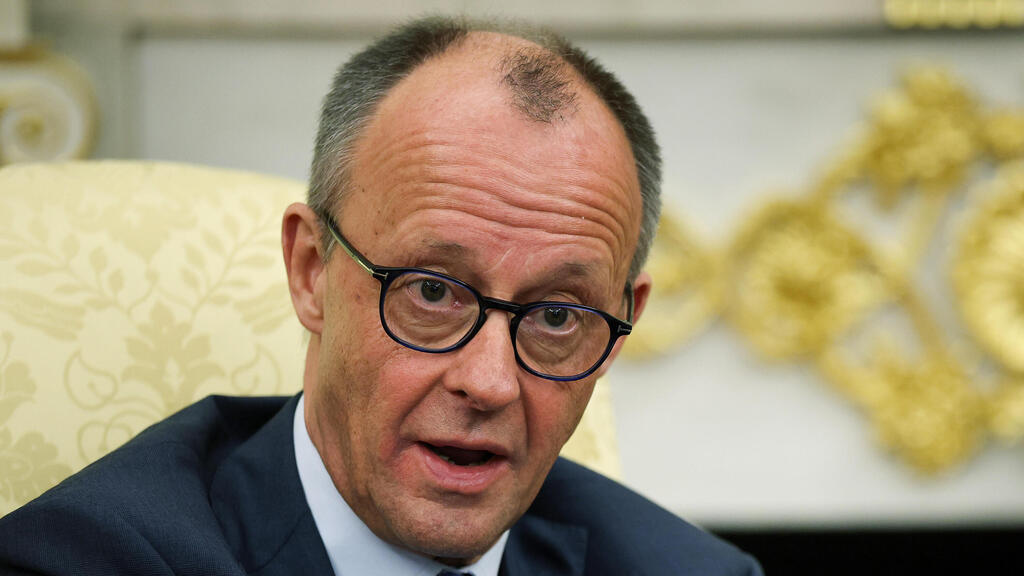
Friedrich Merz
(Photo: Win McNamee/Getty Images)
This remark was followed by an unprecedented escalation by Finance Minister Smotrich, who invoked the Shoah when he wrote: “Chancellor Merz, the times when Germans told Jews where they can live and where not are over and will never come back. You will not force us into ghettos again, especially not in our own country.”
Even the Israeli ambassador to Berlin, Ron Prosor, felt obliged to counter this attack from Smotrich by saying that his remarks were “exactly what is undermining the remembrance of the Holocaust and are presenting things in a completely distorting way.”
This is just the latest escalation. For years now, Berlin has supported the European mantra that Israel should not prevent a two-state solution, knowing, of course, full well that this goal has become an illusion.
Yet, given the current course of Israeli politics, it will be extremely difficult to explain to a critical public why Germany must continue to support this questionable route.
Netanyahu’s government is trying to strangle the independent judiciary and turn the Jewish state into an autocratic entity, which has little to do with the Israel that the world has admired for its democratic values—values that are becoming increasingly difficult to find. The recent decision by the Knesset to introduce the death penalty only for Palestinians, clearly an inhuman and racist act, might very well be the straw that breaks the camel’s back in Germany, but also in the rest of the Western world.
This shameful decision must serve as a wake-up call. Israelis must realize what is at stake for the reputation of their country. Right now, while a final solution for the Iran conflict is still unclear, Israelis understandably have other worries. My Israeli friends tell me they are tired and frustrated when they have to rush to the shelters several times day and night.
But when the current war (which German President Frank-Walter Steinmeier claims to be against international law) is finally over, voters will have to decide in which direction they want to steer the Jewish state. The choice is clear: an open, liberal state where the rule of law is guaranteed, or an ultra-Orthodox theocracy where a minority keeps the country in a chokehold and violence against Palestinians is considered the new irresponsible norm. The violent terrorists in the settlements claim to be the new real Zionists. If this view prevails, even I have to reconsider whether I still want to call myself a Zionist.
Werner Sonne, a former senior correspondent for German broadcaster ARD, is the author of the book “Israel und wir – Geschichte einer besonderen Beziehung” (Israel and we – the story of a special relationship)