

President Isaac Herzog’s visit to Kazakhstan may appear, at first glance, to belong to the routine rhythms of diplomacy. But it also points to a gradual and arguably more consequential shift in Israel’s external orientation. Coming in the wake of Kazakhstan’s association with the Abraham Accords, the visit offers a glimpse into how both middle powers are recalibrating their foreign policies in response to a changing international landscape.
The significance of the timing should not be overstated, but neither should it be dismissed as incidental. Kazakhstan’s engagement with the Abraham Accords suggests that the agreements are beginning to operate beyond their original regional framework. What initially took shape as a mechanism for normalization within the Middle East now appears to function, more loosely, as a platform for pragmatic cooperation.
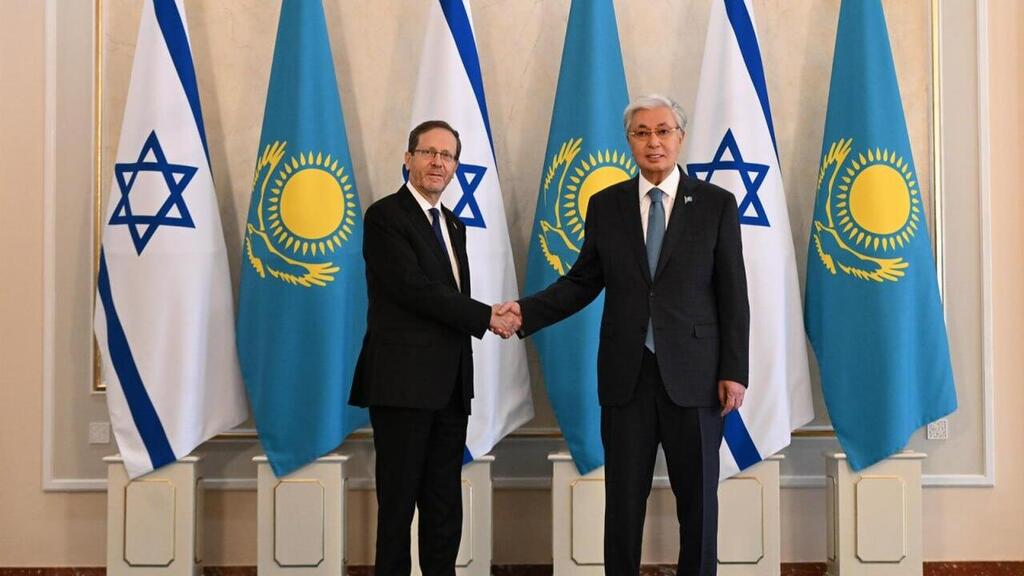
This evolution does not signal a wholesale transformation. It does, however, point to a widening scope, one in which shared interests in technology, trade and development increasingly take precedence over identity-based alignments.
For Kazakhstan, this development aligns with an established pattern of foreign policy behavior. Since independence, its leadership has sought to manage the constraints imposed by geography through diversification rather than alignment. Positioned between Russia and China, and attentive to both, Kazakhstan has cultivated a range of partnerships designed to preserve autonomy and reduce dependence.
Engagement with Israel fits comfortably within this approach. It provides access to technological expertise and Western-facing networks without the strategic entanglements that can accompany closer ties with major powers. In this sense, the relationship is less about affinity than calibrated flexibility.
Israel’s interest reflects a related, though not identical, adjustment. Over time, its diplomacy has extended beyond the immediate confines of the Middle East, drawing on comparative advantages in areas such as innovation, water management and applied technology. These capabilities have become central to Israel’s engagement with states outside its traditional strategic perimeter.
Central Asia, once peripheral in Israeli foreign policy, has gradually entered the picture as part of a broader effort to integrate into emerging economic and technological circuits. The shift is neither abrupt nor uniform, but it is discernible, particularly against the backdrop of persistent regional volatility.
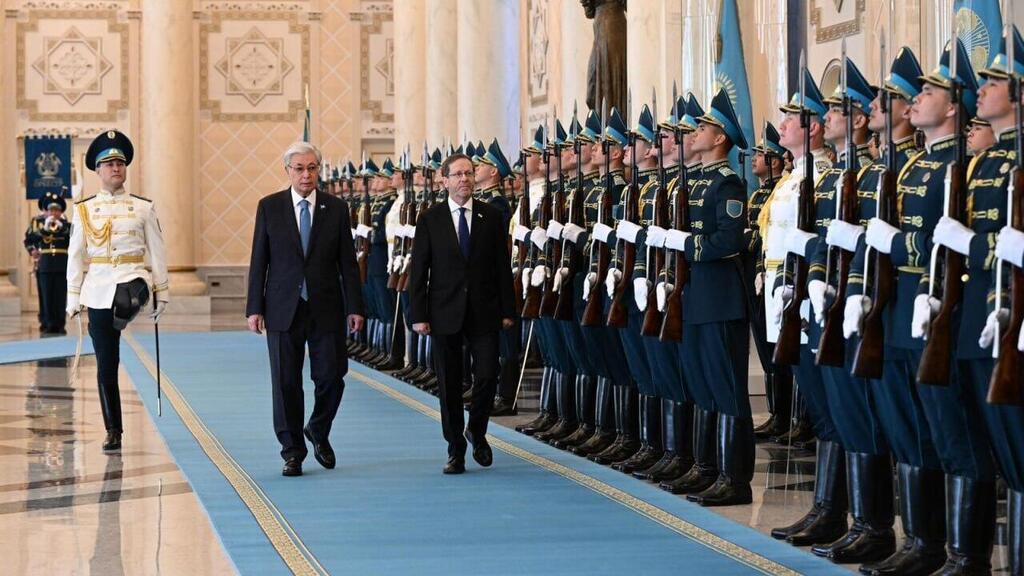
(Photo: Haim Zach/ GPO)
The prominence of innovation and technology on the visit’s agenda should therefore be understood in strategic rather than purely economic terms. These sectors offer a mode of cooperation that is relatively insulated from geopolitical sensitivities while still generating tangible benefits.
For Kazakhstan, partnerships in these fields support efforts to diversify an economy historically reliant on extractive industries and to advance digital transformation. For Israel, they provide a means of projecting influence that does not depend on traditional forms of power. The absence of deep historical or security ties, often seen as a limitation, may in fact facilitate this kind of engagement by allowing both sides to define the relationship in functional terms.
At the same time, the visit carries a signaling dimension that extends beyond the bilateral context. For Kazakhstan, engagement with Israel reinforces a broader image of strategic openness and policy flexibility. It demonstrates a willingness to work with a wide spectrum of partners without privileging any single axis.
For Israel, the visit suggests that the Abraham Accords may have relevance beyond their original geographic scope, serving at least in part as a connective framework linking disparate regions. These signals are not directed solely at domestic audiences. They are also legible to external actors whose influence both countries must continue to navigate.
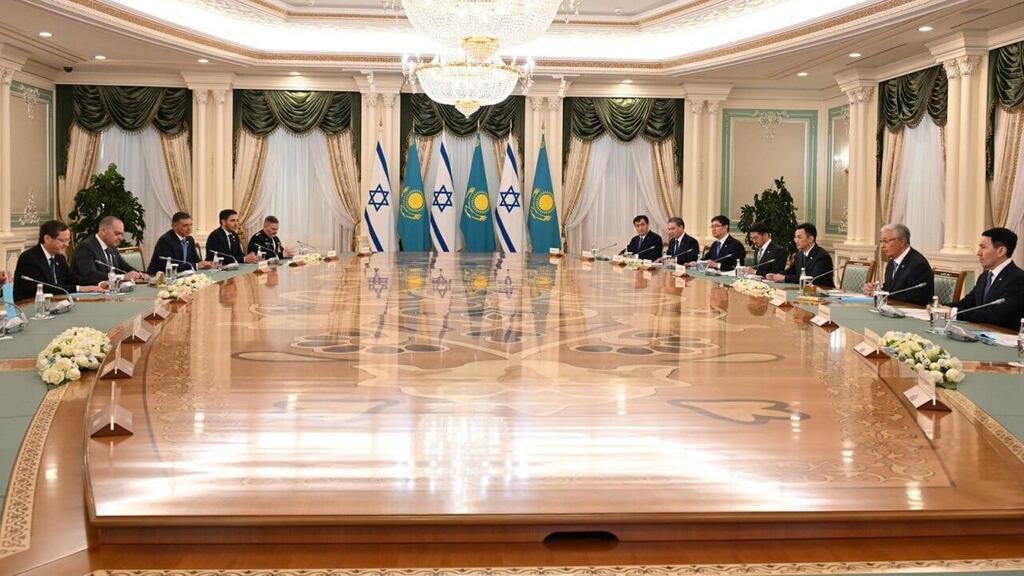
(Photo: Haim Zach/ GPO)
Cultural and historical linkages add a secondary layer to this interaction. The presence of a Jewish community in Kazakhstan and the existence of longstanding, if limited, connections between the two societies provide a degree of continuity. Such factors facilitate engagement and contribute to a sense of familiarity. Nevertheless, they do not constitute the primary basis of the relationship. Its underlying logic remains anchored in shared interests and structural considerations rather than identity or historical ties.
More broadly, Herzog’s visit can be situated within an increasingly visible pattern in the role of middle powers in international politics. As competition among major powers intensifies, middle powers are not merely reacting to external pressures. They are, to varying degrees, seeking to expand their strategic options through diversified, often loosely institutionalized partnerships.
These relationships tend to be issue-specific, pragmatic and adaptable. They do not displace traditional alliances, but they do complicate them, introducing forms of cooperation that cut across established regional and political boundaries.
 Dr. Mordechai Chaziza Photo
In this context, Kazakhstan is less an exception than a representative case. Its engagement with Israel illustrates how middle powers operating under structural constraints can use selective partnerships to enhance their room for maneuver. Israel’s outreach, in turn, reflects an understanding, implicit if not always articulated, that influence in the contemporary international system is exercised not only through proximity or scale, but also through connectivity and specialization.
The interaction between the two countries suggests a form of niche diplomacy that is less hierarchical and more networked, shaped by overlapping interests rather than fixed alignments.
Thus, the visit is not solely about Kazakhstan, nor even primarily about the bilateral relationship. It points to a broader trajectory in Israel’s foreign policy, one that increasingly emphasizes interregional engagement and functional cooperation. This trajectory does not replace Israel’s regional priorities, which remain central, but it does supplement them, offering additional avenues for influence in a more diffuse and uncertain global environment.
If the visit carries wider implications, they lie in this gradual reconfiguration of diplomatic space. Geography continues to matter, but it is no longer as determinative as it once was. What matters increasingly is the ability of states to identify areas of mutual benefit and cultivate relationships that remain viable across shifting political conditions.
In that sense, the significance of Herzog’s visit lies less in its immediate outcomes than in what it reflects: an incremental move toward a more flexible, outward-looking and networked approach to international engagement.
The writer is a senior lecturer in the Department of Politics and Governance and the Division of Multidisciplinary Studies in Social Science at Ashkelon Academic College, and a research fellow in the Department of Asian Studies at the University of Haifa. He is co-author of Emerging Middle Powers in the Middle East: Niche Diplomacy in the 21st Century.