

It is easy to imagine IDF Chief of Staff Lt. Gen. Eyal Zamir using the five-hour flight from Ben Gurion Airport to Germany to review the latest profiles of his counterparts in seven Arab countries. It is just as easy to imagine them doing the same.
On paper, Israel has no formal relations with two of those countries, Saudi Arabia and Kuwait, or with Qatar. Beneath the surface, however, contacts exist. The most intriguing encounter was naturally between Zamir and Saudi Chief of Staff Gen. Fayyad bin Hamed al-Ruwaili, who has held his post since 2018, longer than Zamir has held his. The gathering, organized by U.S. Central Command, brought together the military chiefs of Israel, Saudi Arabia, the United Arab Emirates, Bahrain, Kuwait, Qatar, Jordan and Egypt.
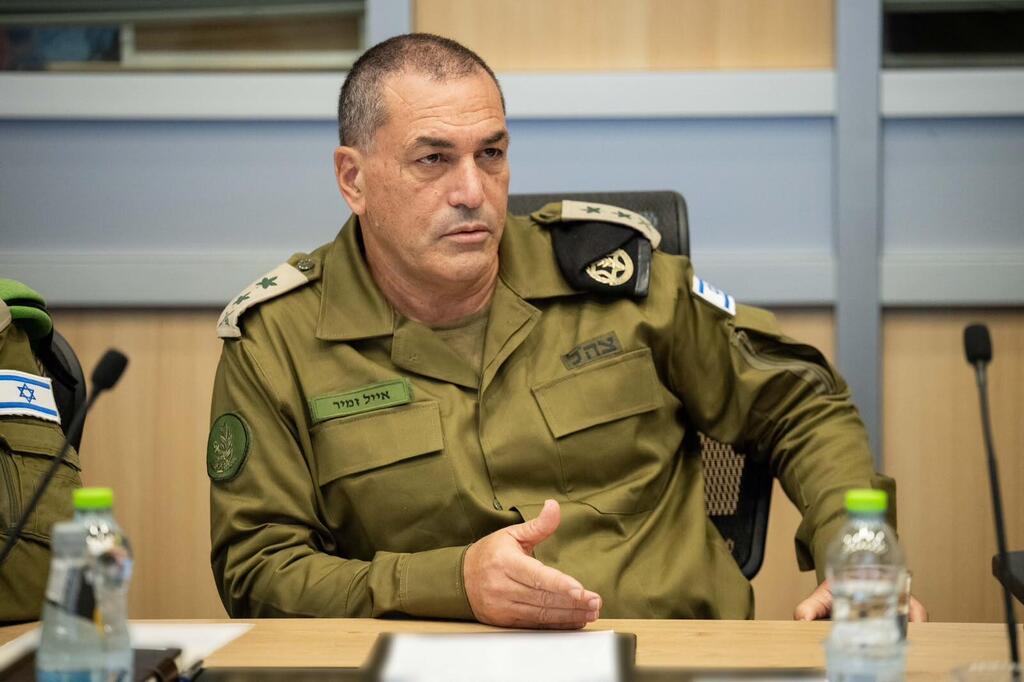
IDF Chief of Staff Lt. Gen. Eyal Zamir
(Photo: IDF)
No one leaked details. None of the military chiefs disclosed what was said, even after CENTCOM confirmed the unusual gathering. Because of the secrecy surrounding the talks, it remains unclear exactly how long the meeting lasted. Even the smallest details were coordinated with great care.
Officials in each of the Arab countries will have studied Zamir as closely as Israel studied their military chiefs. Zamir is expected to remain in his post through Israel’s elections, with his term likely to be extended by another year.
Qatar’s presence was particularly noteworthy. It was invited by the Americans despite the controversy in Israel over its dealings with figures close to Prime Minister Benjamin Netanyahu. Oman did not attend as it continues its special role as a mediator between Iran and the Gulf states, an effort that has so far failed to produce a breakthrough despite Muscat’s attempts to advance understandings with Tehran.
The meeting came amid intensifying regional tensions over Iran and the Houthis in Yemen, with Washington declining direct military intervention against the Houthis while offering Saudi Arabia intelligence and targeting assistance.
U.S. President Donald Trump twice rejected requests from Saudi Crown Prince Mohammed bin Salman, widely known as MBS, for direct U.S. military cooperation. Egyptian President Abdel Fattah el-Sissi gave the Saudi crown prince a warm and elaborate welcome, personally meeting him at the airport and accompanying him to Cairo’s Al-Ittihadiya presidential palace. But he carefully rejected MBS’ request to send Egyptian troops to fight the Houthis.
Egypt’s costly history of military intervention in Yemen, particularly its 1960s campaign, was enough for Cairo to give a clear “no” to the Saudi request. MBS had sought to sweeten the proposal by offering hundreds of millions of dollars, perhaps even billions, in exchange for the deployment of Egyptian forces.
Israeli assistance to Saudi Arabia, mediated by CENTCOM, is already beginning to take shape in the form of intelligence cooperation. The challenge extends beyond protecting U.S. military bases and Saudi Aramco’s oil infrastructure. It also includes helping establish an alternative route for Saudi oil exports that would bypass both the Bab el-Mandab Strait and the Strait of Hormuz.
For now, Israel has an opportunity to capitalize on Saudi Arabia’s predicament as Washington stays out of direct military intervention. The United States is leaving greater room for Israel, with the hope that military cooperation could eventually broaden the relationship and perhaps lead Saudi Arabia toward some form of participation in the Abraham Accords.
Jordan should not be overlooked. Its senior representative at the meeting, Maj. Gen. Majdi al-Harasis, was appointed chief of staff only last month. Relations between Saudi Arabia and Jordan are cool. Jordan’s military and intelligence ties with Israel, meanwhile, remain intact despite having undergone unwelcome changes.
The gathering at a secluded resort in Germany, about whose discussions very little is known, was intended to promote cooperation and provide a forum for consultations among Iran’s regional rivals. It was also designed to strengthen military, security and intelligence ties among the participants. CENTCOM said the commanders discussed opportunities to enhance regional security cooperation.
Zamir briefed his Arab counterparts on IDF operations across a growing number of fronts, from Syria and Lebanon to the Gaza Strip and the West Bank, as well as against the Houthis in Yemen.
The meeting suggests that cooperation between Israel and the participating Arab states could expand further, particularly as shared concerns over Iran and the Houthis create new areas of common interest.