

Every year in mid-February, former Lebanese prime minister Saad Hariri attends memorial ceremonies for his father, former prime minister Rafik Hariri.
From his base in Abu Dhabi, the younger Hariri had announced his retirement from political life. But during this year’s visit to Beirut, he met politicians, senior military officers and businesspeople and said he intended to “return to the picture.”
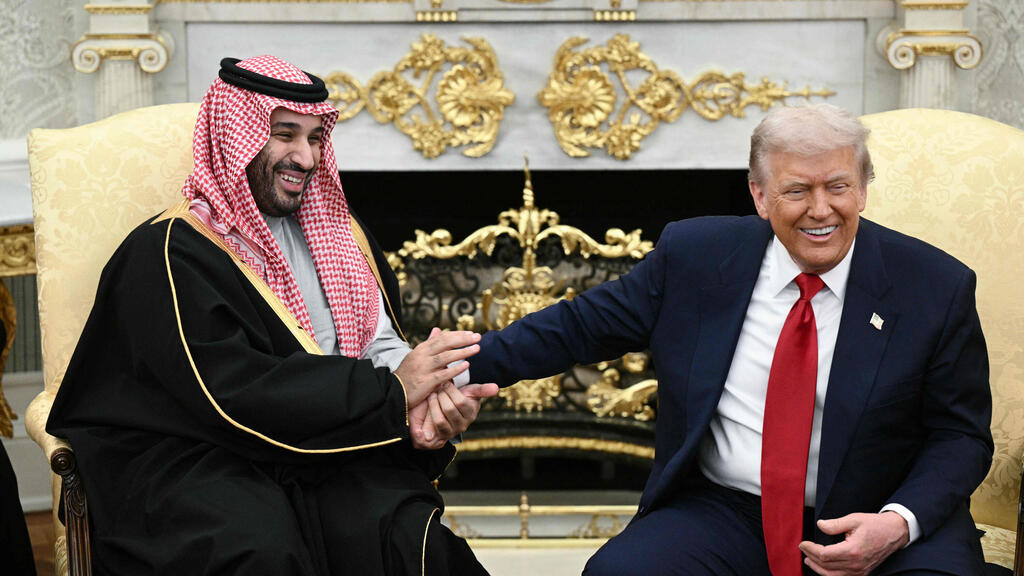
Mohammed bin Salman’s moment: How Saudi Arabia is reshaping the Middle East
(Photo: Brendan SMIALOWSKI / AFP)
When word reached Saudi Arabia, Foreign Minister Faisal bin Farhan sent Hariri a clear message: Do not test us. Riyadh stands with President Joseph Aoun and Prime Minister Nawaf Salam.
For now, Hariri’s comeback dream has been shelved.
In November 2017, he was summoned to Saudi Arabia and taken from the airport for a series of interrogations under harsh conditions of confinement. He was presented with a resignation letter from his post as Lebanese prime minister and placed on a stage to deliver the bizarre announcement of his departure.
French President Emmanuel Macron sent a special plane, and the “deposed” Hariri flew to France before returning to his office in Beirut as though nothing had happened. Less than a year later, he returned to Saudi Arabia and smilingly dismissed reports that Mohammed bin Salman had forced him from office.
Trump asks, Riyadh provides
Trump and Mohammed bin Salman have found common ground in the world of investment. Like a customer at a neighborhood store, Trump points to what he needs, and the royal palace in Riyadh moves quickly to provide it.
At the same time, Saudi Arabia is attacking the Houthis in Yemen while turning a blind eye to Iranian strikes against U.S. military bases on its territory. The Houthis are targeting two sites in Saudi Arabia, both facilities belonging to oil giant Aramco.
Iranian Revolutionary Guard officers are now in Sanaa, Yemen, directing the campaign against Saudi Arabia.
The Saudi ambassador in Tehran remains at his hostile posting, much like his Iranian counterpart in Beirut. Neither leaves his embassy building. Both know intelligence agencies are watching them and that authorities are waiting for the moment they receive orders to depart.
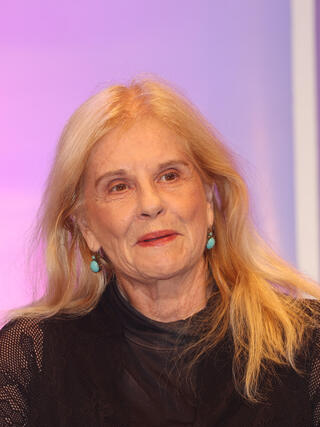 Smadar PerryPhoto: Yariv Katz
Trump describes Mohammed bin Salman as “my friend.” But in March, during a speech at an investment forum in Miami, the U.S. president claimed that the crown prince “kisses my ass.”
Mohammed bin Salman remained silent, and his advisers were instructed not to respond.
After the presidents of Syria and Lebanon visited the White House, Trump’s advisers called Riyadh and instructed their Saudi counterparts to begin planning economic investments in both countries.
The meeting Netanyahu leaked
The Saudi crown prince has not forgotten the leak by Prime Minister Benjamin Netanyahu concerning their secret meeting on November 22, 2020, in the Saudi city of Neom.
The historic encounter was held in the presence of then-U.S. Secretary of State Mike Pompeo, who managed to evade the journalists traveling with him to Saudi Arabia.
Pompeo said nothing. The Saudis issued a forceful denial. Only one side, and it was not difficult to guess which, rushed to leak the meeting to the Israeli media.
Since then, the Saudi royal palace has boycotted Netanyahu’s office.
A path toward a Palestinian state
Mohammed bin Salman and his advisers have adopted a path toward establishing a Palestinian state, without defining its borders or informing the West Bank leadership of their plan.
Until two or three years ago, the Saudis appeared indifferent to the Palestinians’ fate. They also refused to absorb Gaza residents in the kingdom’s vast, sparsely populated desert areas.
Trump applied pressure but received no response, while European leaders tried to appeal to the crown prince.
Under the revived plan of Riyadh’s “fantastic guy,” as Trump has called him, authority in the Palestinian territories would be handed to the leadership in Ramallah.
The question is what will happen in the November elections for a new West Bank parliament. Two months later, after a younger leadership emerges, a presidential election is expected to be held.
The crown prince knows whom he wants to see at the top of the pyramid.
He must now contend with Trump’s latest ultimatum: Join the Abraham Accords, or tell the U.S. president that Saudi Arabia intends to wait until it becomes clear who will be Israel’s next prime minister.