

All eyes in Gaza are fixed on Tehran. The war being waged by the United States and Israel against Iran will decisively shape the future of Palestinian terrorist organizations. Iran’s regime is now fighting for its survival, and whether it survives or falls could also determine the fate of Hamas.
It is important to remember that Iran did not establish Hamas. The movement was born within the Sunni Muslim Brotherhood, which has long been in theological conflict, and at times violent confrontation, with the Shiite camp led by Iran. But as Iran embraced the vision of Israel’s destruction, Hamas gradually became a favored partner of the ayatollahs’ regime and increasingly relied on its support.
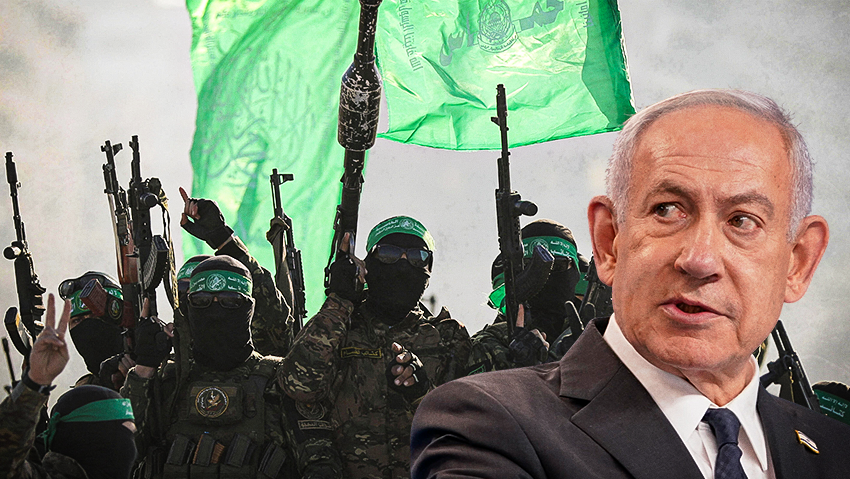
At the same time, Iran also adopted Palestinian Islamic Jihad, an even more radical terrorist organization that emerged in Gaza. For decades, Iran financed Hamas and Islamic Jihad with billions of dollars. It also supplied them with extensive weapons, trained their operatives in camps inside Iran and provided them with consistent political backing.
After Hamas expelled the Palestinian Authority from Gaza in 2007 and seized control of the territory, the terrorist organizations’ dependence on Tehran became nearly absolute. Most Arab leaders remained loyal to Palestinian Authority President Mahmoud Abbas, leaving Hamas in need of a patron with deep pockets and a shared ideological commitment.
Turkey and Qatar maintained close ties with Hamas because of their links to the Muslim Brotherhood, but both avoided appearing as direct sponsors of terrorism. Iran therefore became Hamas’ principal patron and strategic ally, shaping the trajectory of Palestinian terrorism for years, until October 7.
During the war that followed Hamas’ attack on Israel, the organization suffered heavy blows. It lost control of about 58% of Gaza’s territory, and many of its senior leaders and commanders were killed. Iran also lost key allies during the conflict, including Hezbollah leader Hassan Nasrallah, Syrian President Bashar Assad, Hamas political leader Ismail Haniyeh and Hamas Gaza leader Yahya Sinwar.
At the same time, Iran proved unable to rescue its proxy in Gaza.
A ceasefire initiative promoted by President Donald Trump to facilitate the return of hostages to Israel provided Hamas with a temporary reprieve. But the pause came with a price. Trump repeatedly made clear that the central condition for implementing his vision for rebuilding Gaza is the territory’s demilitarization and Hamas’ disarmament.
That demand has placed Hamas leaders at the most critical crossroads in the organization’s history. They must choose between two difficult paths. When the war ends, Hamas will have no choice but to make a decision.
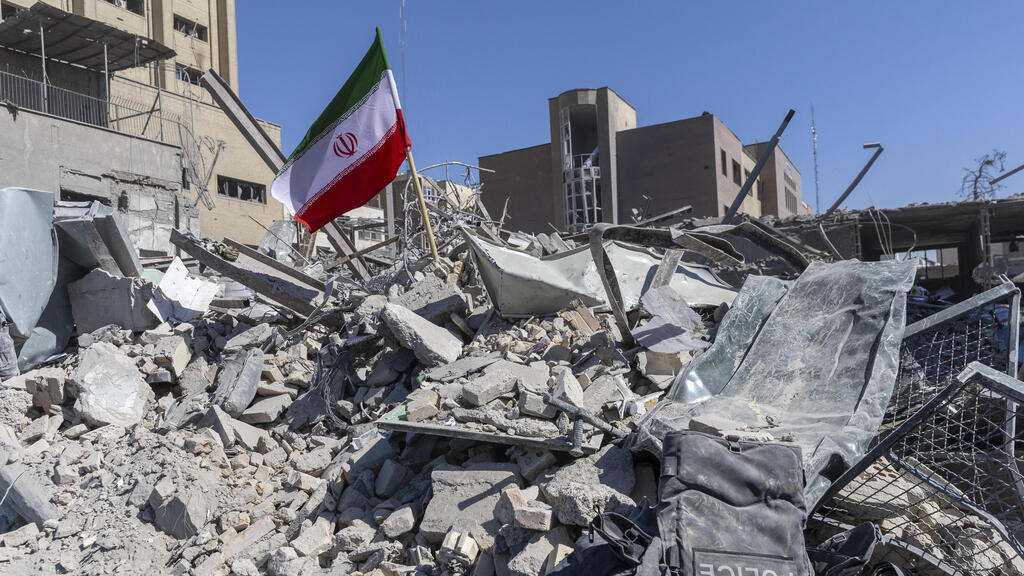
Tehran
(Photo: Majid Saeedi/Getty Images)
Several scenarios could determine the movement’s fate.
1. Surrender
In this scenario, Iran’s leadership announces unconditional surrender, similar to Nazi Germany and Imperial Japan at the end of World War II. The United States would administer Iran for a period, either directly or through local partners.
Iranian support for Hamas and Islamic Jihad would end completely. Hamas would find it difficult to defy global demands, including pressure from mediating countries close to the organization. A structured process of demilitarizing Gaza would begin, ushering in the era of a “new Gaza.”
2. Revolution
After an initial phase of airstrikes, President Trump and exiled Iranian crown prince Reza Pahlavi call on the Iranian people to take their fate into their own hands. Millions pour into the streets of major cities including Tehran, Mashhad, Isfahan, Karaj, Shiraz and Tabriz.
Iran’s Revolutionary Guard Corps, weakened by the loss of its leadership and command structures, fragments. Protesters seize government institutions while the army remains in its barracks.
A temporary revolutionary council forms in coordination with the United States to prepare the next phase: drafting a new constitution and holding democratic elections.
For Hamas and Gaza, the implications would be similar to the surrender scenario.
3. Stalemate
After several weeks of intense and targeted strikes, the Iranian regime remains in power and retains control. Nevertheless, Trump declares victory and ends the operation unilaterally.
Public protests resume in Iran, but the regime’s brutal repression prevents its collapse. The Islamic Republic survives, though its regional standing falls to historic lows.
Iran’s economy is shattered, its military infrastructure destroyed, its air defenses gone and its nuclear program pushed back for years. Diplomatic isolation deepens.
 Former national security adviser Tzachi HanegbiPhoto: Dana Kopel
Under such circumstances, Iran would lack the ability to sustain meaningful support for terrorist organizations. Hamas would face a choice between continuing to resist or adapting to the realities imposed by Trump’s plan for Gaza.
4. Agreement
Iran’s new leadership, replacing Supreme Leader Ali Khamenei, chooses to change course in order to ensure the regime’s survival. It initiates rapid negotiations with the United States that result in a ceasefire agreement.
Iran agrees to surrender its enriched nuclear material and dismantle its nuclear infrastructure while accepting intrusive and unlimited inspections designed to ensure that its military nuclear program never resumes.
Tehran also abandons its ballistic missile capabilities and commits to severing ties with terrorist organizations.
In this scenario, Hamas would become completely isolated and forced to disarm.
5. Failure
Under mounting domestic and international pressure, the United States ends its campaign in Iran before achieving its objectives. Israel aligns itself with Washington’s policy and halts its own actions.
The Iranian regime absorbs the blows it has suffered and draws encouragement from its survival. Iranian public protests fail to gain momentum.
In this scenario, Iran may provide renewed incentives to Hamas in order to preserve the group’s status as an armed resistance movement. Hamas’ insistence on retaining its weapons would derail Trump’s Gaza plan and could lead Israel to resume military operations aimed at dismantling the organization in the Gaza Strip.
The cascade of events now unfolding in Iran may therefore determine not only the future of the Islamic Republic, but also the fate of Hamas and the future of Gaza.