


Through the heavy fog of frustration surrounding the agreement with Iran and the campaign in Lebanon, one predictable certainty is emerging: Israel’s leadership will find someone to blame for the entanglements.
What will not happen is a serious inquiry into the mistakes that created the gap between the promises made at the start of Operation Lion’s Roar and the current reality, which reflects a strategic retreat compared with the situation that existed until the end of February.
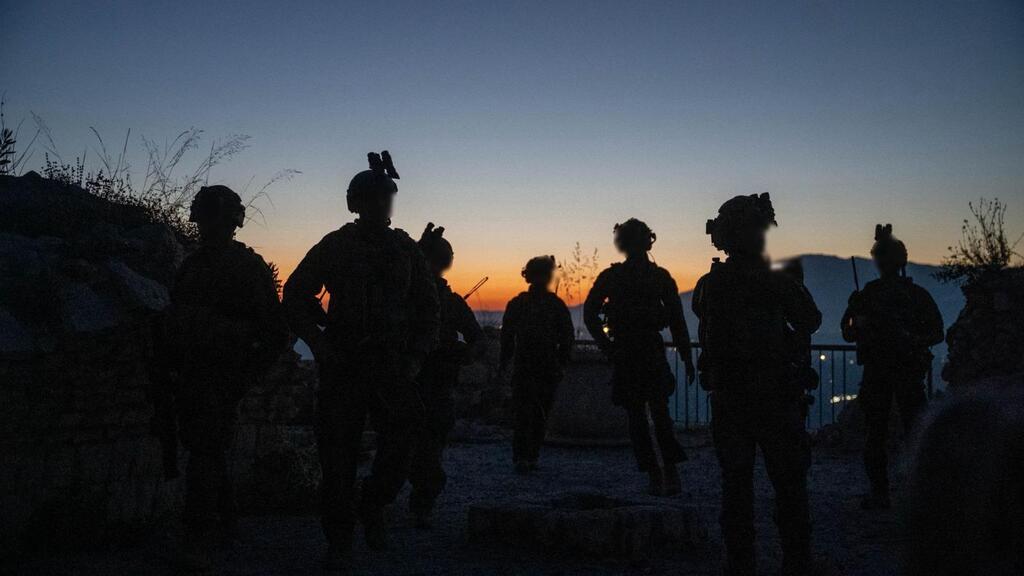
Israel’s Iran deal frustration and Lebanon entanglement have turned into a blame game, with Trump cast as the culprit
(Photo: IDF)
Indeed, when all the fantasies collapse, as they did last week with the signing of the memorandum of understanding between the United States and Iran, the culprit is quickly identified. This time, the focus is on the alleged weakness, bordering on betrayal, of Trump and decision-makers in Washington.
Some have even found “signs of antisemitism” in their remarks. All this is taking place alongside a dangerous display of detachment by senior Israeli officials who are openly musing about alternatives to the alliance with Washington and boasting of Israel’s ability to rely on itself.
Decision-makers are trying to present the difficult situation created by the bad agreement with Iran, the Lebanon entanglement and the crisis with Washington as a “collective challenge.” The damage and the threat are indeed national, but the failure that led to them stems from the policy of a leadership that does not enjoy internal consensus.
A similar pattern is emerging in response to intensifying international criticism over rising Jewish terrorism in the West Bank, which is being described as a wild anti-Israel assault. That was reflected in Foreign Minister Gideon Sa’ar’s boycott of the European Union’s foreign policy chief.
In the face of the multi-front strategic trap in which Israel is sinking, only one achievement remains to wave about: the seizure of territory on three fronts and the claim that this has changed reality and strengthened Israel’s security. Some in the government are even promising to move toward expulsion, annexation and settlement in areas that were taken, in other words, imposing a sectoral vision disguised as “a project that serves us all.”
This is exactly the point at which the public must prove that it has learned the lessons of October 7 and challenge the assumptions handed down to it from above with such certainty. It must ask what the meaning is of a prolonged presence in all the territories that have been captured, what security and diplomatic price that presence carries, and whether there is a sober alternative in the form of bringing local and foreign forces into hostile areas while preserving freedom of action against the enemy.
That comes in addition to questions about the purpose of the current campaign: Which of the overarching goals has been achieved, if any? Where did the belief come from that the Iranian regime could be toppled and a revolution stirred by “decapitating” its leadership and activating minorities? How much awareness was there of the “surprise” card of Hormuz? Was Hezbollah’s determination and resilience assessed in advance? And, of course, there is the core misconception that Trump would stand with us in every scenario.
Israel is experiencing a sharp collapse of expectations. From the euphoria of supposedly being on the verge of toppling the regime in Tehran, forging a historic alliance with Washington, setting a trap for Hezbollah and shaping a new Middle East, Israel has reached a low point in which Iran is implementing a comfortable agreement, a severe crisis is developing with the United States and regional and global isolation is taking shape.
At the center stands the war in Lebanon, where Israel is being required to limit or end a campaign that clearly cannot be decisively won. At the same time, continuing it carries heavy losses, causes severe external damage and is becoming a major stumbling block.
 Dr. Michael Milshtein
In the current situation, Israel must choose the lesser evil between two bad options. The first is to continue fighting in Lebanon, and perhaps even escalate, which would likely turn into a painful clash with Trump. The second is to move as quickly as possible toward an American-sponsored arrangement with the Lebanese government, with an emphasis on a broad deployment of the Lebanese army south of the Litani River and the withdrawal of Hezbollah forces from the area.
The current approach Israel is taking on all fronts, and especially in Lebanon, risks cementing its image as a rogue state threatening world peace, one that has lost strategic balance and is driven by biblical values. That image was reinforced by National Security Minister Itamar Ben-Gvir’s declaration that he wanted to set Lebanon on fire.
Iran, by contrast, is reaping public-relations gains and building an image as a responsible partner interested in arrangements. Along the way, it is also demonstrating continued regional influence, especially in Lebanon, while advancing the unity of fronts against which Israel is fighting. This was reflected in Iran’s announcement last night that it would again close the Strait of Hormuz in response to Israeli activity in Lebanon.
Since October 7, Israel has moved impressively from deep trauma to a counteroffensive in which it seriously harmed its enemies, demonstrated power, restored deterrence and proved unique internal resilience. Now Israel is surprising again, but negatively, through its success in digging itself into a grave strategic low.
From here, Israel can come to its senses. Or it can surprise again and make the situation worse, for example, by advancing reckless moves like the strike in Dahieh or the strike in Qatar a year ago, which could lead to a dangerous collision with Trump.
Dr. Michael Milshtein is a senior researcher at the Moshe Dayan Center at Tel Aviv University