

In the closed hearing room of the U.S. Senate Intelligence Committee some two weeks ago, the air grew thick. Director of National Intelligence Tulsi Gabbard faced an intense line of questioning over the Iran campaign. At the center stood a fateful question: Does Iran’s nuclear program pose an immediate threat to the United States, one that would justify going to war?
As vice chairman, Democratic Sen. Mark Warner pressed for a clear-cut answer, but Gabbard did not retreat, choosing instead a surprising line of defense. In an argument that left those present stunned, she clarified that intelligence can provide facts about centrifuges and nuclear sites, but “the ultimate responsibility for defining Iranian intent and classifying the severity of the threat rests with the president.”
Gallery
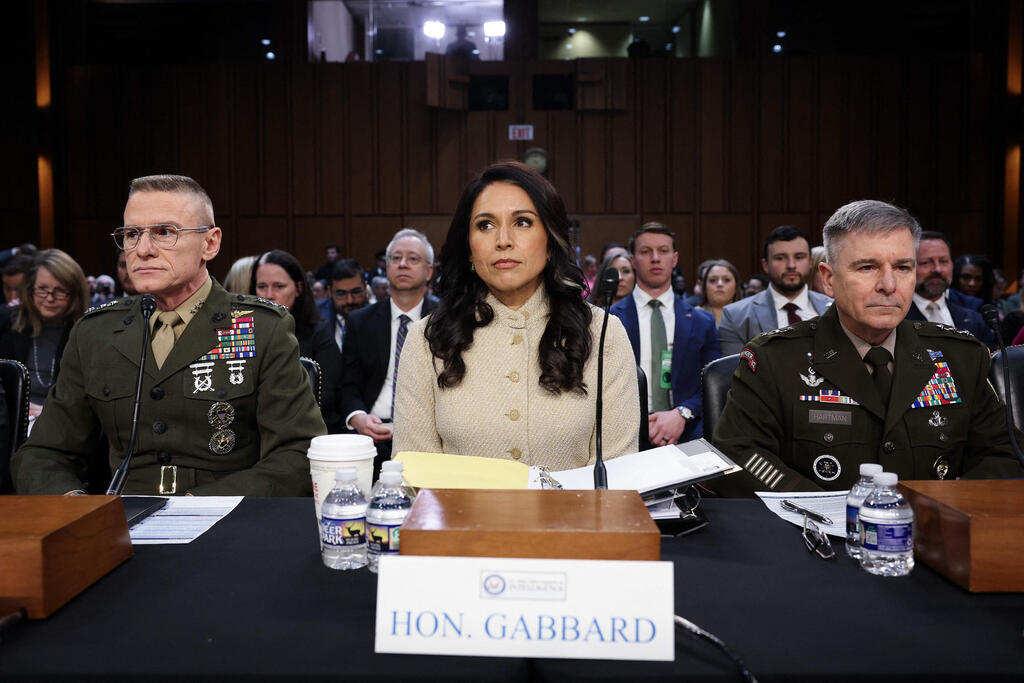
US Director of National Intelligence Tulsi Gabbard
(Photo: WIN MCNAMEE / GETTY IMAGES NORTH AMERICA / AFP)
The heated exchange shifted from a discussion about the Iranian threat to a struggle over the boundaries of American intelligence, exposing troubling ambiguity over who is responsible for national intelligence assessments—precisely within a system rebuilt in the wake of 9/11.
Gabbard’s refusal to provide an “intelligence stamp of approval” for an immediate Iranian intent, while shifting responsibility to the political echelon, is the purest expression of an approach that reduces intelligence to the collection and delivery of information.
In the Trump era, where facts are not always a guiding principle, the vacuum left by intelligence is quickly filled with political narratives serving a presidential agenda. When a national intelligence assessment no longer dares to interpret intent, the president becomes the sole author of reality, and the path to controversial decisions grows significantly shorter.
As the fog of war thickens and a sense of “strategic underachievement” hovers over the impressive military gains, Israel’s intelligence leadership is required to show an assertiveness that does not flatter reality.
(Photo: GPO)
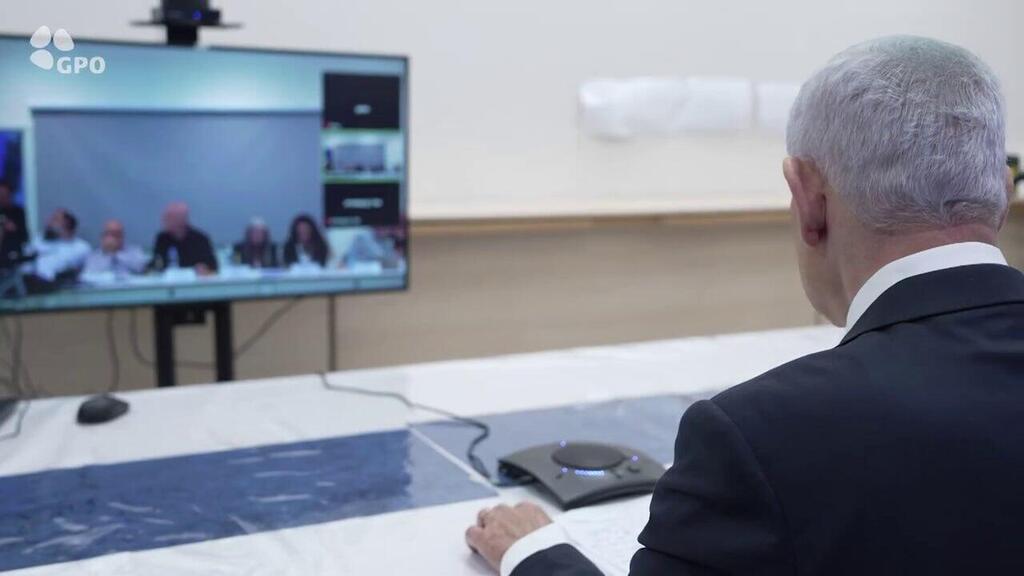
The resemblance to what is unfolding locally is both striking and troubling, particularly as we deal with issues at the very core of Israel’s national security and our existence here. Prime Minister Benjamin Netanyahu treats intelligence assessments as his own domain, constructing, unilaterally and often through pre-recorded messages, a public picture tailored to his needs.
The Knesset and the opposition, to a large extent, are present-absent in this process, failing to challenge with sharp, probing questions. As for the Foreign Affairs and Defense Committee, chaired by Netanyahu’s loyal ally MK Boaz Bismuth, little more needs to be said.
In the past, leaders of the intelligence community knew how to make their voices heard, clear and resolute, at critical junctures, such as the debate over striking Iran’s nuclear program in 2011. Today, under the weight of a prolonged campaign, it seems senior officials are bound to a restrained silence, whether out of a desire to preserve unity of effort or from concern over direct friction with Netanyahu.
Yet in that silence, we risk missing the essential debate about the campaign’s viability, and the growing gap between optimistic plans and assessments and the complex reality on the ground.
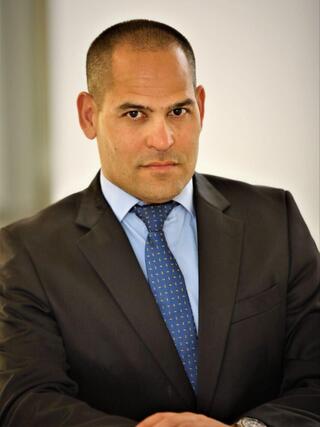 Avi Kalo Photo: Aloni Mor
Precisely now, as the fog of war thickens and a sense of “strategic underachievement” hovers over impressive military gains, Israel’s intelligence leadership must show a form of assertiveness that neither flatters reality nor those who shape it.
This is their moment to clearly define the boundary between what is possible and what is imagined, and to sharply identify where it is right to cut losses in a campaign that is only becoming more entangled.
High-quality intelligence today is not measured by its ability to justify continued fighting, but by its capacity to define the optimal exit point, one that secures achievements while preventing a deeper slide into the Iranian quagmire, with all its heavy costs.