

For three decades, the global economy operated on one basic assumption: the world is connected, goods flow freely, and supply chains work. Oil from the Gulf, chips from Asia, components from Europe, and finished products reaching every corner of the world. The system was efficient, fast, and cheap - until it stopped being taken for granted.
In recent years, it has become clear just how fragile that system really is. COVID-19 was the first crack. One after another came further blows to global supply chains: geopolitical tensions, the Russia-Ukraine war, conflicts in Asia and the Middle East, maritime disruptions caused by Houthi attacks, and Trump-era tariff policies. These developments created a real stress test for the resilience of the global economy and for the ability of multinational industrial corporations to manufacture in a predictable and profitable way.
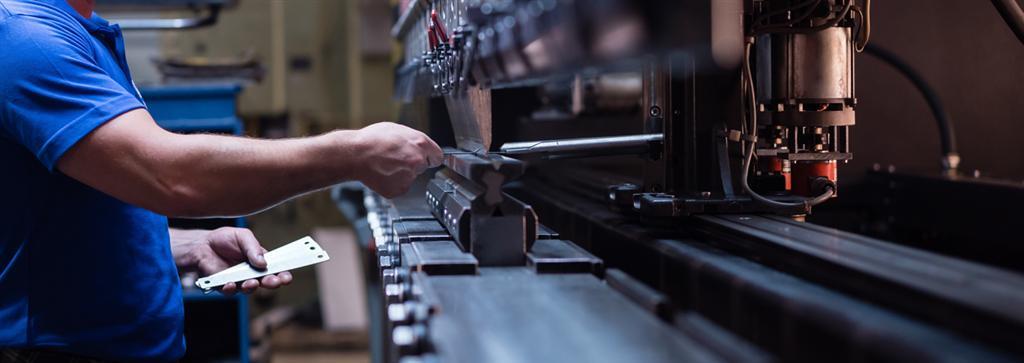
(Photo: Shutterstock)
The war with Iran has pushed this disruption to a new level. When security tensions rise in a region that supplies a significant share of the world’s oil, the entire industrial value chain feels the impact. Oil is not just fuel for cars - it is a critical raw material for entire industries, from plastics and chemicals to aviation and heavy manufacturing.
It is no coincidence that the Strait of Hormuz has become a focal point of the current conflict with Iran. Any disruption to oil exports, any threat to shipping lanes or production facilities, creates a global chain reaction: price volatility, uncertainty around manufacturing capacity, and growing concern over dependence on foreign suppliers. The result is a profound shift in mindset. Many countries are beginning to understand that the global efficiency model on which the economy was built came at the expense of something else - resilience.
The combined blow to oil supply and to maritime shipping is no longer a minor disturbance. More governments and multinational industrial players are reassessing how dependent they are on international supply chains, especially in strategic sectors such as energy, semiconductors, food, and advanced technologies. Instead of a model based on maximum efficiency, a new model is emerging - maximum resilience.
This means major investments in domestic manufacturing, shortening supply chains, diversifying sources of supply, and bringing critical parts of industrial production back home - a process already known as reshoring or friendshoring. This reality sharpens a new triangle now shaping the economic agenda of many countries: national security, economic security, and technological superiority. These three elements are no longer separate. Advanced technology is a condition for economic security. Economic security is a condition for national security. Control over critical technologies is becoming a strategic asset.
 Yoni Heilbronn Photo: Shlomi Yosef
For Israel, this new reality creates challenges - but also opportunities. Israel is not an energy superpower or a heavy industry giant, but it is a global technology powerhouse. At a time when the world is searching for solutions that increase resilience and reduce dependency, technology is becoming a central tool.
One example is PAX SILICA, an alliance led by the United States, designed to secure global supply chains and logistics in a world where AI and advanced semiconductors form the foundation of technological advantage. Israel’s role as one of the few founding members reflects the understanding that it has much to offer in this arena. Many Israeli companies are already active in fields growing rapidly in importance: robotics, energy infrastructure optimization, smart supply chain management powered by AI, cybersecurity for critical infrastructure, industrial automation, and more.
As countries look for ways to protect energy infrastructure, optimize supply chains, or reduce geopolitical risk, these solutions are becoming strategic assets. In other words, the crisis of confidence in global supply chains is not only a problem - it is also a new engine of innovation.
In a world where supply chains have become a matter of national security, countries are no longer just looking for suppliers - they are looking for technological partners. And in this arena, Israel has an opportunity to become far more than “Start-Up Nation.” It can become a key player in shaping the new global economy in a new age of resilience.
- Yoni Heilbronn is a managing partner at IL Ventures.
First published: 09:10, 04.30.26