

For years, Qatar has been the undisputed patron of Hamas, offering financial lifelines, political shelter, and international legitimacy to a group designated as a terrorist organization by the United States, European Union, and many others. But a new contender is stepping forward. Turkey, under the leadership of President Recep Tayyip Erdoğan, is no longer content with simply cheering Hamas from the sidelines.
In recent weeks, Ankara has taken on a much more visible and direct role in Hamas’s political orbit, raising pressing questions about whether Turkey is positioning itself to replace Qatar as Hamas’s chief backer.
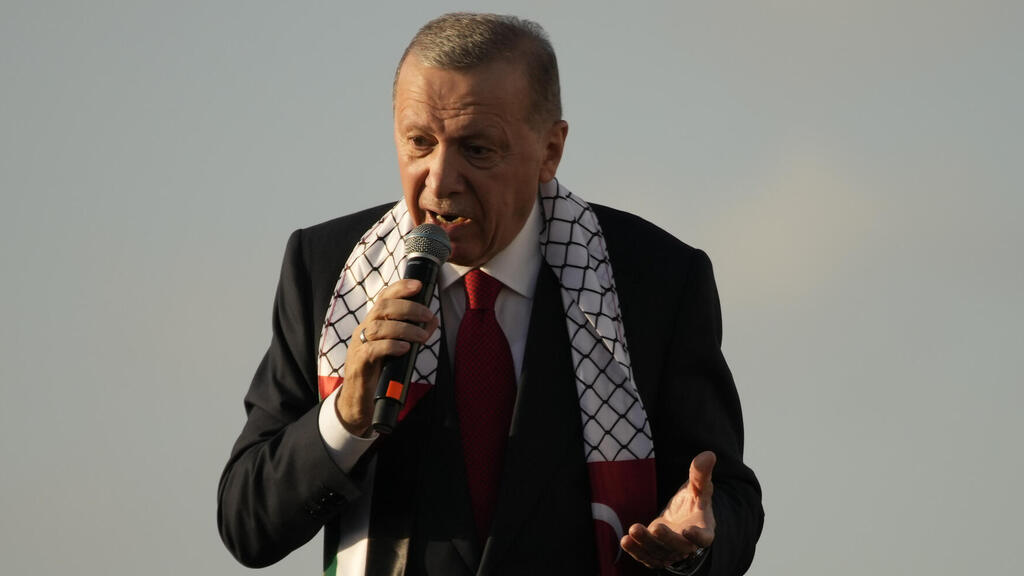
The latest sign came in early November, when Turkey’s intelligence chief met with a high-ranking Hamas delegation in Istanbul. Turkish Foreign Minister Hakan Fidan also held direct talks with Hamas leaders, including Khalil al-Hayya. The discussions focused on Gaza’s ceasefire, humanitarian access, and future governance—conversations usually led by Qatar.
Turkish officials publicly framed these meetings as part of Ankara’s humanitarian mission. But the timing and the depth of engagement suggest far more than charity. Turkey is attempting to stake a claim in post-war Gaza, and it is doing so by embracing the very same militant actors that have long been bankrolled and protected by Qatar.
This shift is not accidental. Qatar has come under increasing scrutiny and international pressure over its role in sheltering Hamas’s leadership, especially after the October 2023 massacre in Israel. As criticism mounts and as Qatar faces diplomatic costs, Turkey appears eager to take the baton. Unlike Qatar, which typically exerts influence quietly through financial channels and backroom diplomacy, Turkey is far more theatrical and ideological in its approach. Erdoğan does not just tolerate Hamas—he praises them as freedom fighters. His government frames Hamas’s actions as legitimate resistance and rarely condemns its violence.
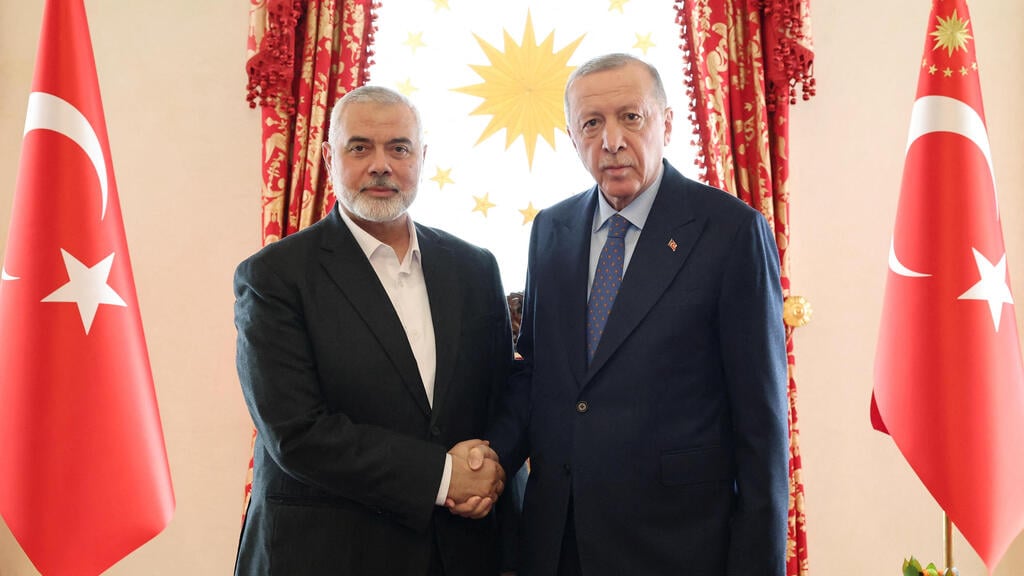
Slain Hamas political leader Ismail Haniyeh and Recep Tayyip Erdogan with slain
(Photo: Murat Cetinmuhurdar/Turkish Presidential Press Office/ Reuters)
This development is dangerous on several fronts. First, it risks prolonging Hamas’s stranglehold on Gaza. Any path to peace must include Hamas’s disarmament and the reintroduction of governance structures not rooted in political Islam or militant ideology. Yet Turkey’s involvement appears to legitimize Hamas at a time when it should be facing its greatest political reckoning. By hosting Hamas officials, championing their narrative, and proposing itself as a “guarantor” of Palestinian interests, Turkey is working to rehabilitate an organization responsible for countless civilian deaths and decades of misery in both Gaza and Israel.
Second, it injects a new level of volatility into the regional balance. Israel has already voiced strong opposition to any Turkish-led role in Gaza’s post-war stabilization. Other countries, including Egypt and the UAE, are equally wary of Turkish ambitions, especially given Ankara’s long record of supporting Islamist factions across the region. Erdoğan’s government remains ideologically aligned with the Muslim Brotherhood, the same transnational movement from which Hamas emerged. His recent embrace of Hamas is not a break from past policy but a deepening of it. The Turkish government sees Islamist influence as a geopolitical asset, not a liability. That makes its entry into the Gaza arena especially alarming.
Turkey’s moves also reflect a broader Islamist power play. For years, Qatar and Turkey have operated as a kind of ideological axis, promoting Islamist groups as vehicles for regional influence. From Libya to Syria to Palestine, these two states have empowered Islamist actors under the guise of supporting democracy and resistance. But their true motive has always been the spread of political Islam—an agenda that undermines secular institutions, destabilizes national governments, and erodes prospects for pluralism. In Gaza, this strategy has devastated an entire generation. Now Turkey seeks to extend the damage.
 Amine Ayoub
Some might argue that Turkey’s involvement could temper Hamas, that proximity and influence can lead to moderation. But history says otherwise. Neither Qatar nor Turkey has ever used their leverage to compel Hamas to disarm, reform, or respect democratic norms. Instead, they have provided it with political oxygen, media platforms, and strategic cover. They have enabled Hamas to dodge accountability while pretending to be peace brokers. This has emboldened Hamas, not restrained it. The same dynamic is now unfolding under a Turkish flag.
Erdoğan’s maneuver is not about peace. It is about influence, ideology, and political theatrics. Turkey is not replacing Qatar to bring balance—it is stepping in to ensure that political Islam retains its grip on Gaza. The world should not be fooled. A new patron has arrived, but the agenda remains dangerously unchanged.
- Amine Ayoub, a fellow at the Middle East Forum, is a policy analyst and writer based in Morocco