


The U.S. war against Iran, European leaders and opinion makers argue, is “illegal” — and therefore they will not lift a finger to join or support it. Illegal? It is the regime in Tehran that is illegal: a regime that has cold-bloodedly killed tens of thousands of its own citizens — likely up to 45,000 — who took to the streets earlier this year to protest. A regime that secretly enriched hundreds of kilograms of uranium to produce nuclear warheads and bombs is illegal. A regime that relies on an armed religious militia, the Islamic Revolutionary Guard Corps, widely designated a terrorist organization, is illegal.
From this follows that any action aimed at toppling, or at least significantly weakening, such a criminal regime is legal. If we do not define it as such, the very concept of the universal rule of law becomes meaningless — morally void. But Europe’s leaders appear unmoved. From their perspective, others can pull the chestnuts out of the fire for them. That is what they are used to.
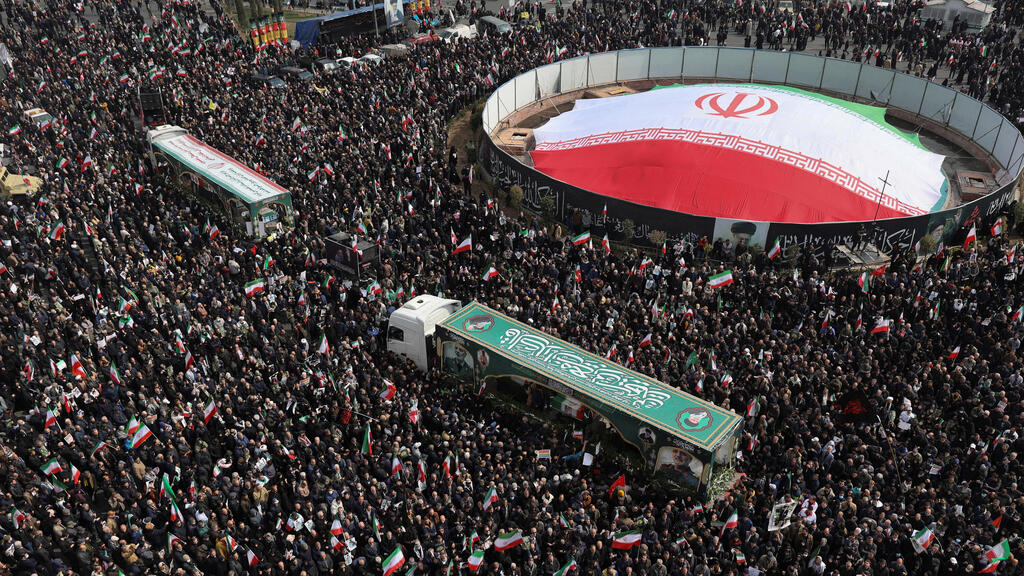
Mass funeral ceremony in Tehran for senior Islamic Revolutionary Guard Corps officials
(Photo: Majid Asgaripour/WANA (West Asia News Agency) via REUTERS)
Consider: more than four years ago, Russia invaded Ukraine, a country in the heart of Europe, with the aim of conquering it — without provocation. Yet not a single European soldier has stood on the front lines alongside Ukrainian troops. Governments have limited themselves to financial and military aid, in diminishing amounts. And public opinion, so outraged by “illegal wars” elsewhere, has faltered; there are no mass weekend protests outside Russian embassies in European capitals.
Consider also: Europe’s avoidance of a supposedly “illegal” preemptive strike against Nazi Germany in 1938 cost tens of millions of lives. Fascist ideology spread across much of Europe before and during the early years of World War II. By 1941, pro-Nazi dictatorships ruled in countries including Italy, Spain, Romania, Hungary, Slovakia, Croatia, Norway, Finland (with reservations) and Vichy France. Their citizens did not rise up in mass rebellion; they cooperated, adapted and acquiesced.
Consider as well: the two atomic bombs dropped by the United States on Japan were not the result of some unlawful or malevolent impulse by the Truman administration. Japan’s leadership was repeatedly given the option to accept surrender terms, acknowledge defeat and end the war. It rejected those offers and vowed to continue fighting. Throughout the war, there were no significant signs of internal resistance to Japan’s imperial campaign. The public knew, supported and cheered — and only after defeat blamed others.
Today, Iran’s dictatorship is being given a rare opportunity to accept terms to end the war proposed by the United States and avoid destruction, death and the loss of the Iranian nation’s future. These are not excessive or humiliating demands: to relinquish enriched nuclear material it should never have developed, to halt production of long-range ballistic missiles, to stop funding terrorist organizations across the Middle East and instead focus on rebuilding Iran’s shattered economy and society. The U.S. conditions do not include prosecuting those responsible for killing regime opponents, do not demand democratic elections and do not even require removing calls for “death to America” and “death to Israel” from Iranian law.
Yet Tehran rejects even these minimum demands and chooses continued fighting. It is, therefore, a criminal regime — and the U.S. war against it is entirely legal.
Discomfort with Donald Trump should not obscure or distort moral judgment — not for opinion leaders and not for principled politicians. This is the test of minimum fairness.