

Yemen’s centralized and underdeveloped economy proved vulnerable to Houthi capture. After taking Sanaa in 2014, the movement leveraged regulatory authority and coercive force to subordinate the country’s few economic centers of power.
By controlling territorial boundaries, the Houthis imposed a comprehensive system of taxation and regulation on all imports entering their territory through a limited number of entry points. This proved extraordinarily powerful given northern Yemen’s near-total dependence on external sources for essentials like petroleum, gas, staple foods and manufactured goods. The Houthis effectively constructed an economic stranglehold over its territory that was dependent on the outside world.
Gallery
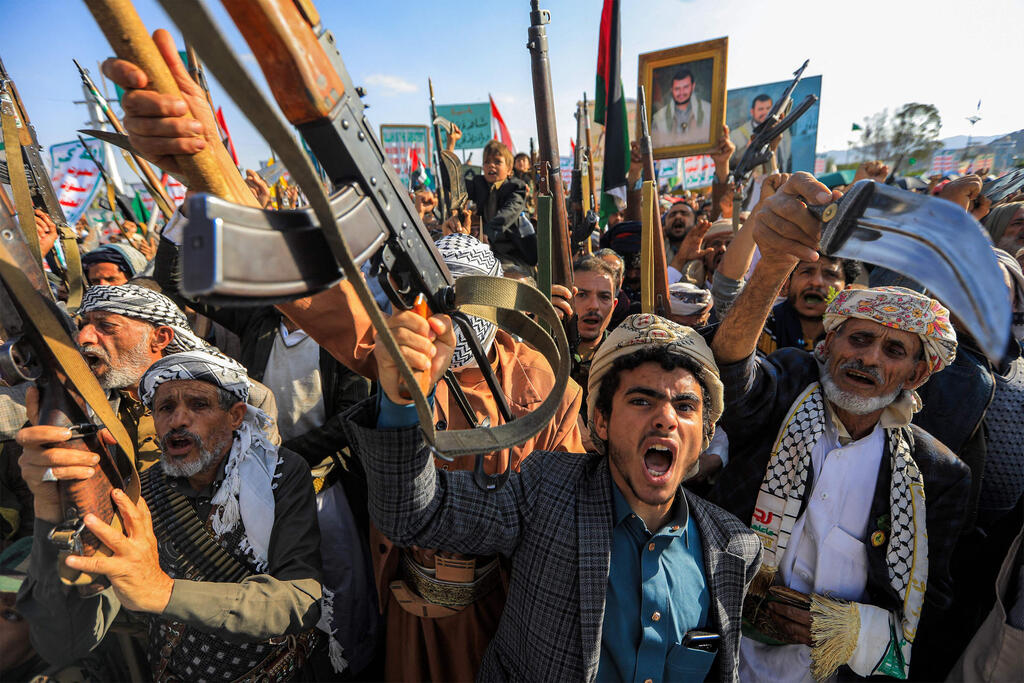
Armed Houthi supporters chant slogans during a rally in Sanaa, Yemen, on October 4, 2025
(Photo: Mohammed HUWAIS / AFP)
In parallel, they seized control of major domestic industries. This included banks, money exchanges and telecommunications corporations, subjecting them to severe taxation and tight regulations. If businesses resisted, the Houthis appropriated them outright, allowing loyalists to extract wealth for personal gain or to advance regime priorities. Unfortunately for Yemen’s poorest, these types of policies were also applied to the vast sums of aid flowing into northern Yemen over the past decade, as the UN and its affiliates warned of a perpetually impending famine.
Hodeidah Port and Sanaa Airport emerged as major revenue sources, and controlling them enabled the movement to regulate what entered the country, the quantities involved and the actors permitted to import goods. Even so, the Saudi-led coalition that sought to remove the Houthis from power from 2015 to 2022 was reluctant to strike these installations, in part because UN agencies and Houthi-linked media consistently played up the prospects of such attacks precipitating humanitarian catastrophes.
In order to understand how Yemen’s economy evolved into its current centralized and underdeveloped form, one must look back in history. Northern Yemen’s economic order is heavily influenced by its social order: Successive Imams (and more recently republican presidents, including some tribesmen) were compelled to manage and appease the tribes, knowing that if the sheikhs felt they were not getting their fair share of resources, then tribal loyalties could shift or tribes could resort to coercive or even violent action. In practice, this produced a continuous flow of state resources from the ruler to tribal sheikhs, who then redistributed these benefits to secure the loyalty of their followers.
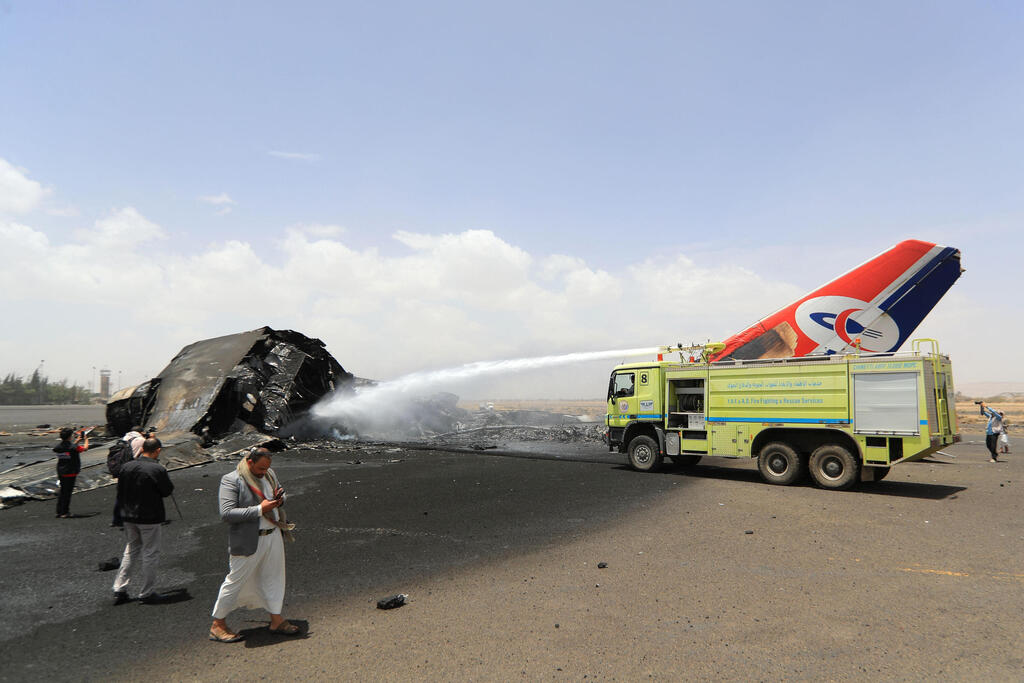
A firetruck douses the smoldering wreckage of a building at Sanaa International Airport in Sanaa, Yemen, on May 7, 2025, following Israeli airstrikes
(Photo: Mohammed HUWAIS / AFP)
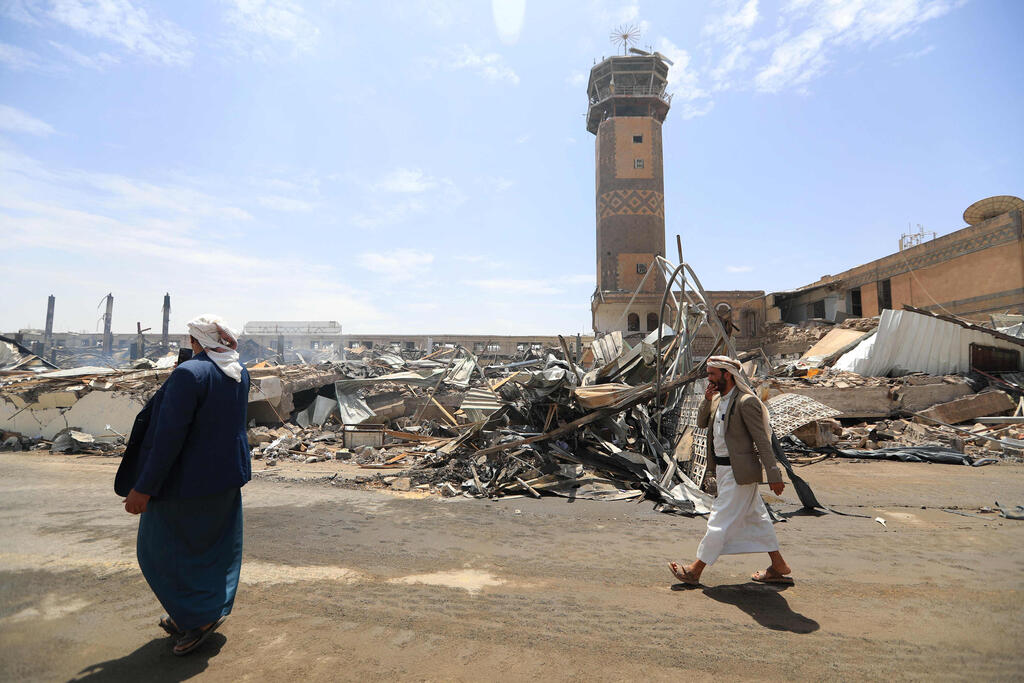
(Photo: Mohammed HUWAIS / AFP)
However, such resources did not translate into long-term development. The funds provided to tribal leaders were not invested in industry, infrastructure or education. Instead, they were absorbed into patronage networks that maintained influence but did little to modernize the region’s economy or enhance opportunities for its population. In some instances, like Imam Ahmed’s confiscation of radio sets in northern Yemen in the 1950s, the country’s leaders actively sought to isolate the population from modernity.
Without meaningful modernization, northern Yemen grew increasingly reliant on remittances from Yemenis working in Saudi Arabia. This dependence accelerated after the sharp rise in oil prices (and expansion of work opportunities in the kingdom) following the 1973 Yom Kippur War. With around 30% of working-age Yemeni males moving abroad to partake in the oil and construction boom, the New York Times in 1980 cited one Yemeni government official as saying, “If you see someone building a new house or driving a new truck, you know he has been working in Saudi Arabia.” Even as northern Yemen (then the Yemen Arab Republic, or YAR) experienced political instability caused by coups and political assassinations in the 1970s, the inflow of money enabled its economy to boom.
However, because the YAR undertook minimal industrial development and relied heavily on foreign income, the country’s economy remained dependent on choke points with the outside world. In his detailed history of Yemen, Paul Dresch summarized the situation in the 1980s as follows:

A Houthi fighter stands guard in Sanaa, Yemen, on September 20, 2025, during a rally in support of Palestinians, as a televised speech by Houthi leader Abdul-Malik al-Houthi plays in the background
(Photo: Mohammed HUWAIS / AFP)
“Production was not the basis of wealth and power, nor yet was aggression against outsiders. Rather, personal wealth accrued from control of the import business and of currency transactions linking Yemen to the wider world, and many of those who exercised such control were army officers.”
More than forty years later, that description remains strikingly relevant. It captures the economic logic of Houthi-controlled northern Yemen today, where wealth continues to derive less from productive enterprise than from the ability to control imports and international financial flows.
The Houthis themselves recognize that on the battlefield, dispersion is key to avoiding painful strikes. However, they did not (and probably could not) create a dispersed economic system that would be difficult to effectively target from the air. This stemmed both from the centralized, fragile economy they captured from the YAR as well as from their own destruction of the rule of law, which rendered Yemen a nearly impossible environment in which to conduct legitimate business. As a result, the economic infrastructure that finances the terrorist regime remains concentrated and especially vulnerable.
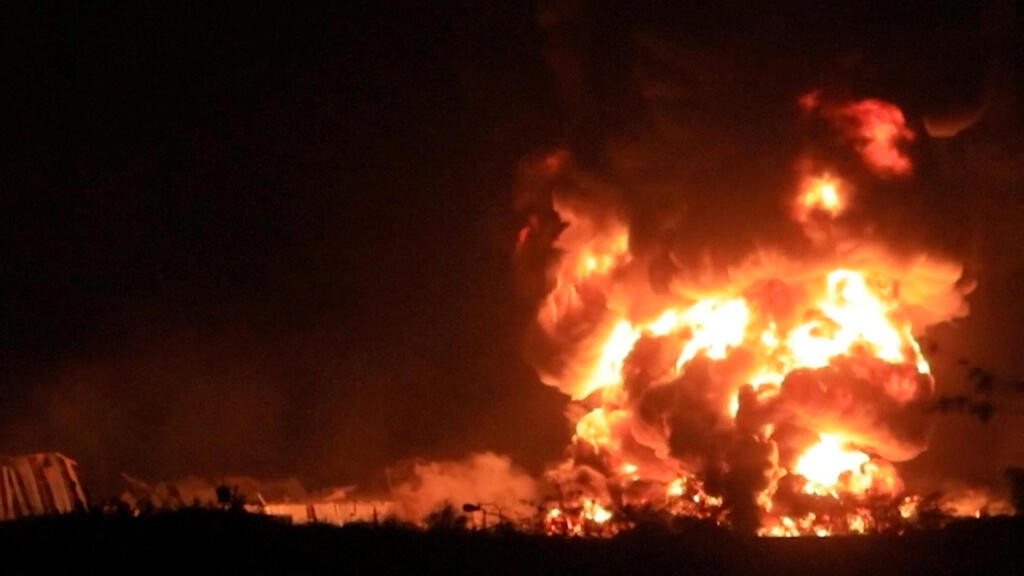
An Israeli airstrike on the Houthi-controlled Port of Hodeidah, May 6, 2025
(Photo: AL-MASIRAH TV/Handout via REUTERS)
Following Israel’s air campaign against the Houthis’ economic lifelines, tougher U.S. sanctions and the predictable economic decay of rule by a terrorist organization, the regime is now scrambling to adapt. Houthi media is now promoting “locally produced” substitutes for everyday goods, from clothing to dish soap to produce, while also urging a boycott of foreign products. The boycott campaign attempts to reframe the regime’s failures and residents’ misery as principled positions. Yet even with a captive market, local industries (very likely affiliated with the regime) are unlikely to be capable of providing the range, quantity and quality of goods needed to prevent growing public resentment.
The Houthis draw power from a centralized and externally dependent economy that enables control but cannot produce development or resilience. As the Houthis’ supply of incentives dwindles, it remains unclear whether greater reliance on coercion will be enough to sustain their regime.
- Ari Heistein is a research fellow at the Jerusalem Institute for Strategy and Security and a consultant on defense technology.