

Saudi Arabia is working to build an alternative network of strategic backstops as it confronts growing uncertainty in its relationship with the United States, concerns over Israel’s rising power and unpredictability, and the need to reinforce its regional standing.
The kingdom no longer relies solely on its traditional partnership framework. Instead, it is seeking out new actors, including former rivals, that can provide security capabilities, strategic flexibility and economic and industrial value. The aim is to reduce Saudi vulnerability in an increasingly complex and competitive regional environment.
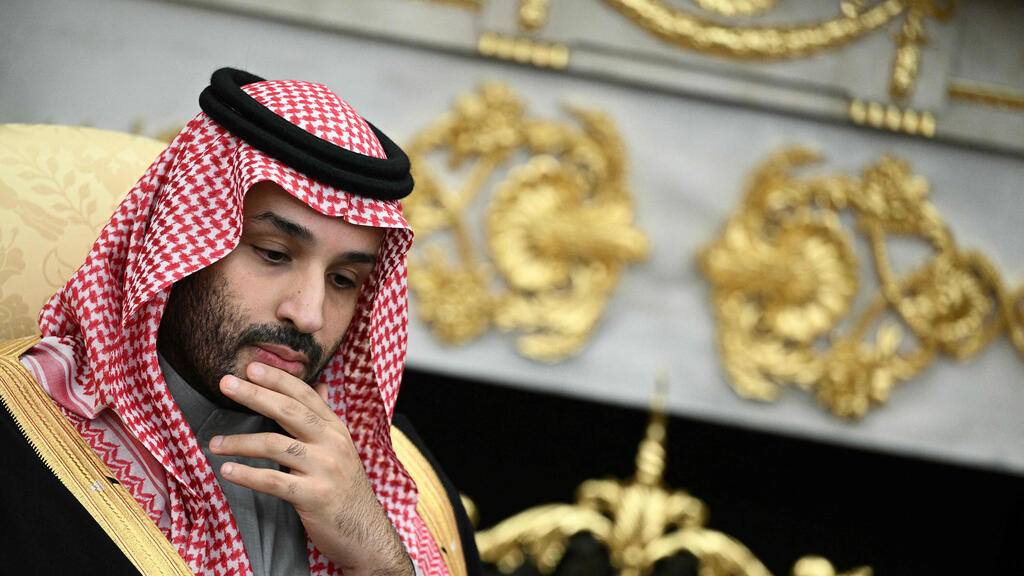
Crown Prince Mohammed bin Salman
(Photo: Brendan Smialowski/ AFP)
A first step in this direction is an emerging security agreement that includes the potential purchase of Chinese-Pakistani JF-17 fighter jets. The deal would allow Saudi Arabia to expand its deterrence capabilities and give substance to the defense agreement it signed with Pakistan in September 2025, following the Israeli strike in Qatar.
At the same time, reports point to the possible integration of Turkey into this emerging framework, creating what some describe as a kind of “Islamic NATO.” Such a structure would offer a flexible response to regional threats: Pakistan brings an operational nuclear capability, Turkey a large conventional military and industrial base, and Saudi Arabia vast financial resources, diplomatic clout and religious legitimacy as the custodian of Islam’s holiest sites.
These moves are not merely a reaction to rising regional uncertainty. They are also part of a broader effort to reshape the regional order and preserve Saudi Arabia’s leading position at the expense of the United Arab Emirates. Abu Dhabi is increasingly seen in Riyadh not only as an economic competitor but as a state working, alongside Israel, to undermine core Saudi interests, particularly in the Red Sea arena.
The warming of ties with Turkey and Qatar at the UAE’s expense, deepening security and economic cooperation with Pakistan, and Saudi Arabia’s growing assertiveness in Yemen and Sudan all point to a kingdom acting not just in self-defense, but with the ambition to redraw alliance patterns and rewrite the regional rules of the game.
During Crown Prince Mohammed bin Salman’s most recent visit to Washington, he was greeted with considerable ceremony, and the host even pledged to sell Saudi Arabia advanced F-35 fighter jets, a move important to the crown prince’s prestige and status. Yet bin Salman has grown wary of promises alone. He has yet to secure what he truly wants from President Donald Trump: a formal defense treaty and a civilian nuclear cooperation agreement.
That gap underscores, in Riyadh’s view, the need for additional backing and for building a multilayered partnership network. The potential inclusion of Pakistan and Turkey in a new transregional framework reflects a classic hedging strategy, allowing Saudi Arabia to navigate rising uncertainty while signaling to Washington that it has alternatives.
Over the past five years, bin Salman focused on reducing regional tensions and pursuing détente, primarily with Iran, to concentrate on implementing his ambitious Vision 2030 economic reform plan. Now, he appears confident enough to once again attempt to shape the regional order.
There is also a personal dimension. Bin Salman wants to restore Saudi Arabia’s perceived rightful place in the Arab hierarchy, not only as king of Saudi Arabia, but as the leading Arab power.
Saudi Arabia is not merely seeking improved defensive capabilities. It is redefining itself as a central regional actor, expanding its room for maneuver and moving away from outdated assumptions of rigid, dichotomous camps toward a new strategic reality.
Israel is not part of this vision. In Riyadh, there is growing disillusionment with an Israeli government seen as unwilling to meet what the kingdom considers a minimum threshold, namely a pathway toward a Palestinian state. Moreover, Saudi Arabia’s recent moves, and the potential alignment with Qatar and Turkey, could place Saudi Arabia and Israel on opposite sides of an emerging regional divide.
Dr. Yoel Guzansky is head of the Gulf Program at the Institute for National Security Studies and a former official at Israel’s National Security Council.