

It is difficult to draw a coherent line through the flurry of Israeli statements on Lebanon over the past week: from a firm declaration by the political leadership on the need to disarm Hezbollah, against the backdrop of reservations voiced by senior military officials; through boasts that the ceasefire in the confrontation with Iran does not constrain operations in Lebanon, to the sharp turn marked by Prime Minister Benjamin Netanyahu’s announcement of the start of negotiations with the Lebanese government.
The zigzag reflects the heavy tension Netanyahu faces. On one hand, by continuing the campaign in Lebanon he appears to seek to blur the question marks surrounding the end of the campaign against Iran, now led by a more extreme regime whose nuclear and missile threats remain unresolved. On the other, he faces growing American pressure, which has already resulted in restraint on strikes in Beirut.
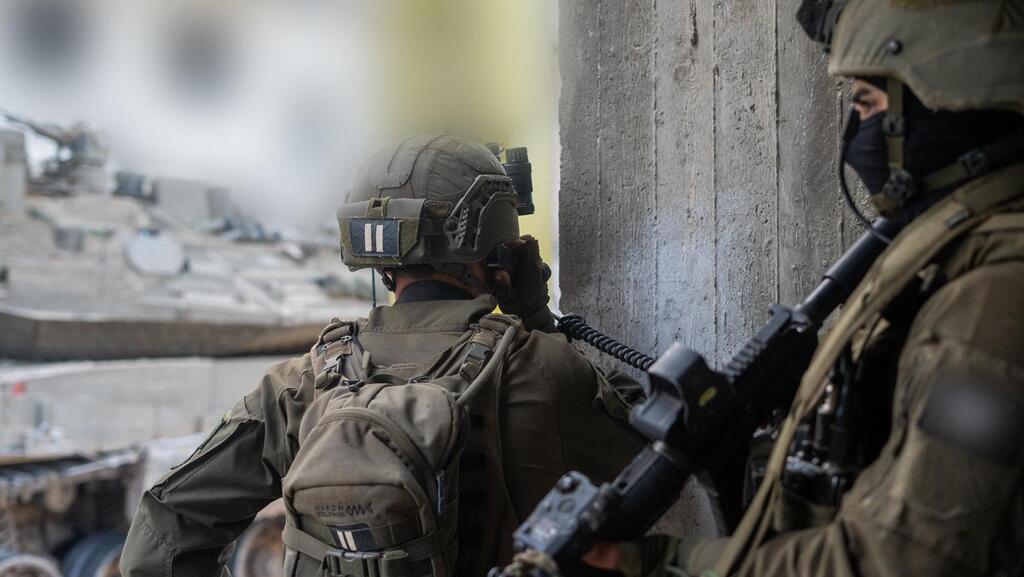
IDF soldiers in Southern Lebanon
(Photo: IDF)
In the background, Iran continues to demand that any end to the war with it also include Lebanon, underscoring that its regional influence, though significantly weakened, has not disappeared.
It must be acknowledged that Israel has become entangled. It has failed to defeat Hezbollah despite the heavy blows inflicted on the group and the pressure on the Lebanese state, and despite territorial control that once again exposes the weakness of the claim that “Arabs understand only when land is taken from them.” Meanwhile, residents of northern Israel continue to face hardship and frustration over the lack of a solution that would allow them to live in security.
Israel could deepen the ground maneuver, depopulate southern Lebanon and intensify attacks against the Lebanese government. Yet these steps are likely to produce mainly cumulative damage, similar to what developed six months ago in Gaza and ultimately led President Donald Trump to impose an end to the war.
This is the moment for the leadership to engage in an honest dialogue with the public, free of fantasies, beliefs and the dominant slogans of the past two and a half years. It would be advisable to pursue several realistic goals: clearing the area south of the Litani River of military threats, accompanied by oversight that should be American; preserving full freedom of action in Lebanon while thwarting Hezbollah’s effort to establish a “new equation,” in place of the one Israel established in November 2024; curbing Iran’s influence in Lebanon; and accelerating diplomatic engagement between Jerusalem and Beirut, initially on arrangements and, it is hoped, eventually on a peace agreement.
Israeli policymakers present this as a goal, but their Lebanese counterparts do not, speaking instead of security arrangements and expressing concern over rising tensions with Hezbollah due to the talks.
Disarming Hezbollah remains an important objective, but it should be made clear that its likelihood is low at present. For Israel to achieve it would require either an advance north of Beirut, a possible but costly scenario, or decisive action by the Lebanese army against the group, a scenario that currently appears highly unlikely.
As in the case of Hamas, under current conditions the focus should be on ensuring full freedom of action, including against rearmament efforts, while cautiously and skeptically hoping that non-extremist local governance will strengthen and challenge militant organizations with both military power and deep public support.
Since Oct. 7, Israel should have learned from its wars that internal transformations do not arise from territorial conquest, control over populations or attempts at shaping consciousness, but from internal upheaval. Conditions can be created to encourage such processes, but humility and caution are essential. Without them, Israel risks being drawn into ventures such as cultivating militias, clans and separatist elements, approaches that failed in Gaza and have been repeated in Iran.
The crisis in Lebanon offers further lessons that are wearying to repeat and discouraging to see remain unlearned despite repeated setbacks since Oct. 7: that there is no “decisive victory” or disappearance of the enemy; that the repeated declarations raise doubts about whether understanding of the adversary has truly improved; and that in the absence of thorough inquiry, with those responsible for past failures continuing to shape policy, distortions in perception persist and recur.
It is essential to formulate a sober strategy and dismissing that need is irresponsible. It is also vital that the public, as well as professionals within the system, present their views honestly and courageously, even when they contradict prevailing assumptions among decision-makers. In an open, advanced society, substantive criticism and differing opinions cannot be branded as “unpatriotic” or as undue pessimism that undermines the expectation of unity and support for the leadership.
This is among the central lessons of Oct. 7 and a core task for representatives of civil society, foremost among them the media and academia.
In Lebanon, the campaign continues, but there is a growing assessment that it will end similarly to previous rounds in Gaza and Iran, twice, namely through a decision by Trump that does not always align with Netanyahu’s declarations or preferences. Evidence לכך can be seen in the fact that Hamas continues to reject demands to disarm and remains the dominant force in Gaza.
The immediate test in Lebanon will be whether Israel’s demand to conduct negotiations under fire is accepted, or whether it will be forced to begin diplomatic talks only after a cessation of hostilities.
A new Middle East could indeed emerge from the war, but not on the basis of the assumptions to which Israel currently adheres, chief among them that force resolves everything. Instead, a fundamental shift in policy is required, centered on the understanding that a diplomatic track is not a weak expression reflecting outdated thinking, but an essential tool without which any military achievement erodes and gradually gives way to strategic damage.
The author is head of the Palestinian Studies Forum at the Dayan Center at Tel Aviv University.