

The debate sparked by the documentary NAZA goes far beyond the battle over Israel’s image. At its heart is a question that will confront every democracy forced to fight a terrorist organization that places its fighters, headquarters, weapons and infrastructure inside a civilian population: How can such an enemy be fought while protecting your own civilians and soldiers, and at the same time meeting the legal and moral obligation to minimize harm to civilians on the other side?
Serious accusations demand a serious response. It is not enough to attack the filmmakers, denounce them or call them traitors. Such reactions do not refute their claims. They only help portray Israeli society as unwilling to confront criticism. The proper response must be based on facts, context, international law and a professional analysis of battlefield realities.
Gallery
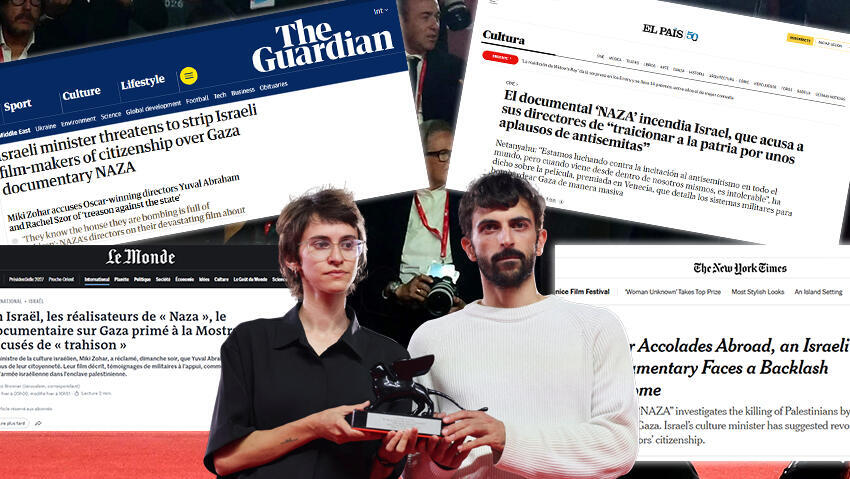
‘NAZA’ alleges genocide. The reality of the IDF’s war against Hamas is more complex
(Photo: REUTERS/Yara Nardi, Stefano RELLANDINI / AFP)
At the same time, Israeli politicians, opinion leaders and media figures should stop calling for Gaza’s complete destruction or making statements that fail to distinguish between terrorists and civilians. Beyond the moral flaw in such rhetoric, it harms Israel and IDF soldiers by providing ammunition to those who argue that Palestinian civilian suffering was an objective rather than a grave consequence of the war forced upon Israel.
Disclosure and the limits of this discussion
I have not seen the full film, which has not yet been made available for viewing in Israel after its creators chose to present it first to the international community. I have watched published excerpts and read interviews with the filmmakers and detailed reviews by viewers, including favorable ones. This article therefore does not claim to review every scene, but to answer the film’s central arguments as presented by its creators and described in published accounts.
According to those descriptions, filmmakers Yuval Abraham and Rachel Shor argue that the widespread killing of Palestinian civilians was not the result of mistakes, exceptional cases or the harsh realities of combat, but of a deliberate systemic policy that they believe could amount to genocide.
Through anonymous testimony from soldiers and intelligence personnel, the film reportedly describes a targeting system based on digital surveillance and artificial intelligence. It alleges that human oversight of some processes was inadequate, that people were designated as targets and attacked in their homes while family members were present, and that strikes were approved even when large numbers of civilian casualties were expected.
The film also reportedly raises allegations of civilians being shot in areas whose boundaries were unclear, harm near aid distribution points, destruction intended to force the population southward and the restriction of food and use of hunger as a means of pressure. Its creators attribute responsibility not only to individual soldiers, but to the chain of command, the military establishment, Israel’s political leadership and Israeli society and media.
These are grave allegations that join the intense international criticism directed at Israel throughout the war. Precisely because they are so serious, they must be examined rigorously rather than accepted as established fact simply because they appear in a documentary.
The numbers speak for themselves
The number of people killed in Gaza, their identities and the breakdown between combatants and civilians remain disputed. Figures published by the Hamas-run Health Ministry in Gaza do not fully distinguish between military operatives and civilians, while Israeli estimates of the number of Hamas and Palestinian Islamic Jihad terrorists killed also require substantiation and detail.
For the sake of argument, take the figure of 75,000 Palestinian dead cited by Hamas authorities and the IDF figure of 25,000 terrorists killed. That would produce a ratio of one combatant to two civilians.
In my view, that 1:2 ratio in itself contradicts the claim that the numbers demonstrate war crimes or an intent to exterminate a population. The ratio is an important element in assessing the nature of the campaign and comparing it with other wars fought by Western militaries in densely populated urban areas, where civilian-to-combatant casualty ratios have reached 9:1. Even if we were to cut the IDF’s estimate of terrorists killed in half, the ratio between civilians and terrorists would still compare favorably with other Western militaries.
At first glance, the numbers alone might appear enough to end the discussion. But accusations this serious require a broader and more detailed answer.
The missing variable: Hamas’ strategy
The central weakness in the accusations against Israel presented in the film is that they place full responsibility for the war’s consequences on Israel without giving sufficient weight to Hamas’ method of warfare.
Hamas does not merely operate near civilians. For years it built its military power inside civilian space: tunnels beneath neighborhoods, weapons inside buildings, positions near public institutions and the use of the population as a screen that restricts Israel’s freedom of action.
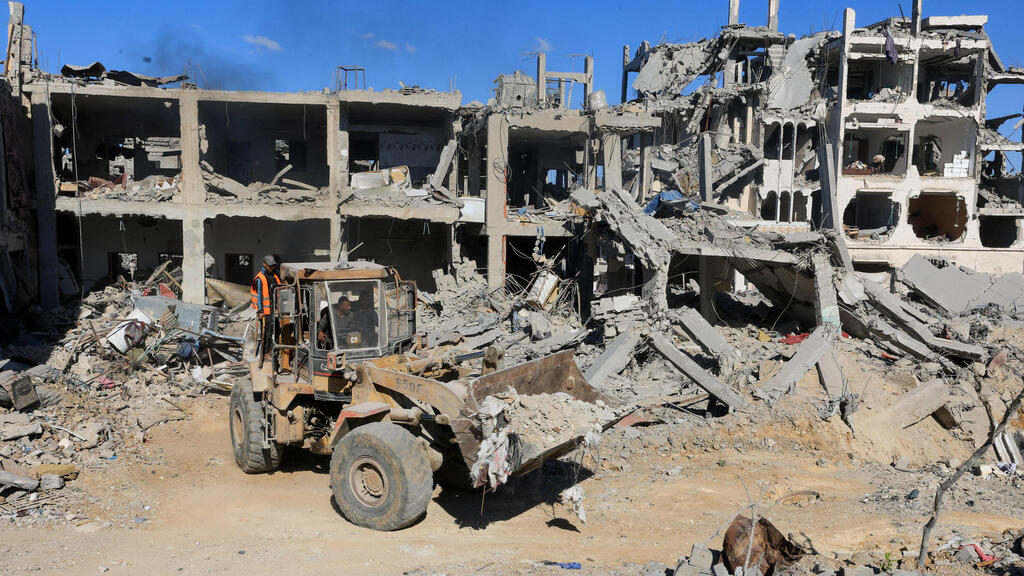
Gaza ruins
(Photo: REUTERS/Dawoud Abu Alkas)
None of this releases the IDF from its obligations. Even when the enemy violates international law and uses civilians as human shields, the attacking side remains bound by the principles of distinction, precautions and proportionality.
But the results of the war cannot be analyzed as if Hamas were a passive actor or as if the placement of its military infrastructure in the heart of the civilian population were not part of a deliberate strategy.
If responsibility for every civilian casualty is always placed exclusively on the attacking military, without regard for the conduct of the defending organization, a dangerous incentive is created: The more deeply a terrorist organization embeds itself within its population and the more it endangers civilians, the greater the likelihood that it will gain operational immunity and international legitimacy.
That is the human-shield paradox, and Israel will not be the only country forced to confront it.
There is no surgical war in an urban battlefield
Western international discourse often assumes that there is a “surgical” method for reaching every target and that if civilians were harmed, a cleaner alternative must necessarily have existed. In my professional experience, that assumption does not always survive the realities of combat.
Close-range fighting in an area saturated with explosives, snipers, anti-tank squads and tunnels can require heavy fire precisely when troops become entangled and face an immediate threat to their lives. At times, a planned airstrike based on intelligence and an assessment of expected collateral damage can be more precise than a ground battle unfolding amid uncertainty.
Using airpower is therefore not necessarily “operational laziness.” Sometimes it is the way to complete a mission while reducing the danger to troops.
But the need to protect soldiers is not an unlimited license. Every operation still requires an assessment of the target, the alternatives, the expected civilian harm and the concrete military advantage anticipated.
The very choice of the film’s name, NAZA, the Hebrew military acronym for collateral damage, itself points to the existence of such assessment processes inside the IDF.
What proportionality actually means
The principle of proportionality in international law does not compare the total number of people killed on each side. Nor does a high number of civilian casualties by itself prove that a strike was unlawful.
The legal question is whether, based on the information available to those making the decision before the attack, the expected incidental civilian harm could be anticipated to be excessive in relation to the concrete and direct military advantage expected from the operation.
That means each strike must be examined according to its specific circumstances: What was the military target? What was its value? What information was available? What harm was expected? What precautions were taken? Was there a practical alternative expected to cause less harm?
The result matters and may justify investigation, but it cannot replace an examination of the decision-making process as it existed in real time.
Artificial intelligence does not absolve humans
The use of AI-based tools in intelligence and target selection requires strict supervision. A computer system bears neither legal nor moral responsibility. Responsibility remains with the human beings who authorize an operation.
In the IDF, AI-based systems are intelligence-support tools. The final decision to carry out a strike is made by an officer, with a human in the loop, who weighs the military value against the anticipated collateral damage on the basis of the information available at that moment.
Humanitarian efforts and the gap between intent and outcome
The IDF invested an extraordinary effort in humanitarian measures, including warning calls, leaflets and the establishment of the Salah al-Din route as a humanitarian corridor. Western armies have not previously devoted such extensive resources to communicating directly with an enemy population in order to move civilians away from combat zones.
Israel also facilitated humanitarian assistance into Gaza on a scale far beyond what would normally be expected from a country at war. Palestinian civilians were gravely harmed, in my view, by Hamas’ seizure of aid trucks and exploitation of their contents.
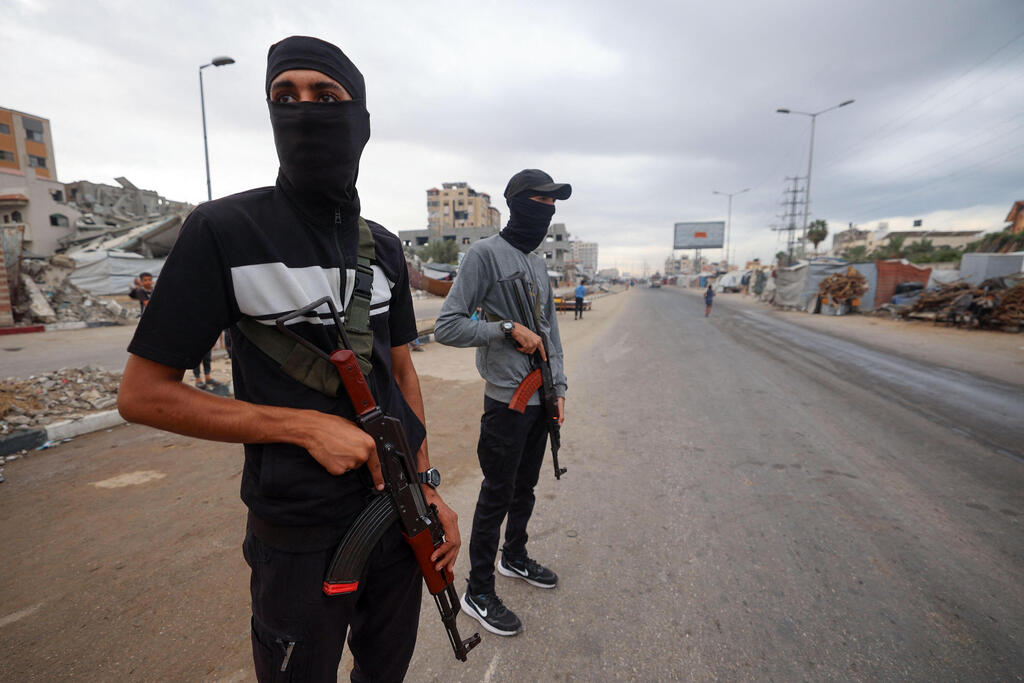
Hamas terrorists in Nuseirat
(Photo: Eyad BABA / AFP)
Central Gaza and, for long periods, Gaza City itself included areas where the IDF did not conduct major ground maneuvers, while airstrikes there were carried out selectively in an effort to avoid civilian casualties.
The percentage of those killed inside areas designated as humanitarian zones in central Gaza was significantly lower, around 2% to 3.5% of the total death toll. In my view, that points to a deliberate Israeli effort to avoid strikes in those areas despite Hamas’ attempts to use them as shelter, and is further evidence against the claim of an extermination policy.
The moral paradox of risking soldiers
The argument is sometimes made that by authorizing attacks with high anticipated collateral damage, the IDF prioritized the lives of its soldiers over those of Palestinian civilians.
Expecting the IDF to sacrifice its soldiers in order to save enemy civilians is not only unrealistic, but also raises a moral problem toward the citizens and soldiers of its own country. Every government has an unwritten contract with its citizens and troops that requires it to protect their lives.
Demanding that an army choose tactics that significantly increase the number of its own soldiers killed is a demand no democracy can sustain over time.
The underground war against Gaza’s ‘metro’
Under Hamas, Gaza became an urban fortress. This is the elephant in the room that, in my view, both the filmmakers and much of the international community ignore.
The IDF faced an estimated 800 kilometers of interconnected tunnels beneath civilian homes, one of the most formidable challenges confronted by a Western military in the modern era.
The tunnels transformed virtually any civilian structure into a potential military target because it could conceal a tunnel shaft or underground command post. That fundamentally changed calculations of collateral damage.
Hamas’ underground “metro” effectively transformed Gaza from an ordinary civilian environment into a military fortress and forced commanders to make extraordinarily difficult operational decisions that inevitably caused damage to infrastructure.
Alongside the tunnels, Hamas booby-trapped tens of thousands of civilian buildings, including schools and kindergartens. In the IDF’s operational learning process, we examined this pattern and found that mosques, schools, clinics and UNRWA facilities were statistically among the structures frequently encountered as booby-trapped sites.
The scale of the explosives threat required the IDF to use substantial firepower to protect its soldiers, increasing physical destruction. The tunnels and booby-trapped buildings turned civilian space itself into a weapon.
The systematic destruction of homes used by terrorists also reflected the fact that such structures were used not only for weapons storage but for combat.
What alternative did the IDF have other than to dismantle the military environment from which the October 7 attackers emerged?
Israel was not fighting thousands of miles from home
Unlike expeditionary wars fought by Western states thousands of miles from their borders, the Gaza war was fought against a direct threat to Israeli civilians.
It began after the October 7 massacre, the abduction of civilians and soldiers and continuing rocket fire at Israeli communities.
That does not exempt Israel from the laws of war, but it is essential to understanding Israel’s perception of the threat and the way operational decisions were made.
For Israel, this was not a war of choice or an intervention in a distant theater. It was a war to remove a threat that had demonstrated both its capability and its intention to attack the Israeli population directly.
The strategic absurdity of the war
One of the principal reasons Israel failed to topple Hamas rule in Gaza was Hamas’ takeover of humanitarian aid that Israel facilitated in order to prevent a humanitarian crisis, including famine.
In other words, Israel’s strategic failure in Gaza stemmed in part from something almost unprecedented in war: A country that was attacked, whose civilians were murdered, raped and kidnapped, continued throughout the conflict to facilitate water, food, medicine and energy for the population governed by the side that attacked it.
Despite that paradox, Israel is still accused of genocide and deliberate starvation.
International proceedings against Israel have cited statements by Israeli politicians and media figures calling for Gaza’s destruction or blurring the distinction between terrorists and civilians.
Even when those speakers had no operational authority and their statements did not reflect actual orders or policy, they handed Israel’s critics valuable material.
Those statements must stop. They are morally wrong, diplomatically damaging and can be used in attempts to prove an intent that does not necessarily emerge from military conduct itself.
Anyone who wants to defend IDF soldiers and Israel’s legitimacy must understand that words also have strategic and legal consequences.
The debate is about the future of counterterrorism
Israel must seriously examine every credible allegation of unlawful conduct, professional failure or harm that could have been prevented. Criticism and investigation are not signs of weakness. They are part of the strength of a democracy and a professional military.
The IDF established such a mechanism under retired Maj. Gen. Yoav Har-Even. It examined hundreds of incidents during the war and, where suspected irregularities were identified, recommended opening formal investigations.
 Brig. Gen. (res.) Guy HazootPhoto: Amos Luzan
The IDF’s broader response to the doctrine of using civilians as human shields deserves, in my view, study and praise rather than condemnation.
For the past two decades, the IDF prepared for war against the terrorist armies of Hamas and Hezbollah, which built their capabilities around an offset doctrine: compensating for Israel’s superiority in airpower, intelligence and ground maneuver by exploiting civilian populations in Lebanon and Gaza as human shields and turning civilian urban areas into military fortresses.
Assuming Israel intends to remain part of the democratic Western world, this strategy was designed to place it in an almost impossible position. Hamas and Hezbollah sought to offset Israeli battlefield superiority by embedding themselves among civilians while also developing the ability to seize territory close to Israel’s borders.
The threat posed by those terrorist armies in Lebanon and Gaza was direct, broad and dangerous to the lives of thousands of Israelis. Under certain scenarios, it could even have developed into a threat to the existence of the state.
Some of the accusations directed at Israel over its conduct in Gaza have relied, in my view, on false reports and manipulation by Hamas, double standards toward Israel and no small amount of antisemitism.
The filmmakers, as Israelis, presumably cannot simply be dismissed on those grounds. That makes their allegations more dangerous, not less, and makes answering them seriously all the more important.
For years, Israel and the IDF avoided a decisive war against the terrorist armies of Hamas and Hezbollah. Israel contained the threats from north and south for nearly two decades even as the danger to its security grew.
Israel did not initiate the Gaza war despite a threat that had become increasingly dangerous to its national security. The policy of containment was a mistaken Israeli conception that Hamas exploited, leading to the October 7 massacre.
Despite that massacre, Israel employed in Gaza a war machine that constrained itself in an effort to prevent a humanitarian catastrophe among enemy civilians and, wherever possible, avoid harming innocents.
For Israel’s critics and the creators of NAZA, that is still not enough.
From their perspective, as I see it, some 2,000 dead in Israel is a small number when set against the destruction in Gaza and the scale of Palestinian civilian casualties.
But the audiences who applauded the film for 25 minutes do not live in the Middle East and are not familiar with the laws of the jungle that govern this region.
October 7 had to carry a price of defeat for Palestinian society, not through the killing of innocent people, but through the destruction of the military fortress built by those who planned and carried out the massacre: the military infrastructure above and below ground in Gaza, built directly on Israel’s border rather than thousands of miles away.
No society can survive if it acts differently.
That is why the IDF’s methods in Gaza had not only a professional justification, proven on the battlefield, but a moral one as well.
Brig. Gen. (res.) Guy Hazoot is a senior researcher at the Institute for National Security Studies and former head of the IDF’s operational learning directorate