

The United States, alongside Israel, is currently facing a major strategic dilemma: whether to continue negotiations with Iran in an effort to reach an agreement on the Strait of Hormuz and its nuclear program, or to resume military strikes against Iranian nuclear facilities and military infrastructure, either to eliminate the threat or to create significant leverage over the Islamic Revolutionary Guard Corps in pursuit of a deal.
Each option has advantages and disadvantages. An agreement could provide temporary stability, while military action could damage Iran's strategic capabilities and demonstrate the price of continuing its current policies. Yet both share the same fundamental problem: neither guarantees the achievement of the broader strategic objective, the overthrow of the ayatollahs' regime.
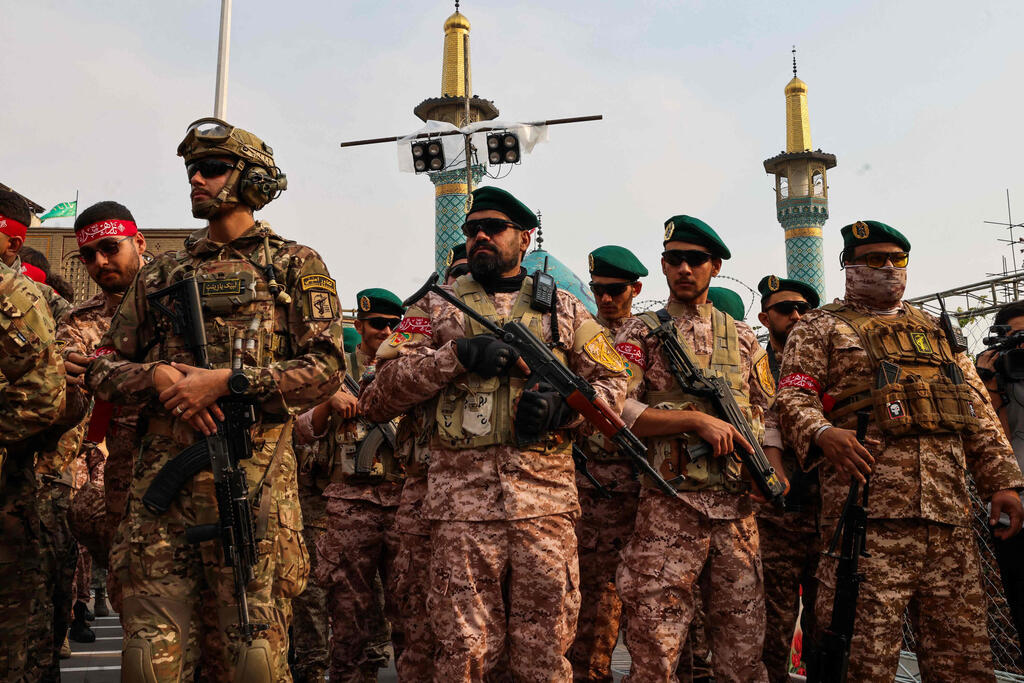
(Photo: Atta KENARE / AFP)
Nuclear facilities can be destroyed, missile systems targeted, the capabilities of the Revolutionary Guards weakened and even an agreement reached that would restrict Iran's activities for years to come. But as long as the existing power structure remains intact, the threat could eventually be rebuilt. The real question, then, is not only how to prevent Iran from acquiring nuclear weapons, but how to create the conditions for fundamental change in the regime responsible for the threat.
Chaos theory
This is where a concept I propose calling "chaos theory" comes into play. Not a single decisive blow, but systemic collapse. In its scientific sense, chaos theory deals with complex systems that are highly sensitive to initial conditions, in which small changes can produce large and unpredictable consequences. This is not a conspiracy theory or a suggestion that some invisible hand is directing events, but rather a recognition that complex systems can respond in nonlinear ways to accumulating pressures and disruptions.
Applied to strategic thinking, the Iranian regime can also be viewed as a complex system of interdependent centers of power: religious and political leadership, the Revolutionary Guards, intelligence and security agencies, financial institutions, centers of economic control, propaganda apparatuses and networks of personal and financial loyalty.
The regime's strength rests not only on its military power, but also on the ability of all these components to continue functioning together, maintain discipline, transfer resources, preserve loyalty and project an image of control and stability to the public.
When several key systems come under significant pressure simultaneously, a crisis may emerge that exceeds the sum of the individual pressures. What initially appears to be an economic difficulty, a leadership crisis or damage to the regime's prestige could develop into a crisis of trust among centers of power, a breakdown of loyalty within the security apparatus and an erosion of the regime's ability to maintain control.
The goal is not to create chaos for its own sake, but to establish conditions in which the institutions of government lose their ability to continue functioning as a unified system. If regime change is the objective, it requires an approach far broader than isolated strikes on nuclear facilities. It requires a sustained, multidimensional campaign.
On the military and security front, efforts should focus on weakening the ability of the regime's repressive and coercive apparatuses to enforce its will, while maintaining a clear distinction between military targets and the civilian population and infrastructure essential to civilian life. Harming civilians is not only a moral and legal problem; it could also strengthen national solidarity around the regime and undermine the prospects for change.
On the economic front, consideration should be given to tightening targeted sanctions against the Revolutionary Guards, their financial networks, assets associated with the regime's leadership and entities that enable it to circumvent international restrictions. The objective is to reduce the resources available to the centers of power, not to bring about a collapse in the Iranian population's living conditions.
In the cyber and information domains, pressure on the regime's security and surveillance capabilities could be intensified, while simultaneously expanding the Iranian public's access to free information, independent communications and exposure of corruption, failures and contradictions within the leadership.
Alongside these measures, international support for Iranian civil society, opposition figures and political groups advocating a transition to a different form of government is of considerable importance. Such support could include diplomatic, economic and humanitarian assistance, while recognizing that the legitimacy of any change must emerge first and foremost from Iranian society itself.
Accumulating pressure
The logic behind this approach is the accumulation of pressure. An economic crisis alone will not necessarily bring down the regime. Neither will a severe military blow. Public protests, without cracks emerging in the security apparatus, may be met with violent repression.
But when centers of power weaken, internal trust erodes, economic pressure intensifies and the public begins to recognize a genuine possibility for change, a turning point may emerge.
It is important to emphasize that such a collapse is by no means guaranteed. Chaos, by its very nature, cannot be fully controlled, and it could also lead to civil war, the disintegration of state institutions or the rise of a new extremist force. Planning for the day after, therefore, is not a secondary consideration but a central component of the entire strategy.
One of the recurring strategic mistakes in confrontations with hostile regimes is the assumption that overthrowing the government will automatically produce a suitable alternative.
Historical experience suggests otherwise. A power vacuum does not remain empty for long. Without a credible, organized alternative capable of governing, extremist groups, militias and competing centers of power may move in to fill it.
For this reason, alongside efforts to increase pressure on the Iranian regime, intensive diplomatic work must begin now to develop an alternative governing framework.
Establishing dialogue
Dialogue should be established with Iranian opposition figures, both inside and outside the country, to explore the possibility of creating a political transitional framework and developing with them a shared vision for Iran's future. Such a framework could operate outside the country's borders until conditions allow for its return, but it must enjoy Iranian legitimacy and not be perceived as a government imposed from abroad.
Alongside these political contacts, an international framework should be prepared to offer economic assistance, conditional sanctions relief, institutional reconstruction, regional cooperation and Iran's renewed integration into the international community.
This is not merely about presenting an alternative to the major powers, but about sending a clear message to ordinary Iranians, government officials, businesspeople and even members of the security apparatus: a future is possible without the ayatollahs' regime.
That message is no less important than the pressure itself. People will find it difficult to abandon an existing political system if they do not believe there is an alternative capable of guaranteeing their security and future.
The international debate currently focuses on important but limited questions: how much enriched uranium Iran will be allowed to retain, who will inspect its nuclear facilities, under what conditions the Strait of Hormuz will reopen and which sanctions will be lifted.
These are questions of strategic significance, but they primarily concern the capabilities and behavior of the existing regime rather than its continued existence.
If the strategic objective is regime change, that goal must be stated clearly, and policy must be developed accordingly. Such a policy cannot be limited to military strikes on one hand and negotiations on the other. It must combine multidimensional pressure, efforts to undermine the ability of the regime's power structures to maintain their control, support for forces seeking change and the creation of a political foundation for an alternative government.
 Doron Hadar
Chaos theory does not guarantee that a regime will fall. It offers a different way of understanding how an apparently powerful political system can reach a breaking point through the accumulation of pressures, internal fractures and a loss of legitimacy.
But even then, the collapse of the regime is only half the journey. The other half, no less important, is creating the conditions for a stable and legitimate government to emerge in its place.
The goal is not to leave behind a devastated Iran. The goal is to enable a different Iran to emerge.
- Col. (res.) Doron Hadar is a former commander of the IDF's Crisis Management and Negotiation Unit and a founding partner of Critical Impact