

“We did not initiate the security zone in Lebanon,” officials in the defense establishment said yesterday. “And we did not initiate the volatility in the West Bank ahead of the elections. All of these are the product of decisions by the political echelon, and it is the one that needs to ensure the resources to deal with them.” The senior defense official to whom the quote was attributed also took care to explain that the remarks were intended to “reflect,” as he put it, the situation in the IDF and the need for resources.
And there is more: Following the primary results, one commentator assessed, based on a conversation with a “senior defense official,” as he described him, that Netanyahu had cooked up for himself a comfortable list of yes-men who would make it easier for him to pass a decision to go to war in order to postpone the elections or influence the results. And if proof from the field is needed, elsewhere a senior official was quoted as claiming that the refueling aircraft that landed in Israel are part of preparations for another round in Iran.
Gallery
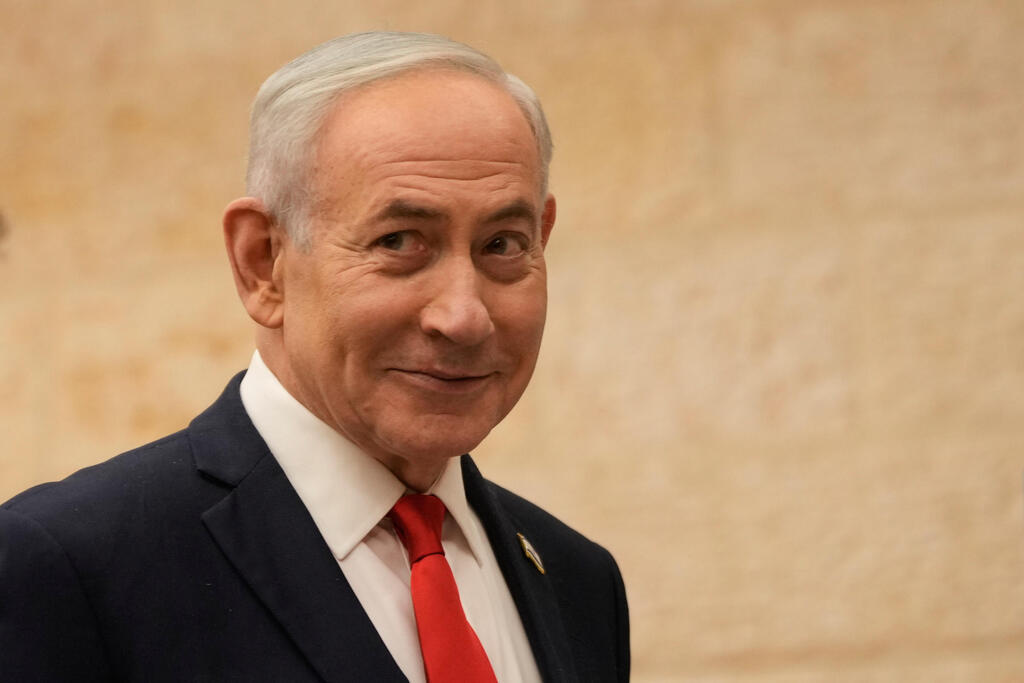
The fear Netanyahu may initiate a military move in order to strengthen himself politically is taking up ever more space in public discourse
(Photo: Ohad Zwigenberg, Pool, AP)
As the election date draws closer, the fear that Netanyahu may initiate a military move in order to strengthen himself politically is taking up ever more space in the public discourse. This is not a new claim, and it is not inherently baseless simply because it is political.
“Diversionary war” is what it is called in the academic literature — using an external conflict to divert the public’s attention from an internal crisis. The 1982 Falklands War is the more classic example studied in this context, with reference to the public’s instinctive tendency, or at least that of a large part of it, to close ranks in the face of an external threat and rally around the government and the leader. At the same time, studies show that the effect is not automatic and is limited in both duration and by the outcome of the campaign. A “diversionary war” is not a one-way ticket.
And three things must be said about all this. The first concerns the inflationary use of the definition “senior defense official.” Without offending anyone, and without names of course, it is worth saying here that the credit should be taken with a very large grain of salt. It is true that rank does not guarantee command of the material, innovative thinking, creativity and certainly not eloquence, but still — senior means senior. A branch head in the service is not a senior Shin Bet official, and not every former Unit 8200 officer is a senior figure in Israeli intelligence. And this is not nitpicking. When one says “senior defense official,” the tendency is to attribute to that person intimate familiarity with what is really happening.
A second comment concerns the term war, or its synonyms — “confrontation” or “serious confrontation”; “explosive event,” which is, by the way, a somewhat grandiose definition; a “round” of reserve duty, a term that has become common currency here; “campaign,” which is, how shall we put it, a somewhat stale term — and so on.
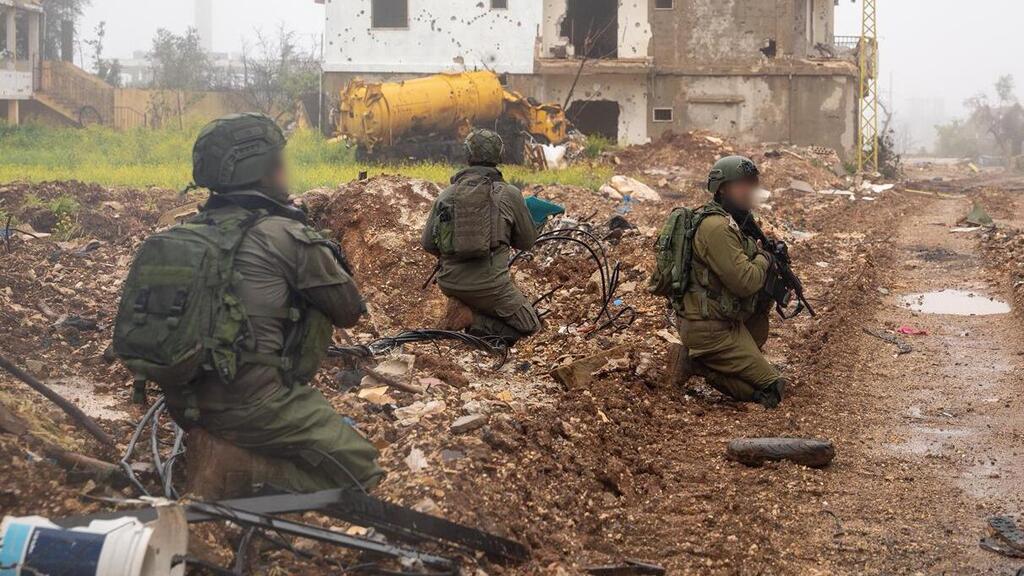
We're already at war: IDF soldiers operating in Lebanon
(Photo: IDF Spokesperson's Unit)
And the obvious question in this context is what war-confrontation-round-volatility we are talking about now, and what exactly the senior officials who speak about deliberately created volatility ahead of the elections mean, because except for Turkey, which is now starring in the headlines, Israel is already at war anyway. Or at least in an ongoing military confrontation in Gaza and Lebanon, dealing with high volatility in the territories and on the verge of volatility in Syria. A round in Iran will not happen without American approval, which probably will not come before November. So what is left? Turkey? Is that the war Netanyahu will deliberately cook up in order to evade elections or improve his chances?
Even if one chooses to ignore the legal framework requiring a majority of 80 Knesset members to postpone the election date, the question that remains on the table is why this particular argument is taking up such broad public space. So yes, as noted, this is not an unfounded concern, and still the distance between concern and realization is great. Certainly when we are sitting on the yellow lines in Gaza and Lebanon and bombing in Syria.
And the next obvious question is whether the other arguments have run out. The democratic celebration in Likud, for example, which produced distorted primaries with repellent results, and which may have kicked thoroughly corrupt figures like Silman off the list, but there is no doubt that it is not an expression of the realization of the Israeli dream for different leadership. Certainly not after several yeshiva students describe how they were paid to take part in this democratic dream.
In other words, what should concern a significant portion of voters ahead of October is not the conspiratorial question of which war Netanyahu will invent for us, but rather which war we are still up to our necks in, how the burden is being divided and where the budgets are flowing. Who is being bought and who is being sold. Everything that has been on the public agenda, openly and in full view, for four years already.