

Leaders today fall not only at the ballot box but through collapsing legitimacy in their parties, parliaments and streets. This new era of fragile mandates risks turning democracies into revolving doors of leadership just when stability is most needed.
On a humid afternoon in Tokyo, Shigeru Ishiba faced the cameras and announced his resignation as Japan’s prime minister. His words were calm, but his body language betrayed exhaustion.
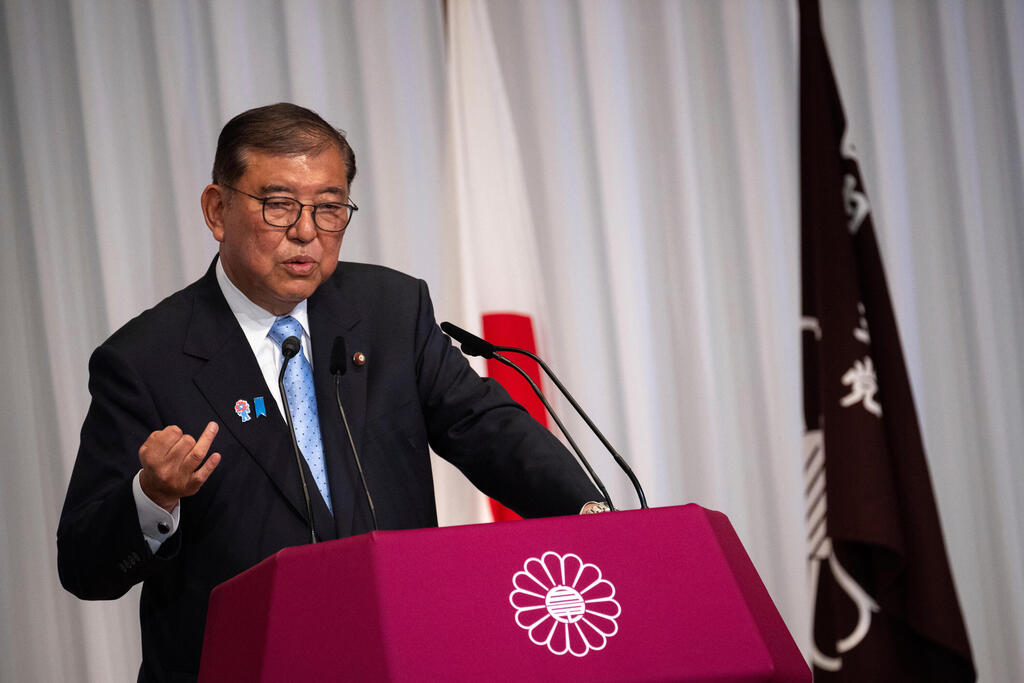
The explanation was familiar: mounting internal conflicts within his own party had made his position untenable. Thousands of kilometers away in Paris, François Bayrou was forced from office after losing a confidence vote in the National Assembly. In Kathmandu, K. P. Sharma Oli had already vacated his seat of power, toppled not by legislators or party rivals but by swelling crowds of protestors demanding his departure.
Three countries, three political cultures, three leaders, yet one storyline. What ties together these apparently unrelated dramas is not ideology or geography, but a deeper transformation in the architecture of democratic governance. The twenty-first century is becoming the age of fragile mandates: an era when prime ministers and presidents are not defeated at the ballot box alone, but undone simultaneously by pressures from their party, their parliament and their people.
A new anatomy of collapse
In Japan, the ruling Liberal Democratic Party fractured from within, eroding Ishiba’s legitimacy long before voters had their say. In France, Bayrou discovered that without parliamentary confidence, even a seasoned leader cannot govern for long. In Nepal, Oli confronted the raw force of street politics, where legitimacy evaporates overnight in the face of mass mobilization.
Each case illustrates one dimension of the same phenomenon: the sources of political authority, party cohesion, institutional confidence and public consent are no longer separate; they collapse together, often with breathtaking speed.
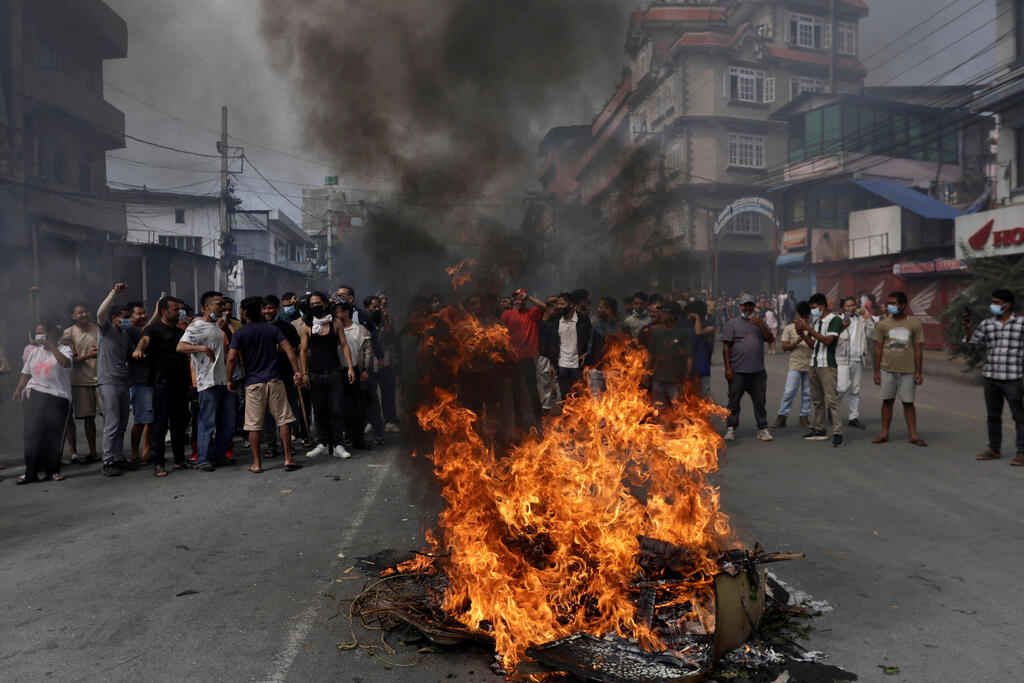
Mass street protests in Kathmandu, Nepal
(Photo: REUTERS/Navesh Chitrakar)
Historically, governments fell for clearer reasons. Monarchs were toppled by foreign invasion or palace intrigue. Modern democratic leaders lost elections or faced revolutions. Today, by contrast, the downfall is subtler, more bureaucratic: leaders are strangled not by a single decisive blow but by a cumulative erosion of legitimacy. A budget crisis sparks factional rebellion; a rebellion leads to a failed confidence vote; a failed vote ignites protests in the street. The circuits of politics, media and digital platforms bind these arenas together, accelerating the cycle.
This volatility is emerging at precisely the moment when democracies need the opposite: strong, durable governments capable of tackling long-horizon crises, climate change, migration, technological disruption and geopolitical rivalry. Instead, democracies appear caught in a revolving door of leadership. A prime minister who governs for barely a year cannot build nuclear energy infrastructure, overhaul pension systems or design digital policy that requires a decade to mature.
The paradox is cruel. Voters demand decisive solutions to generational challenges, yet the very mechanics of politics produce leaders with diminished authority and short life spans. It is not that electorates no longer believe in democracy; rather, they expect too much, too quickly and punish too severely. The result is governments designed for firefighting, not for strategy.
Nor are Japan, France and Nepal isolated cases. In the Netherlands, the government collapsed over migration disputes, leaving a caretaker administration. In Mongolia, the prime minister was ejected after corruption scandals triggered protests. In Canada, Justin Trudeau announced he would step down as party leader, recognizing that his personal legitimacy had ebbed even though his government remained formally intact. These stories echo the same refrain: leaders hold office on borrowed time, their authority conditional and easily revoked.
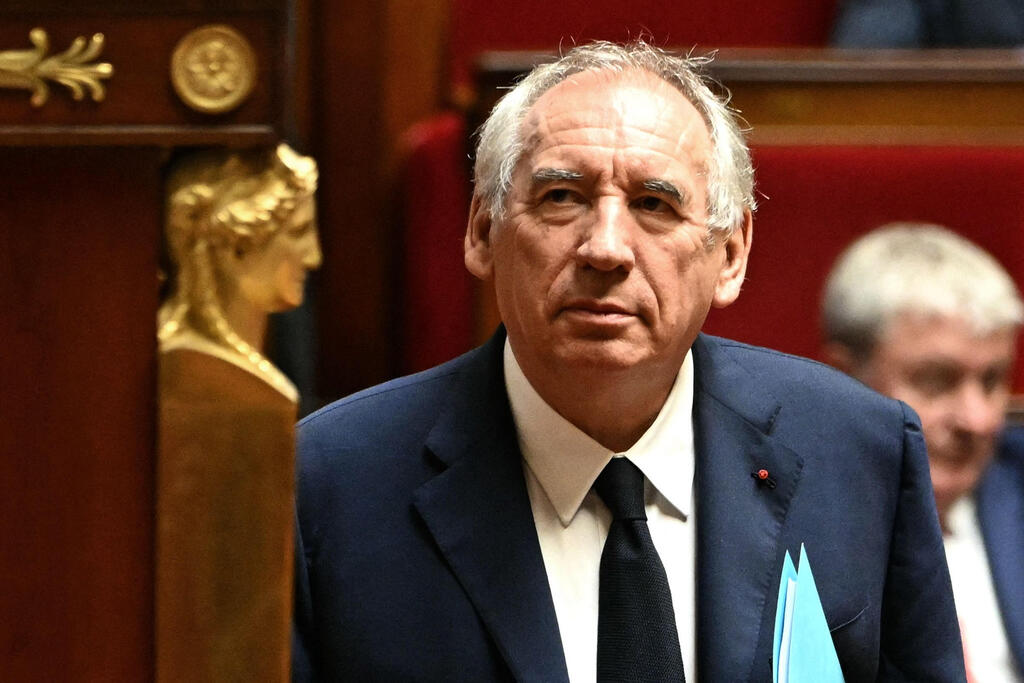
François Bayrou
(Photo: Bertrand GUAY / AFP)
This is not merely about populism or ideology. Right and left, liberal and conservative, suffer alike. The common denominator is structural fragility: mandates that are partial, provisional, constantly under renegotiation. Leaders today resemble interim managers rather than statesmen; they preside over institutions but seldom command them.
What comes next?
Several trajectories are possible. Some democracies may attempt to fortify constitutions, lengthen terms or introduce mechanisms to shield governments from incessant no-confidence votes. Others may drift toward technocracy, outsourcing authority to unelected experts or algorithms that promise continuity when politics cannot. In the darker scenario, voters disillusioned by perpetual instability may embrace strongmen who promise stability at the price of pluralism.
Yet instability need not be fatal. One could argue that rapid turnover prevents entrenched elites, refreshes leadership and keeps governments responsive. But there is a cost: strategic paralysis. Nations confronting existential challenges cannot afford to reset their compass every twelve months. The fragility of mandates, if left unaddressed, risks hollowing out the very capacity of democracies to act.
At the heart of this crisis lies trust: intangible, invisible, but decisive. Political legitimacy is not measured solely in votes, but in the perception that leaders can command their party, persuade their parliament and retain the patience of their people. Once trust corrodes on any one front, the others quickly follow. In the twenty-first century, trust has become the most volatile currency of politics, and the most essential.
 Dr. Bella Barda Bareket Photo: Lia Yaffe
The resignations of Ishiba, Bayrou and Oli are not isolated tales of failure. They are signals of a systemic shift in how democracies function under the weight of digital scrutiny, fiscal constraint and impatient electorates. The age of fragile mandates is upon us.
The question is whether democracies can invent new forms of stability before the revolving door spins so fast that leadership itself becomes indistinguishable from vacancy.
- Dr. Bella Barda Bareket is a global trends analyst specializing in the intersection of economics, geopolitics and technology.