

Once upon a pita, falafel was the great equalizer. For five shekels, you could buy lunch, identity and a small taste of equality. Twenty years later, that same meal costs twenty-five. This is not just food inflation; it’s an X-ray of the Israeli economy — wages doubled, but life quadrupled.
In 2005, a falafel in pita cost five to ten shekels. In 2025, the going rate is twenty-five to thirty. Meanwhile, average wages rose from roughly ₪7,000 to ₪14,000. On paper, that looks fine. In practice, it means your salary buys fewer lunches, smaller apartments and shorter vacations.

The “falafel index” — the street-level price of the most ordinary meal — has risen about fivefold in two decades, while wages have merely doubled. The math is simple, but the message is brutal: our incomes didn’t keep up with our appetites.
The dream of homeownership has followed the same curve, only steeper. Since 2005, housing prices in Israel have jumped more than 130 percent in real terms, roughly 2.3 times the pace of average wage growth. The ratio of salaries to house prices — a measure of affordability — has worsened by about 20 percent. In plain Hebrew: the middle class must now work longer for smaller spaces.
This isn’t just Tel Aviv’s problem. From Haifa to Be'er Sheva, the story repeats: salaries rise in shekels, but housing costs rise in dreams deferred. Israel is becoming a land of homeowners’ heirs, not homeowners.
Israel’s GDP per capita has surged. The shekel is strong. The Start-Up Nation thrives. Yet the average Israeli feels squeezed. Why? Because growth has been uneven, concentrated in high-tech sectors, while service, education and public jobs crawl. The “Silicon Wadi” success doesn’t trickle into the supermarket checkout line.
The cost of living is the tax on inefficiency — on over-regulated markets, cartels and red tape that smother competition. When even the falafel vendor explains to customers that tahini prices rose due to import duties and rent hikes, you know economics has gone street-level.
Inflation isn’t just a number
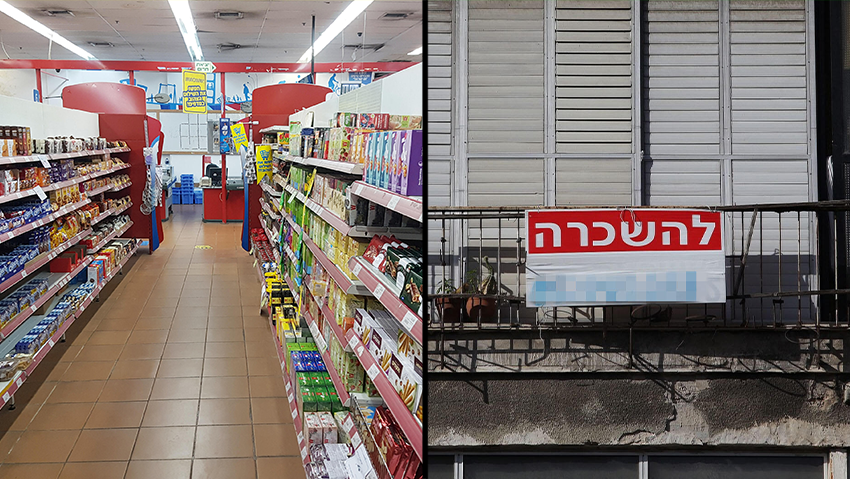
Economists track inflation with decimals. Families feel it with sighs. Inflation is not abstract — it’s the smaller bag of groceries, the shrinking lunch, the missing savings. Israel’s official inflation rate may hover around 3-4 percent, but the experienced inflation — what households actually feel — is far higher when it includes food, housing and transport.
(Photo: Orel Cohen)
When the working Israeli spends more on basics and less on the future, the economy grows but society stagnates.
The problem is not that Israel is poor; it’s that prosperity is misallocated. The state collects high taxes but delivers low efficiency. The private sector innovates globally but competes locally in tiny markets with high barriers. The result is a peculiar paradox: a country that exports intelligence but imports affordability crises.
Israel needs a new social contract — one that measures success not only by GDP or unicorn valuations but by purchasing power, accessibility and the dignity of everyday life.
What can be done
Real relief requires competition, deregulation and housing supply. Open land for development. Break cartels in food and banking. Modernize transport. Reward productivity beyond tech.
 Prof. Ilan AlonPhoto: LinkedIn
And yes — track the “falafel index” as seriously as the Consumer Price Index. Because when your street food becomes a luxury, your economy is sending you a warning.
The falafel tells the truth that official statistics conceal. Israelis today earn more but live tighter. The cost of being Israeli — in shekels, in stress, in hope — has inflated faster than the currency.
A nation that can launch satellites and code blockchains can surely find a way to make falafel affordable again. Until it does, our prosperity will remain a mirage — golden on the charts, hollow at the counter.
- By Prof. Ilan Alon, Professor of Economics and Business at Ariel University (Israel) and the University of Agder (Norway)