

The recent statement from the American Fertility Association, reaffirming its support for established technologies while expressing reservations about “restorative” approaches, reflects how public discussions on fertility often remain centered on medical philosophies and binary debates. Yet, what is too often overlooked in these conversations is the perspective that matters most: the lived experience of the woman at the center.
I write this wearing two hats. As a fertility expert, I live and breathe the science, the statistics, and the protocols that make the miracle of parenthood possible for so many. But I also write this as a woman who endured six years of fertility treatments. Six years in which my body was not my own.

(Photo: Shutterstock)
For six years, I lost spontaneity, privacy, and above all, my sense of control. Anyone who has been through it knows the ritual: the early mornings at the clinic, the nerve-racking wait for an ultrasound, the meticulous planning of a workday around yet another blood test. The journey to parenthood became a full-time job, and the clinic was the boss. I remember sitting in my car after another appointment, trying to catch my breath before an important meeting, feeling like an actress in someone else’s movie. My body had become foreign territory, managed by numbers on a screen and the voices of nurses in a hallway. I lost faith in my intuition and replaced it with constant anxiety. Are the follicles growing enough? Did yesterday’s injection work?
In this process, one of the most significant challenges is follicle monitoring. It is, without a doubt, a critical phase. The success of the treatment depends on our ability to identify the precise moment to act. But the existing model, which requires women to physically come to the clinic every day or two for an invasive exam, is outdated. It is draining, creates dependency, and adds a thick layer of anxiety to a journey that is already incredibly difficult. This model turns hope into a logistical chore and anticipation into a traffic jam.
As a doctor, I often sat across from women who were overwhelmed by their fertility struggles. I saw the sadness in their eyes and heard how it reached into every part of their lives. Many told me about the excuses they had to invent at work for appointments or treatments, and how their plans and ambitions felt delayed or even out of reach. Their stories made clear that fertility challenges were never just medical—they touched careers, relationships, and a deep sense of self.
I felt our shared frustration. They felt helpless, and I felt powerless in the face of a rigid system that allowed for no flexibility. I understood that the great paradox of modern fertility medicine is that it is technologically advanced yet remarkably conservative when it comes to the patient experience. It knows how to create a pregnancy but has forgotten yet it has failed to center the woman who is meant to carry it.
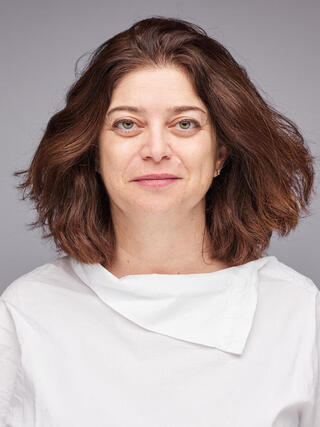 Dr. Nadia Prisant
The next revolution in fertility care will not be another protocol or a new drug. The revolution is already here, and it lies in technologies that enable a woman to take an active part in monitoring her treatment from home, tools that give her data about her own body, reduce the need for endless clinic visits, and return what was taken from her: autonomy.
Of course, there is no substitute for professional medical guidance. The goal is not to replace the doctor but to empower the patient to become an active and informed partner in her care. It is to give her tools that allow her to understand what is happening in her body and to make the dialogue with her physician more balanced and constructive.
The future of fertility treatment isn't about arguing whether it is good or bad. The future is about making it better. Instead of forcing women to fit their lives around the treatment, it is time for the treatment to fit their lives. It is time to put some of the power and the control back into the right hands: the patient's.
- Dr. Nadia Prisant is a fertility specialist and Chief Medical Officer at IMMA Health, a company combining AI-powered digital tools and high-quality medical devices to make reproductive and pelvic care more accessible.
First published: 16:12, 08.26.25