

Economic history teaches us that great powers and nations do not necessarily collapse under the force of an external enemy, but under the excessive weight of the armor of war they place upon themselves. The U.S at the beginning of the 21st century offers a stark warning.
In the wake of the trauma of September 11, President George W. Bush led America into two of the longest and costliest wars in its history, apart from World War II, in Iraq and Afghanistan. Beyond the thousands of lives lost, the questionable military adventures in Baghdad and Kabul, whose direct and indirect costs are estimated at more than $8 trillion, were financed almost entirely through the issuance of federal debt securities and sustained access to the U.S. Treasury market, rather than through contemporaneous taxation or budgetary offsets.
Gallery
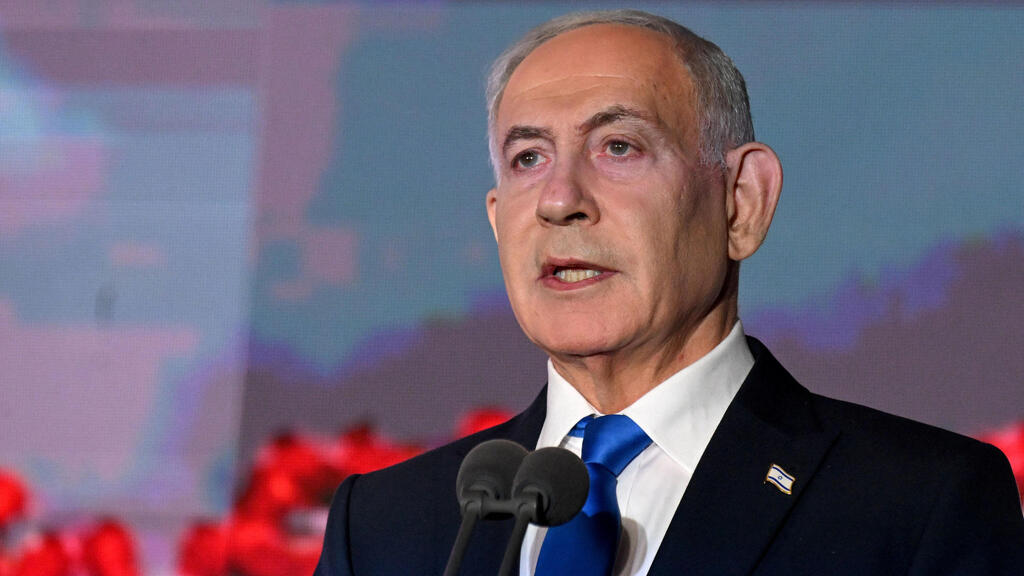
Prime Minister Benjamin Netanyahu is reportedly avoiding providing a security update to Opposition Leader Yair Lapid
(Photo: Debbie Hill / Pool / AFP)
Today, the U.S. national debt has surpassed $40 trillion, approximately 123% of GDP, while annual interest payments alone exceed $1 trillion. As debt-service costs consume a growing share of federal revenues, America's capacity to invest in the foundations of future prosperity, from education and infrastructure to innovation and social mobility, is steadily eroding. The burden created by decades of debt accumulation is therefore not merely financial; it represents a strategic constraint that future presidents will carry for years to come, at a moment when socioeconomic inequality and political polarization are already placing increasing strain on the American system.
Israel's debt challenge is showing signs of a troubling Americanization. The transition from a model centered on balancing security, economic growth and social investment toward Prime Minister Benjamin Netanyahu's vision of a more heavily militarized state risks imposing significant long-term economic costs.
Many economists warn of the possibility of a "lost decade" reminiscent of the years following the 1973 Yom Kippur War, when defense spending surged to roughly 30% of GDP and the debt-to-GDP ratio climbed above 150%, contributing to inflation, fiscal strain and prolonged economic stagnation. Yet today's circumstances may be even more concerning. Unlike the Israel of the 1970s, contemporary Israeli society is more polarized, burden-sharing is less universal, and growing segments of the population do not participate equally in either military service or the labor force. As a result, the country's capacity to absorb a prolonged period of elevated defense spending may be considerably weaker than it was half a century ago.
The costs of the war are now estimated in the hundreds of billions of shekels. Israel's debt-to-GDP ratio has climbed back above 68%, marking a significant reversal from the fiscal discipline that characterized much of the past two decades. The country has also endured a series of unprecedented credit-rating downgrades, damaging investor confidence and increasing the cost of future borrowing. At the same time, the defense establishment is seeking tens of billions of shekels in additional annual resources beyond its pre-war baseline, creating mounting competition over finite public resources.
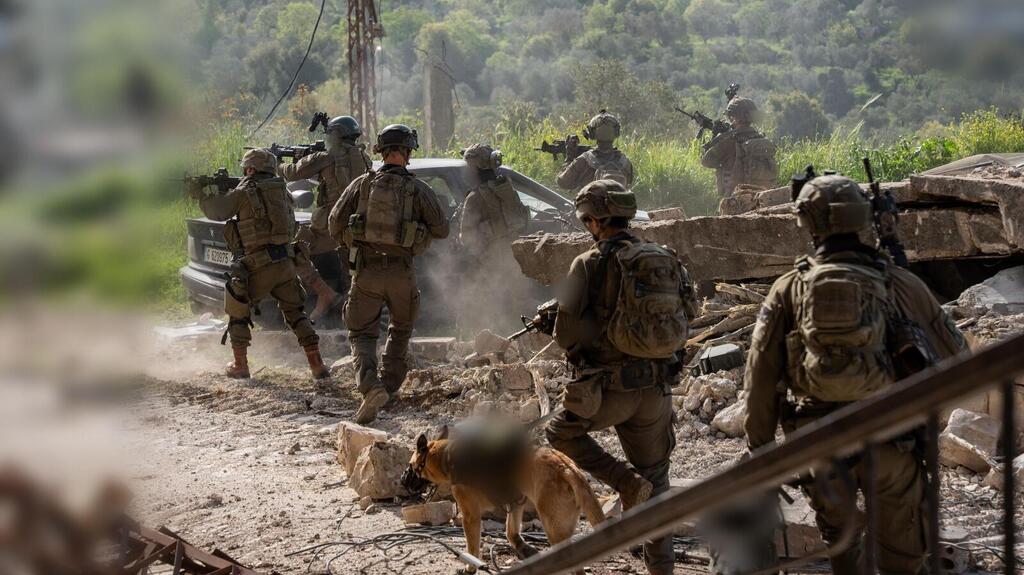
IDF troops in southern Lebanon: The costs of the war are now estimated in the hundreds of billions of shekels
(Photo: IDF Spokesperson's Unit)
The resulting burden falls primarily on a relatively narrow tax base, namely the middle class that serves, works, and finances a disproportionate share of public expenditure, even as its own economic pressures continue to intensify.
Much as Osama bin Laden sought to weaken the United States not only through the attacks themselves but through the costly strategic and economic consequences that would follow, Yahya Sinwar's calculations extended far beyond October 7. His objective was also to inflict lasting damage on Israel through economic exhaustion, international isolation, rising antisemitism and growing regional instability. Yet these second-order effects appear to receive insufficient attention. Indeed, one is left wondering whether they factor meaningfully into the thinking of Israel's current leadership at all.
Netanyahu's management of the war, and his continued reliance on alarmist politics three years into the conflict, do little to inspire confidence in Israel's long-term resilience. The gradual Americanization of Israel's defense budget is absorbing resources that could otherwise be directed toward education, infrastructure, productivity and social mobility, while deepening pressures on a society already burdened by inequality and fragmentation.
In the end, the coming elections will not be about Netanyahu himself. It will be about whether Israel continues down a path of rising debt, growing economic strain and the weakening of its productive middle class, or chooses a strategy that balances security with prosperity, renews the foundations of growth and innovation, and safeguards the Zionist project for generations to come.