


In the circumstances Israel has found itself in since October 7, a bad deal is better than continued deterioration. But the deal was announced. And it’s an excellent deal. So good, in fact, that it raises questions. Is it real? Will Hamas agree? At least as Trump presented it, this is much more than a deal. It is the opening of a new chapter in the Middle East.
The problem is we’re in the Middle East. That makes everything more complicated. Put aside the expected objections inside the current coalition — they have mattered in the past, but not this time. The core problem was and remains the terrorist organization Hamas, which in the last two years has achieved unprecedented gains. Hamas’ primary aim was never to reach a cease-fire. Its first objective was to drive Israel into a political collapse. That objective was achieved. Its next aim is to push Israel from political collapse to political disintegration. And despite the optimism, it remains unclear whether Hamas will give up the unconventional weapons it holds.
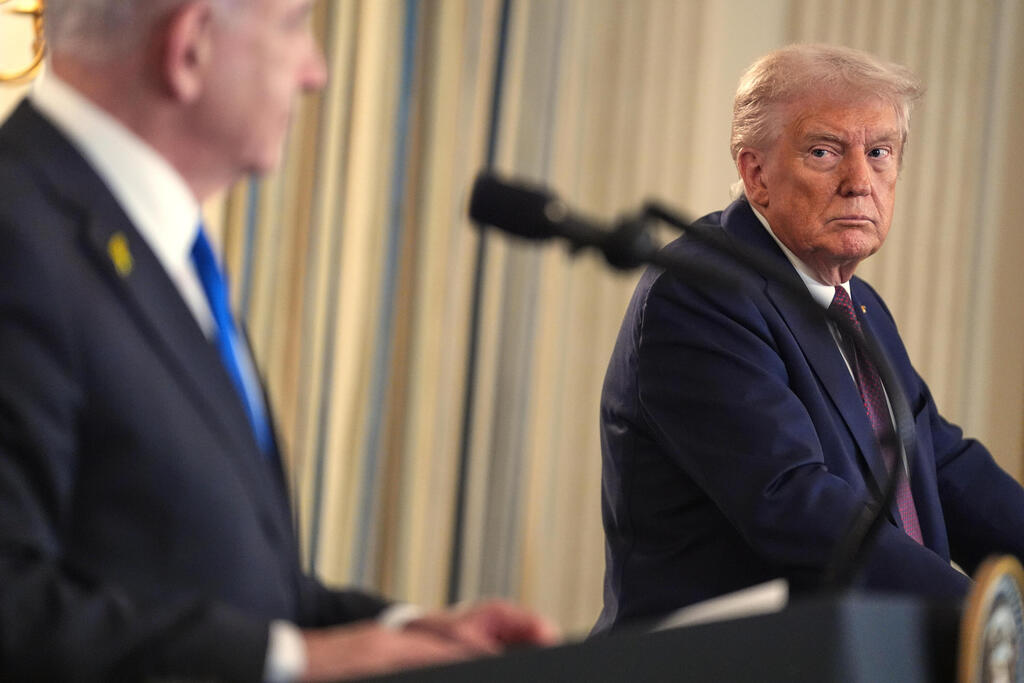
Donald Trump and Benjamin Netanyahu at a news conference at the White House
(Photo: Evan Vucci/AP)
The fixed conception of the Israeli government — and of many outside it — is that “military pressure will force Hamas to retreat from its positions.” One wonders what else has to happen before it is clear that the intimidation-deterrence-and-destruction model has failed spectacularly. That is a Western, rational conception: threaten destruction or actually destroy, and the damaged party will make concessions and compromises. But that is not the jihadist logic. On the contrary: destruction in the Strip is Hamas’ most effective weapon against Israel. Defeat in a battle is victory in the campaign.
There was no genocide. There was no deliberate starvation. But even if there had been, these are the last concerns on Hamas’ agenda. Those campaigns are Hamas’ success, aided by countless useful idiots across the free world. They have raised the level of hatred against Israel. They have already produced economic sanctions. Those campaigns are the weapon that Hamas hopes will move Israel from collapse to disintegration. Buildings flattened? More dead children? Excellent. That is a weapon against Israel. And Israel’s response is supposed to intimidate Hamas? That’s the idea.
Hamas’ main objective has been and remains to undermine Israel’s standing — not militarily, but strategically
There is a change. In recent days there has been massive Arab pressure on Hamas. Maybe we are at a turning point. It is worth recalling that at the end of 2000 Bill Clinton presented the peace framework bearing his name. The Palestinians were offered a state on 96% of the West Bank, all of Gaza, a division of Jerusalem and a generous international fund to solve the refugee problem. Leading Arab states supported the plan. Saudi Ambassador Bandar bin Sultan even pressured Arafat minutes before he went to the White House: “If you refuse it will not be a tragedy, it will be a crime,” he told him. Did it help? Arafat went to the White House and committed both a crime and a tragedy. The second intifada only escalated. Terrorists sowed death in Israel and far greater death among Palestinians themselves.
After Arafat ignored pan-Arab pressure, there is no certainty that Hamas will succumb to pressure either. Hamas’ main objective has been and remains to undermine Israel’s standing — not militarily, but strategically. Still, of all pressures, Arab pressure may be the most consequential. Arab states have deep cooperation with the United States. Among the countries pressing Hamas, the influence of the Muslim Brotherhood states — Qatar and Turkey — is somewhat more significant. Israeli pressure alone does not deter Hamas. Let’s not kid ourselves.
Trump is already convinced there will be a deal. I hope he’s right. But Trump is a tireless producer of false dawns. Even before the Alaska summit with Putin in August he scattered hints of optimism. Since that summit, Russia’s war in Ukraine has only intensified. That’s Trump — not always fully connected to reality. So if we want to be optimistic we need another sign.
 Ben-Dror YeminiPhoto: Avigail Uzi
Netanyahu’s call with the emir of Qatar suggests that maybe, this time, it’s serious. It was an odd apology — one that has already drawn many harsh reactions from the right. Smotrich even compared it to Munich. But as the old sketch said: “Be a man. Humble yourself.” Given the circumstances, the apology was the right move if it advances — or even leads to — a deal.
After such brutal two years, we are a people waiting for good news. Yesterday we got some from the U.S. president. Here and there it sounded strange, confused, but separating the chaff from the wheat, in addition to the deal itself there were many positive and hopeful elements. Even if only the first steps come to pass, it is the route by which Israel can escape Hamas’ trap. But the ball is in Hamas’s court, so the questions remain. Still, for a change, there is also hope of stopping the slide. God willing.