

The agreement signed between the United States and Iran may reduce tensions in the region in the short term and give markets a renewed sense of stability. But the Middle East has long moved between periods of calm and sudden crises, and any future confrontation could once again put the Strait of Hormuz at the center of the risk to global supply chains.
That is precisely why the need to create stable and secure alternatives to traditional trade routes has not weakened. It has grown stronger. Hormuz is one of several strategic chokepoints, alongside routes such as the Panama Canal, that remind us of the need for more than one route.
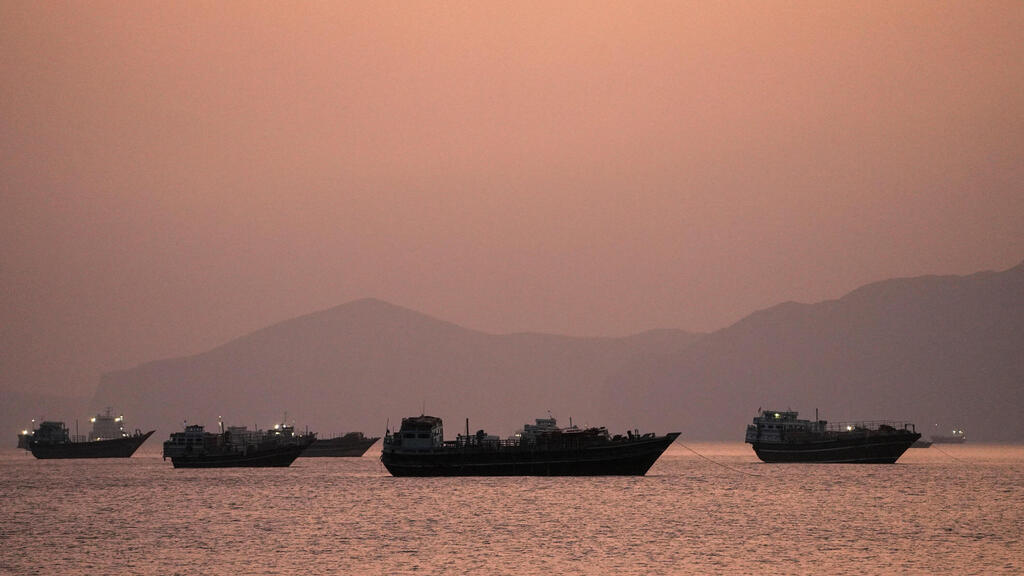
Israel has the ports, infrastructure and wartime resilience to become a central link in IMEC
(Photo: Reuters)
For decades, Israel was seen as a kind of logistical and economic island. Despite its strategic location at the meeting point of Asia, Africa and Europe, it never fully realized its potential as an international trade junction. But the new geopolitical and economic reality creates a historic opportunity to turn Israel into a central gateway between East and West.
The current agreement with Iran does not cancel the need for IMEC, the India-Middle East-Europe Economic Corridor. It underscores its importance. In recent years, the world has learned that dependence on a single route is a strategic weakness. Even if Hormuz remains open in the coming years, any political, security or military shift in the region could restore the threat to one of the world’s most important energy and trade routes.
IMEC was designed precisely to deal with that reality: to provide another route, one that is more reliable and secure and does not depend on the goodwill of a single country or on unpredictable regional developments.
But IMEC is far more than a trade corridor. It is part of a broader vision to transform Israel from an endpoint into a global trade hub. That vision rests on a combination of advanced seaports, inland ports, railways, logistics centers and technological innovation. At the same time, it fits into Israel’s emerging national trade strategy, whose goal is to strengthen the country’s connectivity to international markets and position it as a key link in the global supply chain.
The economic significance of such a move is enormous. Countries that serve as trade hubs benefit from foreign investment, industrial and logistics development, the creation of high-quality jobs and expanded business activity. For Israel, this is an opportunity to strengthen the economy’s competitiveness, increase exports, attract international investment and reduce logistics costs.
Beyond the economic contribution, this is also a move with geopolitical significance. Those who control the trade junctions of the 21st century also gain diplomatic and strategic influence. It is therefore no surprise that other countries are competing with Israel and advancing rival alternatives.
Israel has another major advantage: proven experience. During more than two years of war and unprecedented security challenges, Israel’s supply chains continued to function. Israelis did not experience any substantial shortage of consumer goods, in part because of the operational continuity of the country’s ports and logistics infrastructure.
Israel has proved its ability to maintain functional continuity even during the most difficult periods. It must therefore continue to lead efforts to establish the trade route connecting Asia and Europe. An agreement with Iran may change the tactics, but it does not change the strategic need: The world needs another trade route, and Israel can and should be a central part of it.