


Despite the widespread belief that Hamas gave a conditional “yes, but” to the Trump administration’s latest ceasefire and hostage-release proposal, an examination of the organization’s official statement suggests a different reality — one closer to a firm “no, but.”
According to the statement, Hamas agreed to only one key clause of the American plan: a deal to release all hostages, both living and dead, within 72 hours of the agreement taking effect. The proposal, presented by U.S. President Donald Trump, outlines a full exchange that would see the release of 250 Palestinian prisoners serving life sentences from Israeli prisons in return for all remaining hostages in Gaza.
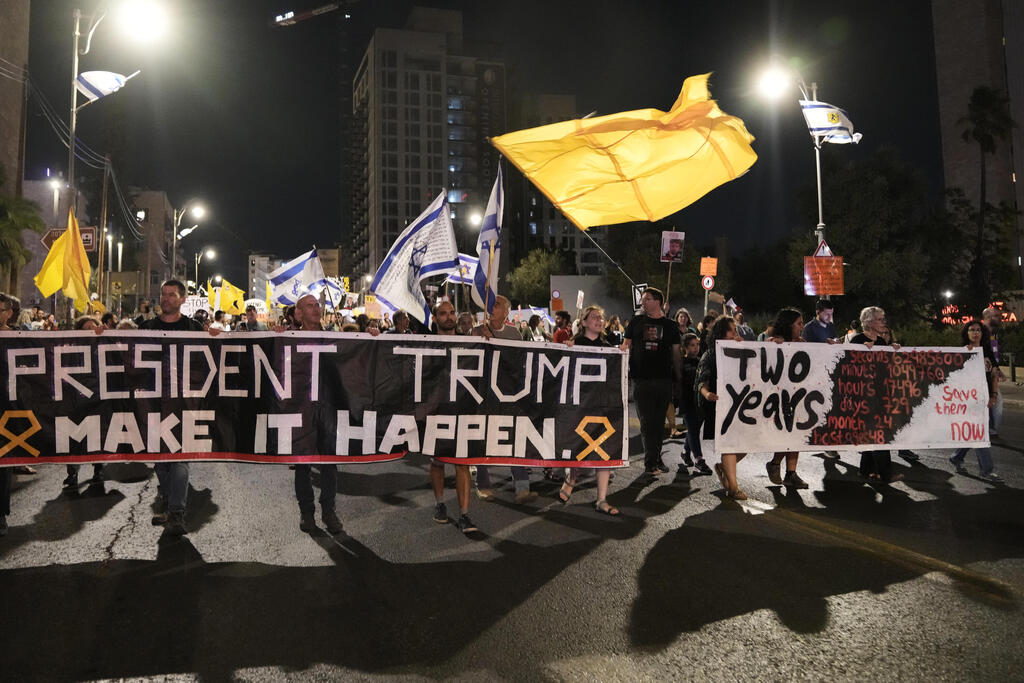
Hamas understands that the 72-hour countdown would begin only after technical details and prisoner lists are finalized. Even then, it remains doubtful the group could return within three days all the bodies of hostages still held in Gaza. Beyond this single provision, Hamas has rejected most of the significant clauses in the proposal, particularly those relating to security arrangements and postwar control of the strip.
Senior Hamas officials have made clear that the organization will not even discuss disarmament. According to their statements, any discussion of Hamas relinquishing its weapons is irrelevant at this stage and could only occur after the establishment of a Palestinian state. The group has also rejected the idea of an international force or any form of foreign supervision in Gaza, which the Trump plan calls for.
Hamas has indicated it might consider allowing the Palestinian Authority to reenter Gaza. The group has said it is prepared to transfer control to an independent technocratic government, as it has stated in the past. Still, its refusal to accept key conditions is likely to determine whether Gaza heads toward renewed conflict following any potential hostage release.
Even so, Israeli officials and analysts note that if only the hostage-release clause is implemented under Trump’s plan, it would represent a major achievement for Israel. The plan calls for the release of all hostages in one coordinated step, without an open-ended ceasefire or full Israeli withdrawal from Gaza — both of which Hamas has repeatedly demanded. For the first time, the long-standing rallying cry “Bring them all home now” appears within reach.
What remains unclear is why Hamas, after months of rejection, has now agreed to at least part of a proposal it previously refused. Israeli officials familiar with the talks say Qatar and Egypt, which have mediated between Israel and Hamas for nearly a year, have played a decisive role. The mediators reportedly pressured Hamas to agree while offering the group assurances that if it released all hostages, the United States would not permit Israel to resume large-scale fighting in Gaza.
Conversely, Israeli sources suggest that Jerusalem received quiet guarantees that if Hamas ultimately rejects the plan’s disarmament terms, Israel would retain the right to resume military operations. In effect, Trump’s proposal has maneuvered both sides — Hamas and Israel — toward an agreement neither necessarily wanted, yet both may find difficult to refuse.
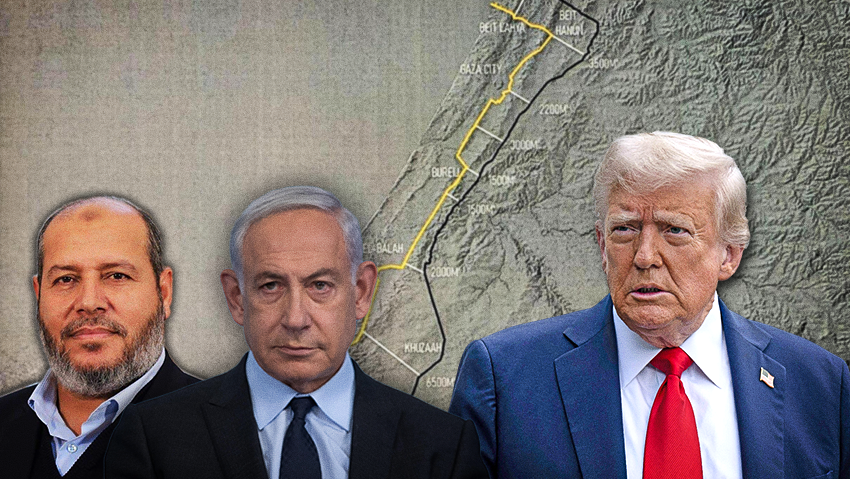
(Photo: Brendan Smialowski AFP, Alex Kolomoisky)
Prime Minister Benjamin Netanyahu, who faces intense political pressure at home over the war and the fate of the hostages, is said to have approached the plan with caution. Similarly, within Hamas, there are fears that the move could spell disaster for the group. If the ceasefire enabling the hostages’ release ends with renewed fighting, whether through U.S. approval or indifference, Hamas would have failed to achieve its war aims, while Israel could claim victory.
Hamas officials in Gaza, including senior figures Izz al-Din al-Haddad and Ra’ad Saad, are believed to have advocated a less extreme position than the faction led by brothers Yahya and Mohammad Sinwar. Early in the war, al-Haddad and Saad reportedly warned Hamas’s overseas leadership that the Sinwars’ hardline approach would lead the organization — and the strip — toward catastrophe. Their current stance is unclear, but sources in Gaza say they remain close to hostages still held underground and fear that any deal to release them could quickly lead to their own assassination.
Another challenge for the mediators — primarily Qatar and Egypt — is their growing distrust of Israel following the collapse of a previous hostage deal earlier this year. That agreement, negotiated in March 2025, fell apart after Israel allegedly failed to meet its commitments, including limited troop withdrawals. The Israeli negotiating team at the time, led by Mossad chief Dedi Barnea and Shin Bet director Ronen Bar, was later dismissed, and authority over the talks was handed to Strategic Affairs Minister Ron Dermer.
Diplomatic sources in both Cairo and Doha say those events have complicated efforts to secure a new framework. Yet, the urgency of the current moment — with the hostages’ fate and the course of the war hanging in the balance — is widely seen as unparalleled.
As one senior Israeli official put it, “These are dramatic and decisive days for Israel. This may be the last chance to bring the hostages home and end the war with tangible achievements.”