


Israel has stepped up its preparations, but not because it knows that U.S. President Donald Trump has ordered, or is preparing to order, a major strike on Iran. The opposite is true.
Jerusalem does not know what Trump has decided, and that uncertainty is forcing Israel to prepare for several possible scenarios at considerable cost. A decision in Washington could be made quickly, leaving the Israeli Air Force little time to formulate a response that both serves Israel’s operational needs and is coordinated with the United States.
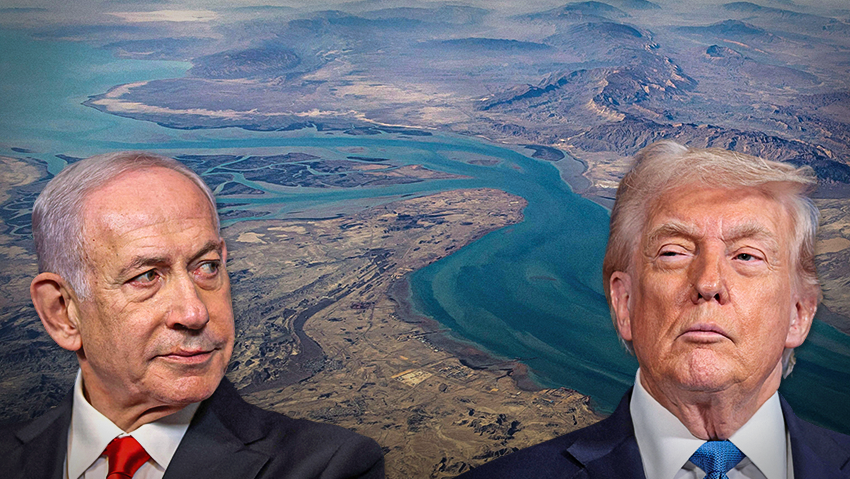
The prevailing assessment in Jerusalem is that Trump still wants to return to the understandings outlined in the memorandum of understanding with Iran. At the same time, the White House appears to recognize that compromise proposals advanced by Qatar and Oman would largely serve Iranian interests.
Those proposals call for a 10-day ceasefire during which the U.S. blockade would also be suspended. Iran would be able to export oil and receive goods through the Strait of Hormuz, while the pause in fighting would ease pressure on the regime.
The United States, however, would gain little from such a ceasefire because Iran’s Revolutionary Guard Corps has shown no willingness to abandon its demands regarding the Strait of Hormuz.
The Americans are weighing two poor alternatives. The first is to escalate and strike Iranian national infrastructure in the hope of forcing Tehran back to the negotiating table in a more realistic frame of mind.
The second is to accept compromise proposals offered by Qatar, Oman and Pakistan. A 10-day ceasefire would offer Washington little beyond conserving munitions and temporarily halting attacks on Kuwait, Jordan and Bahrain, as well as on U.S. troops stationed there. Those forces are currently under repeated attack.
Once the 10 days are over, however, the United States would likely find itself facing the same strategic problem. For that reason, the assessment in Jerusalem is that Trump may prefer to escalate now, while the U.S. midterm elections are still three months away, rather than risk a major confrontation closer to election day or during the campaign itself.
According to a reliable source, Israel’s central problem is not only the complete uncertainty surrounding Trump’s intentions. The deeper problem is that the Israeli government, and Prime Minister Benjamin Netanyahu personally, currently have little ability to influence those decisions in either direction.
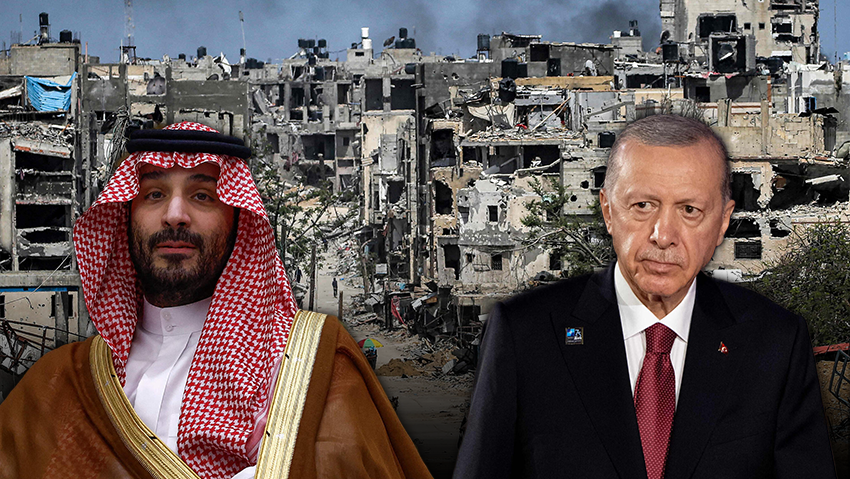
Fighter jets for Turkey, civilian nuclear program for Saudi Arabia
(Photo: Evelyn Hockstein / POOL / Andrew Harnik / GETTY IMAGES NORTH AMERICA)
Over the past 10 days, Netanyahu has had difficulty establishing direct contact with Trump. During the war, and until recently, the two leaders spoke and consulted by phone almost every day. Netanyahu has also not received a date for a meeting with Trump, despite seeking one as early as last week.
The disconnect appears to stem in part from Netanyahu’s efforts to block the transfer of F-35 fighter jets to Turkish President Recep Tayyip Erdoğan, whom Trump favors. It also reflects pressure from antiwar figures in Trump’s inner circle, led by Vice President JD Vance, who have been telling the president that Netanyahu is trying to draw him into a war that would be politically damaging.
Evidence of the growing distance between the two leaders emerged during a meeting of Israel’s smaller security cabinet this week. Participants struggled to assess the White House’s intentions as they prepared for possible scenarios in the conflict with Iran. At one point, Netanyahu left the room to hold a lengthy call with Washington in an effort to obtain more detailed and current information about U.S. plans.
Unlike in the past, however, he did not speak with Trump that evening. Instead, Netanyahu held a long conversation with Secretary of State Marco Rubio, who is regarded as Israel’s most important supporter within Trump’s inner circle.
That stands in contrast to Vance, who is viewed in Jerusalem as hostile to Israel’s position.
Washington’s decision to finalize a civilian nuclear agreement with Saudi Arabia also came as a shock to Jerusalem. The surprise was not only that strategically significant, potentially game-changing information reached Israel through the U.S. media rather than directly from the administration.
The Trump administration also dropped its demand that Saudi Crown Prince Mohammed bin Salman normalize relations with Israel as a condition for the nuclear agreement. Under former president Joe Biden, Saudi entry into the Abraham Accords had been the central condition for reaching such an agreement.
That requirement has now disappeared. Israel’s political leadership is trying to obtain information about Washington’s intentions from the IDF, but senior military officials cannot provide the missing answers.
Israeli commanders frequently speak in glowing terms about their close relationship with U.S. Central Command, but CENTCOM commander Brad Cooper and his staff apparently do not yet know what Trump has decided. They may also have been instructed to maintain strict discretion.
These are therefore days of deep uncertainty, reflecting an unhealthy disconnect between the leaderships in Jerusalem and Washington. That disconnect appears to stem from the near-total loss of trust Trump once placed in Netanyahu.