

The ballroom at the Gaylord National Resort was still filling in when I felt it — that particular hum of a room that knows why it showed up. Thousands of people, most of them Christians from all fifty states, some of them Jews like me, converging for three days on the banks of the Potomac. Not for a concert. Not for a rally in the disposable sense of the word. For a summit. For work.
I left the Christians United for Israel Washington Summit this week changed. Not because the sessions were polished, though they were. Not because the programming was ambitious, though it was that too. I left changed because for three days I was surrounded by people who have decided that loving Israel and the Jewish people is not a feeling you have — it is a job you do.
Gallery
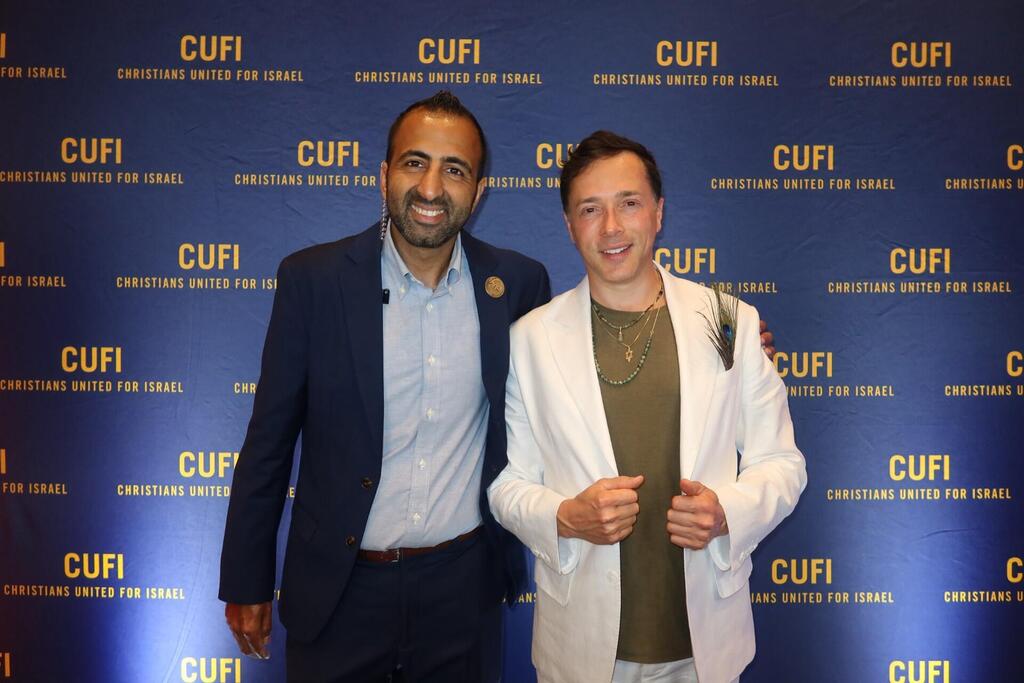
Yuval David with Kasim Hafeez, Director of Digital Strategy for Christians United For Israel
(Photo: Yuval David)
The feeling was real, and it was specific
There is a spiritual unity in that room that is hard to describe to someone who has not stood inside it. It is not generic goodwill. It is not the soft, safe solidarity of a hashtag. It is Christians and Jews, side by side, naming the same enemies and reciting — in different languages of faith — the same conviction: that the Jewish people have a right to exist, to defend themselves, and to live in their ancestral homeland without apology.
What struck me most was how little of it stayed in the realm of sentiment. This was not a room content with thoughts and prayers. CUFI's more than ten million members do not just believe something about Israel — they act on it. By the end of the week, delegations had walked the halls of nearly every congressional office in Washington, armed with the year's policy priorities and the knowledge that their numbers, back home, are real and countable. That is not a metaphor for support. That is support with a shoe-leather cost attached to it.
And then there was the schmoozing — because that is the Jewish word for it, and I will not pretend otherwise. The hallway conversations. The meals shared with pastors from Texas and rabbis from New York. The unplanned moments where people turned their brief conversations into soulful conversations, in the lobby, the lobby bar, the restaurant, and every hallway in between, where two strangers from entirely different worlds settle in over coffee or a late dinner and discover they are, in fact, standing in the same fight. That is where alliances are actually built. Not from the stage. From the conversations that happen once people finally sit down together.

The CUFI’s Washington summit
(Photo: Yuval David)
I have spent years in rooms like this one. As a journalist and news commentator, I represent these stories in broadcast and print, unpacking difficult global topics and making them approachable from a values based understanding. As a political advocate and, at times, a strategic communications advisor to organizations and leaders trying to say the right thing in the wrong moment, I have worked the policy and the language of it from the inside. And as a Jewish representative invited to speak in rooms that are not always Jewish rooms, I have learned something particular: that the space between two communities is rarely closed by a speech.
It is closed by people willing to do the slower work of being a bridge — showing up in the room, listening as much as speaking, reminding both sides that shared values and common cause are the foundation, not the exception. I do not say any of that to claim particular authority. I say it because it is the lens I bring into a room like this one, and it is why I could recognize the difference between a room performing unity and a room building it.
This was the latter. And it clarified something I have come to believe deeply in that work: that being an ally is not the finish line. Allies coordinate. Friends show up. What I saw at CUFI, again and again, was people trying — imperfectly, earnestly — to move from the first category into the second.
The part that should disturb every American
Here is what widened my chest with something other than inspiration, and I want to be precise about it rather than gesture at it. I face death threats. Specific, targeted, ongoing death threats. I am not speaking in the abstract or in generalities.
I receive them because I am a Jewish advocate who refuses to go quiet — because I speak openly and honestly about Israel, because I claim the word "Zionist" not only as a matter of my own identity as a Jew, but because I understand clearly what Zionism actually means: the Jewish people's right to self-determination in our ancestral homeland, and a movement that also helps other peoples learn to represent themselves, too. And I receive them because I insist on human rights for every human being without ever diminishing or hiding who I am, as a Jew, to make that stance more comfortable for someone else. That is the price attached to refusing to shrink. I have made my peace with paying it. I will not pretend it is small.
What I was not prepared for, at CUFI, was how many people already knew that about me — knew my work, knew the threats that come with it — before I ever said a word about it myself. And what genuinely stopped me was how many of them, unprompted, told me they live with the same thing. Christian pastors. College students. Lay leaders who had never stood on a stage in their lives.
People who are not Jewish, who are not Israeli, who simply said in public that they stand with the Jewish people and the State of Israel — and who are now receiving death threats for exactly that. Not because they are Zionists in the sense I am. Because they are Christians who chose, openly, to support Israel and the Jewish people, and someone decided that support was worth threatening to kill them over. Specifically, personally, by name.
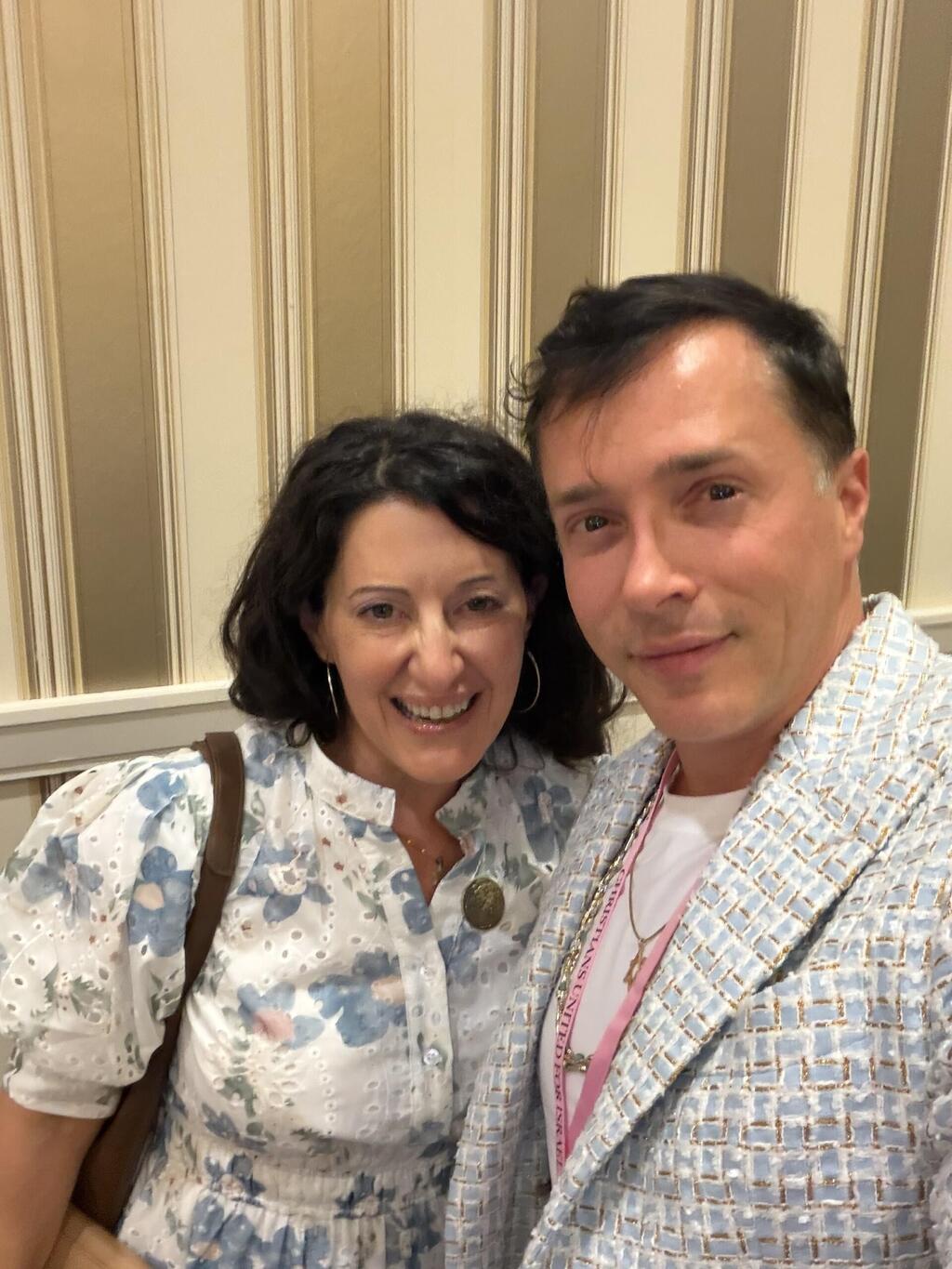
Yuval David with Shari Dollinger Magnus, Co-Executive Director of Christians United For Israel
(Photo: Yuval David)
That should stop every American cold. It should not take being Jewish to be terrified of a death threat for supporting Jews. It should not take being a Zionist to be threatened for being one. When a Christian college student is receiving the same kind of threat I receive, for the same reason, that is not my problem to carry alone anymore, and it never should have been theirs to carry alone either. That is an American problem. It is a moral one. And it is proof of exactly how high the stakes of this alliance actually are. When Jews are targeted, and those who support Jews are targeted, the problem is our society is a cancer of hate that is normalized and spreading.
Common enemies are not the whole story
It would be easy — and it would not be wrong — to say Jews and Christians must unite because we share common enemies. We do. The Islamist terror networks that murder Jews for being Jews do not stop to ask whether the aid worker, the journalist, or the pastor standing beside us is Jewish too. Their hateful ideology has no room for either of us. That is a real and sufficient reason to stand together, and I do not discount it.
But if shared enemies were the whole of it, this alliance would be thin, reactive, defensive — a bunker, not a movement. What I felt in that ballroom was something sturdier. Christians and Jews in that room share a text, a moral vocabulary, a belief that human beings are made in the image of God and that the world is meant to be repaired, not merely survived. We share a conviction that justice, dignity, and freedom are not Jewish values or Christian values — they are the shared inheritance we are both responsible for protecting.
That is the alliance worth building. Not one that exists only in opposition to what threatens us, but one that exists in pursuit of what we are both, separately and together, called to build: a world where no one is threatened for their faith, their nationality, or their support for a besieged ally; a world repaired, not merely defended.
The call to action
Some of the most meaningful conversations I had that week happened in the spaces between the programming — moments where Christians and Jews sat down together to talk about what we actually share, not just what we're both against. That is the work I keep returning to, because I believe it is the actual work: building the bridge, not just standing on either side of the canyon shouting encouragement across it. And every time I do it, I come back to the same conviction. Being allies is necessary, but it is not sufficient. Allies can drift the moment the crisis passes. Friends do not.
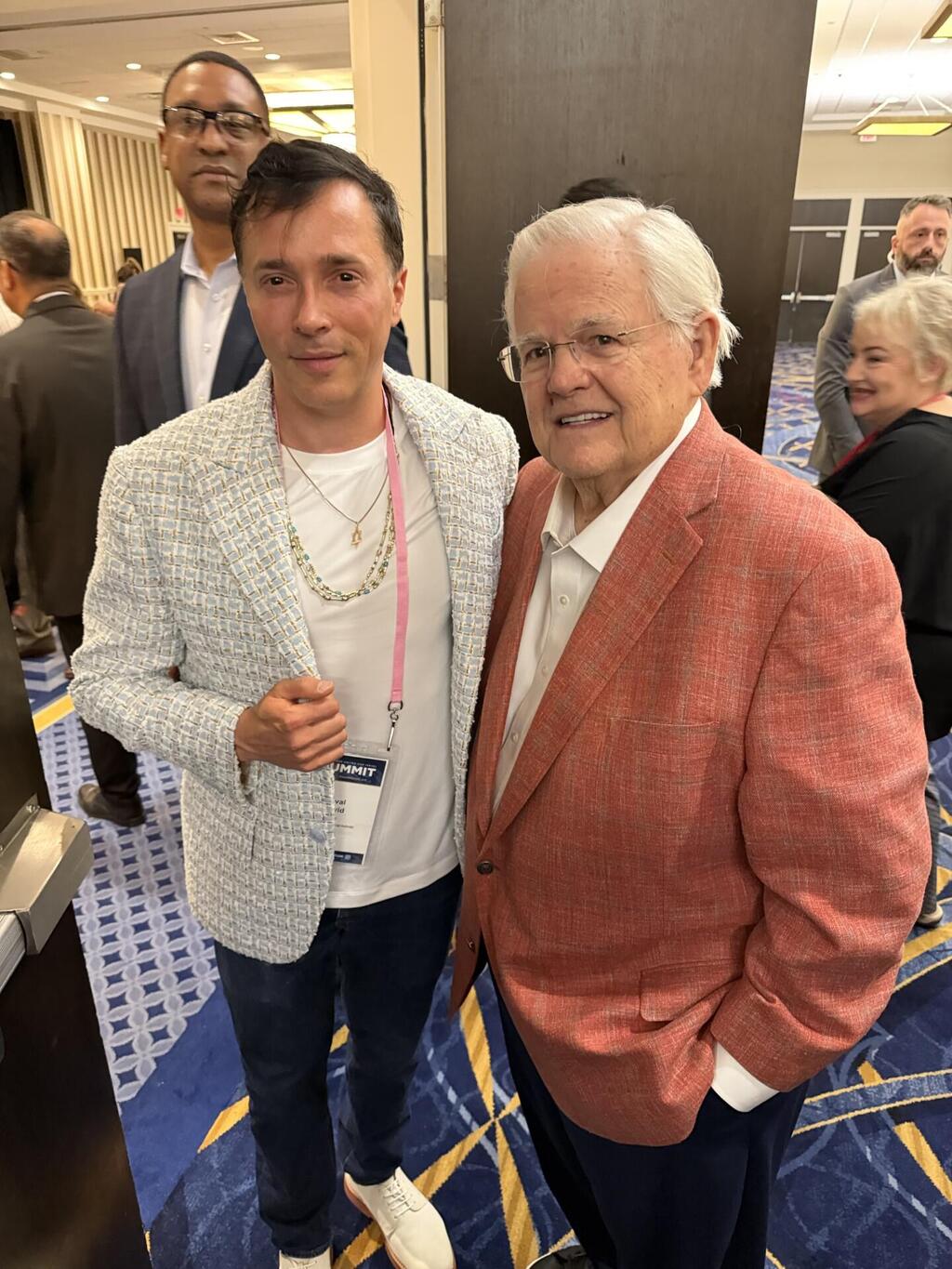
Yuval David with Pastor John Hagee, founder and National Chairman of Christians United For Israel
(Photo: Yuval David)
So here is what I am asking of every Jew and every Christian reading this. Do not wait for the next atrocity to remember that you have allies. Build the relationships now — the pastor in your town, the synagogue two miles from the church, the campus group that could use a friend from the other tradition. Show up for each other's vulnerable moments before they become emergencies. Move past alliance and into friendship, because friendship is what survives the moment the headlines move on.
And do not let the reason you show up be limited to the enemy at the gate. Show up because you believe, as I do, that the world gets better when Jews and Christians insist — together, in public, without apology — that human dignity is not negotiable, that hatred dressed as politics is still hatred, and that the work of repairing the world was never meant to be done by one faith alone.
Thoughts and prayers were never going to be enough. This week in Washington, thousands of people proved they know that. Now it's on the rest of us to prove it too.
Yuval David is an Emmy Award–winning journalist, filmmaker, actor, news commentator, and internationally recognized advocate focused on combating antisemitism, extremism, and disinformation while advancing democratic values, human rights, and the U.S.-Israel relationship. He advises governmental leaders, diplomatic missions, NGOs, and policy organizations and appears regularly across major American, Israeli, and international news networks.
Website: yuvaldavid.com | Instagram: @Yuval_David_ | X: @YuvalDavid | Facebook: YuvalDavid | YouTube: YuvalDavid| TikTok: @yuval.david