

Since July 2025, the Druze community in Sweida, southern Syria, has been living through an unbearable reality. But beyond the siege, the shortage of medicine, the disruption of basic infrastructure and the constant fear of further attacks, something much deeper has been broken: trust.
For the Druze in Sweida, the question is no longer simply how to live within Syria, but how they can feel that they belong to a state that massacred them.
Gallery
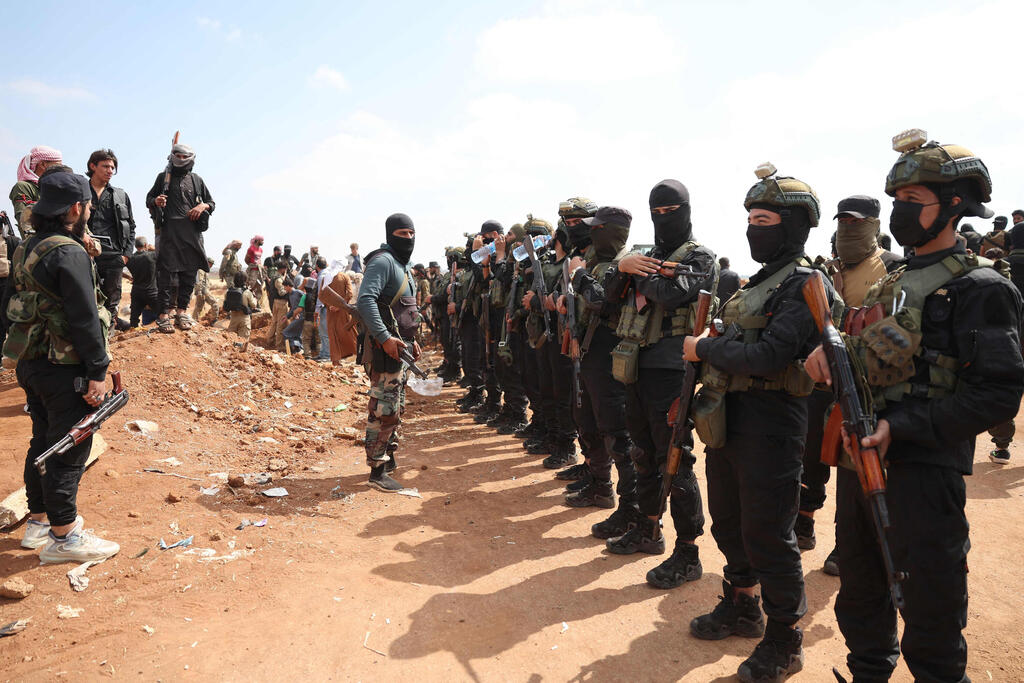
Forces loyal to Syrian President Ahmad al-Sharaa blocking access to Sweida
(Photo: OMAR HAJ KADOUR / AFP)
July 2025 was not a passing event. People were killed, women were raped, civilians were abducted and homes were looted. There is documentation and testimony showing that the perpetrators included members of Syria’s General Security forces, acting on behalf of the Syrian authorities, as well as militias operating alongside them. And today, more than a year later, there has still been no genuine accountability, no apology and no reckoning.
Perhaps the world has already moved on. The Druze in Sweida have not. They are still paying the price.
Sweida remains under siege. Only limited quantities of medicine are entering the area, and those who are sick and require treatment unavailable locally may find themselves facing a life-or-death situation. There have also been cases of people who left Sweida for Damascus and were abducted or detained, while their families still do not know what happened to them.
This is not security. This is not a state that can be trusted. And then there is the question of the children.
The authorities in Damascus demanded that students from Sweida leave the area to sit for various examinations rather than take them within their own communities. How can parents be expected to send their children to places where they do not feel safe?
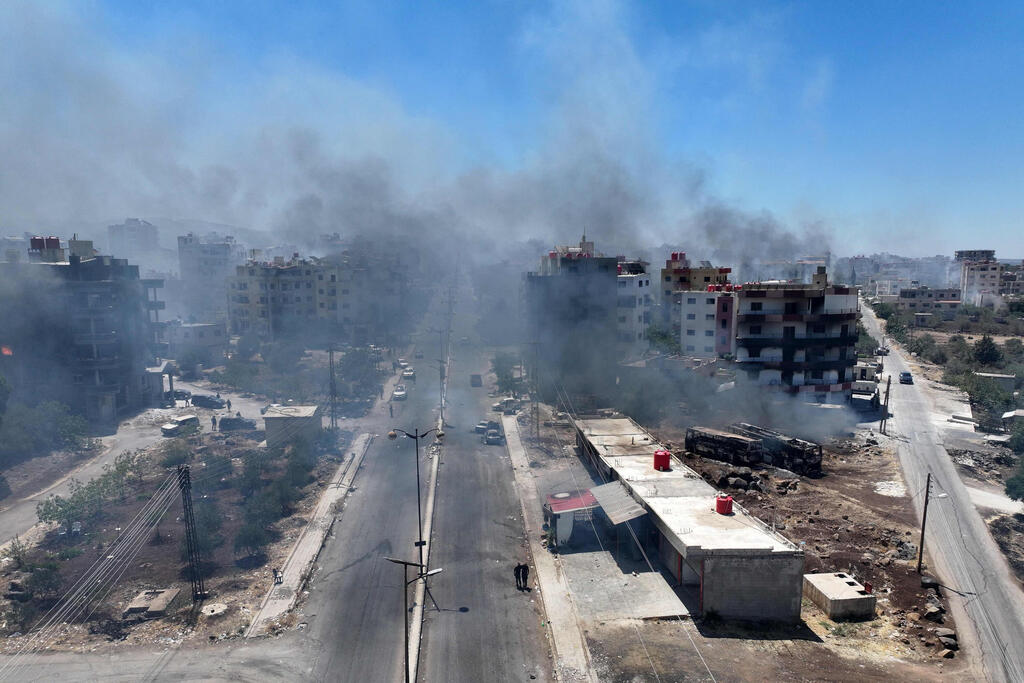
Smoke billowing over Sweida amid fighting between Druze gunmen and Syrian government forces
(Photo: Omar HAJ KADOUR / AFP)
The 34 Druze villages that were seized and placed under the control of forces affiliated with the authorities in Damascus are also part of this reality. The authorities refuse to withdraw from them.
And yet, that same regime is now seeking legitimacy from the international community.
The West wants stability. European countries, among other things, want to create conditions that would allow Syrian refugees who arrived in Europe to return home. France, Germany and other countries want to see a functioning Syrian state with which they can engage.
But Europe's desire to solve the refugee crisis cannot come at the expense of the Druze.
The fact that many countries are willing to recognize and engage with the authorities in Damascus does not make them a government that the Druze can trust.
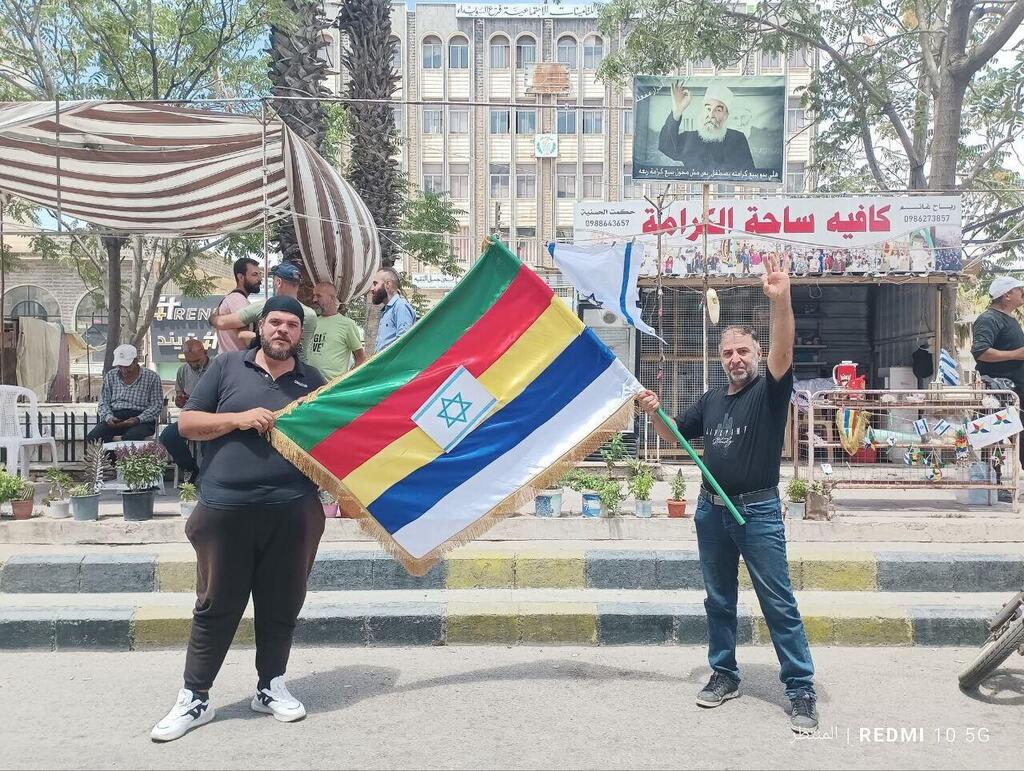
Demonstrators hold the Druze flag ebmlazoned with an Israeli flag in Sweida, Syria
We must remember who is leading Syria and where he came from. Ahmad al-Sharaa, also known as Abu Mohammad al-Julani, was previously the leader of Jabhat al-Nusra, an organization affiliated with al-Qaeda in Syria. The United States had previously offered a reward of up to $10 million for information leading to his capture. Today, he seeks to present himself as the legitimate leader of a new Syria.
But a change in image does not erase the past. For Israel, there is also a direct security dimension. Sweida lies in southern Syria, 70 km from Israel's border. Any change in the balance of power in this area has a direct impact on Israel's security.
I do not ignore the anti-Israel chants or the expressions of support for Gaza and Hamas, including calls made by forces associated with the Syrian military. Syria is a ticking time bomb for Israel, just as Yahya Sinwar tried to lull Israelis into complacency before October 7, only to lead an unprecedented terrorist attack and massacre.
Precisely because this area lies just across our border, Israel must understand what is happening there. Israel must not place blind trust in the authorities in Damascus.
The Druze in southern Syria need protection. Israel was the only country in the world that saved the Druze as their spiritual leader, Sheikh Hikmat al-Hajri, himself has said. He insists that after the massacre of his people, he understood that the Syrian authorities could not be trusted.
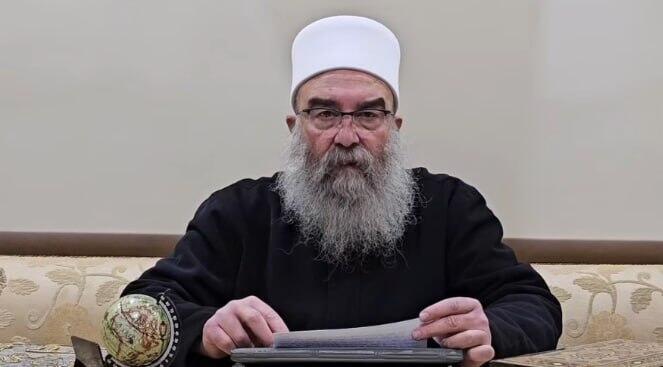
Druze spiritual leader in Syria, Sheikh Hikmat al-Hajri
They also need humanitarian assistance. At present, they have no other actor capable of providing the security and support they need.
The connection between the Druze in Israel and the Druze in Syria goes beyond religion. It is also familial. It is a bond of solidarity and mutual responsibility.
That is why I believe Israel must continue assisting the Druze in southern Syria not merely through declarations, but through tangible humanitarian aid.
Food, medicine and medical equipment must be allowed to reach them. Israel should also examine the possibility of establishing a humanitarian corridor that would enable Druze communities in Israel to provide assistance to their brothers and sisters across the border.
And in my view, it is time to seriously discuss the solution that the Druze themselves are demanding: autonomy.
If the Druze in Sweida do not want to return to life under centralized rule from Damascus, their voices must be heard. A model of self-government, international guarantees and protection for the community should be considered a model that would allow the Druze to manage their own affairs while preserving their security and identity.
The Druze are a unique minority, with deep historical, familial and spiritual ties to the Druze community in Israel and to the Jewish people. The Druze have survived for centuries because they have protected their identity, their community and one another.
They deserve to survive in Sweida, too.