


The IDF continue clearing the area up to the Yellow Line. In practice, only one division — the 36th — is currently maneuvering and not engaged in defensive missions. Troops are locating weapons, killing a small number of militants who remain in the field, and primarily working to dismantle terrorist infrastructure. At the same time, efforts to fortify a defensive line are ongoing, as the IDF is already looking ahead and trying to formulate next steps.
Alongside completing the clearing operations, the IDF will need to decide whether to remain in all or part of the territory, and whether to hold fixed positions or operate through raids. Any forward plan, however, depends on policy decisions tied to negotiations that have yet to be made. The United States may demand a partial Israeli withdrawal from the area in exchange for Hezbollah’s disarmament in southern Lebanon alone. For now, the IDF is concerned about sliding into a prolonged stalemate in the face of emerging Hezbollah threats on the ground.
Footage from the destruction of tunnels in Lebanon
(Photo: IDF)
The exposure of an underground compound in Qantara underscores the importance of IDF operations across southern Lebanon, including areas far from the border. Hezbollah built what amounts to a refuge city in Qantara, from which it planned raids on northern Israeli communities. The entire network was funded and planned by Iran, Hezbollah’s main patron, which is also involved in shaping the current ceasefire.
“At the start of the campaign, during the forward assault, we encountered the enemy up close, face to face,” a senior security official said. “Now the IDF has entered the stage of clearing the area. Whether it’s weapons or surveillance equipment, this is systematic work. We go meter by meter and clear the terrain. The scale of the terror infrastructure we’re finding is enormous.”
One of the most significant threats facing the forces is drones. The IDF has yet to find effective solutions for drones launched from a distance, which complicate defensive capabilities, including those relying on fiber-optic systems. The drones are fitted with explosives taken from rockets and launched toward troops using improvised mechanisms.
“This is a threat that challenges us greatly and comes from afar. When a drone reaches you, it’s a significant incident — they have already caused one soldier’s death and injuries,” the senior official said. “We are addressing this in several ways, but there is no immediate solution. Work is being done intensively. I hope interception capabilities will improve. All defense industries are focused on this, as is Military Intelligence, and I hope we will see a better response.”
He added that beyond physical protection, there is a strong intelligence effort, led by Military Intelligence, aimed at disrupting the entire drone “value chain,” including command systems and operators.
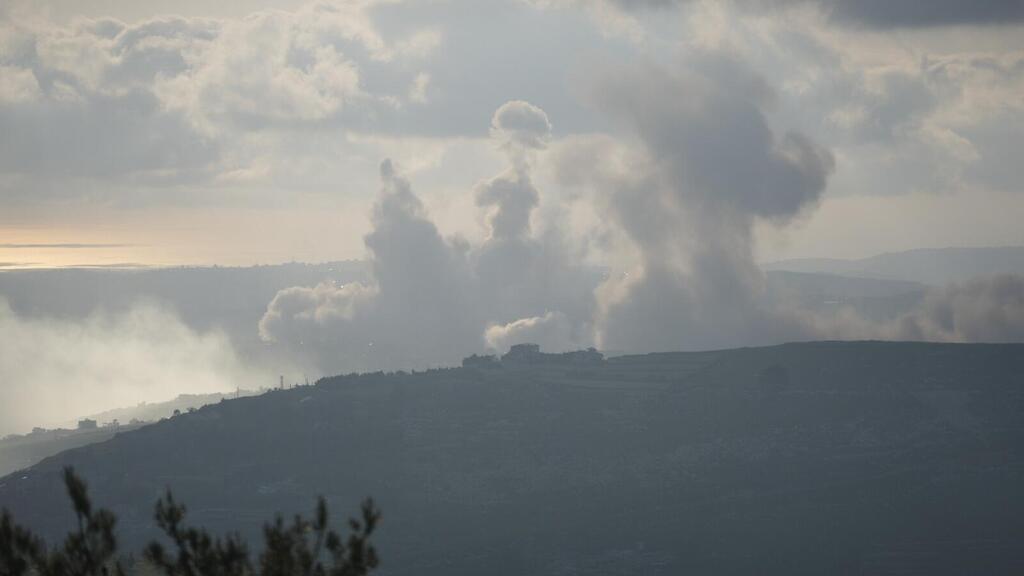
Meanwhile, troops from the 226th Brigade, under divisional command, located and struck a weapons depot, anti-tank positions, observation posts and structures used by Hezbollah for military purposes. According to the IDF spokesperson, Hezbollah operatives used these facilities to plan and carry out attacks against IDF forces and Israeli civilians.
While clearing operations continue, the IDF is already looking ahead. The direction from here remains unclear, as it largely depends on decisions made in Washington. The disarmament of Hezbollah, if it happens at all, will not occur overnight. Political officials have hinted at a phased approach.
The IDF previously established a similar “security zone” and used the term Yellow Line in the Gaza Strip. More than two years later, Hamas still exists. It is significantly weakened and its capabilities have been severely damaged, but under the cover of fighting in the north and operations against Iran, it is rebuilding its governing capacity.
As in the south, so in the north: Hezbollah is fighting for its survival and will do everything possible to prevent moves toward its disarmament, including the risk of triggering a civil war in Lebanon. The group is also trying to prevent the IDF from entrenching itself in southern Lebanon and insists that all residents will return to their homes.
Defense Minister Israel Katz hinted, intentionally or not, that Hezbollah’s disarmament would be carried out in stages, and again issued a warning to the group’s leader, Naim Qassem: “Naim Qassem is playing with fire, and the fire will burn Hezbollah and all of Lebanon — just as in the Assad regime. If the Lebanese government continues to shelter under the shadow of the Hezbollah terrorist organization, fire will break out and burn the cedars of Lebanon.”
 Elisha Ben Kimon
Behind all this, the IDF is waiting for direction from the political leadership while trying to shape its next course. There is still work to be done in the field, but ultimately, to reduce the volume of rocket fire, forces will need to maneuver across the entire area and collect scattered weapons, launchers and rockets. The main concern is ending up in a “security zone” scenario, with troops effectively frozen in place, tasked with holding territory rather than defeating the organization.