

Military activity in the midst of an election campaign is almost unavoidable in Israel, and suspicion surrounding it is nothing new either. Iraq’s nuclear reactor was bombed about three weeks before the polls opened in 1981, in a move that shifted momentum in favor of Menachem Begin’s government, while Operation Cast Lead in Gaza ended a month before the 2009 election, which certainly did not hurt Kadima’s ability to win the largest share of the vote, though not to form a government.
Criticism of the Israeli strike in Syria in 2014, just after the Knesset was dissolved, likewise ran into thick separation walls between politics and security: Every claim that the move was “political” was rebuffed by the military and its loyal soldiers in the television studios.
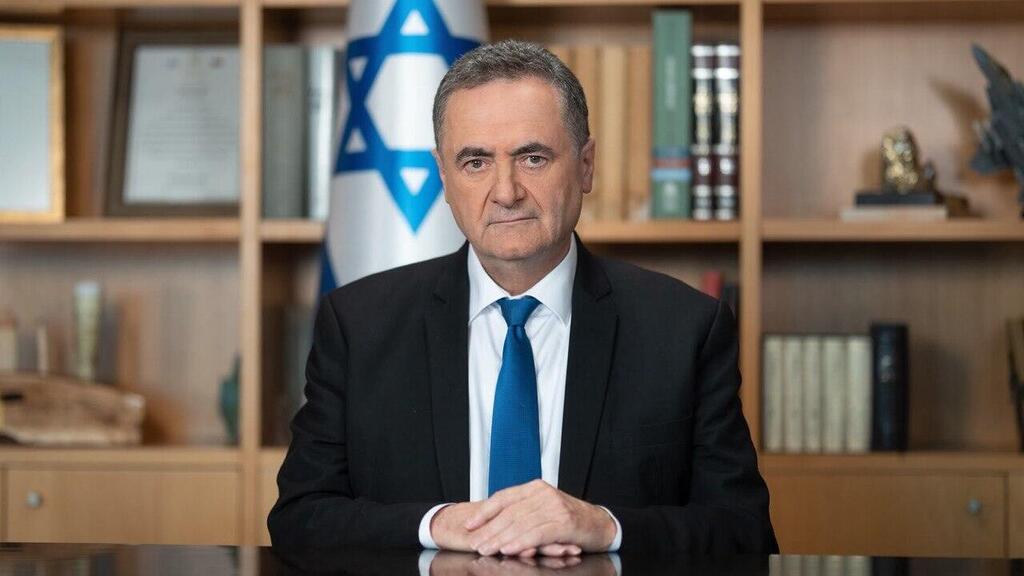
Israel Katz
(Photo: Elad Malka, Defense Ministry)
Now, too, when the leadership’s motives are viewed with profound distrust by large parts of the public, the military is trying to signal that it is not part of the story. “It is clear to us that there will be those who want to heat up various fronts ahead of the election,” security officials were quoted by Channel 13 News as saying. “We will not lend a hand to unnecessary wars.” This astonishing statement, more reminiscent of regimes such as Turkey’s than of a normal democracy, was interpreted as a multi-front comment in the context of the strike in Syria and rising tensions with Turkey. Other briefings, along with remarks by the defense minister in response to the U.S. envoy to Syria’s claim that political needs lay behind the strike, sought to make clear that it was the IDF that initiated and pushed for the action. Incidentally, this is practically a miracle: An event has finally been found for which the system itself gets credit and which is not the product of yet another “I instructed” or “I ordered.”
Unfortunately, the words “the IDF recommended” still turn the Jewish opposition and most of the media into pillars of salt, especially when the recommendations involve offensive action. The unmistakably post-traumatic way in which the IDF has operated since October 7 — both because of its own responsibility and because it has learned how the poison machine treats those who refuse to fall in line — is still not taken into account as part of the discussion.
Despite everything that has been exposed and clarified, the military establishment is still not perceived as a collection of flesh-and-blood human beings motivated not only by a sense of mission and a desire to serve, but also by needs, impulses, fears and, at times, political views. That is why, for example, it is easy to recite the refrain that “the police have fallen” whenever even the faintest expression of Minister Itamar Ben-Gvir’s views appears there, while the enormous contribution of the IDF in general, and Central Command in particular, to entrenching apartheid in the West Bank makes headlines only in exceptional cases. Even then, it is framed at most as a problem of “erosion” or “discipline.”
In fact, the notion that the IDF would want, or be able, to stop “unnecessary wars” reflects two tragedies within the “liberal” camp. The first is a distorted understanding of democracy, as though even an unhinged government somehow authorizes the military echelon to decide which escalation is “political” and which is not. The second is the refusal to recognize that the IDF is not free of biases and interests, some of them longstanding, such as the need for budgets, and others shifting in response to deep social processes, including demographics and politics, as well as specific circumstances such as failures and public criticism.
One need only look at the chaos unfolding in the West Bank and at how long it took to decide which serious incidents in Gaza would be investigated and which would not to understand just how weak and politically deterred the IDF of 2026 has become, even as it longs to rehabilitate its public standing by projecting the image of a “galloping horse.” The chances that this combination will protect Israel from “unnecessary wars” are roughly as high as the chances of Israel Katz winning a Nobel Prize.